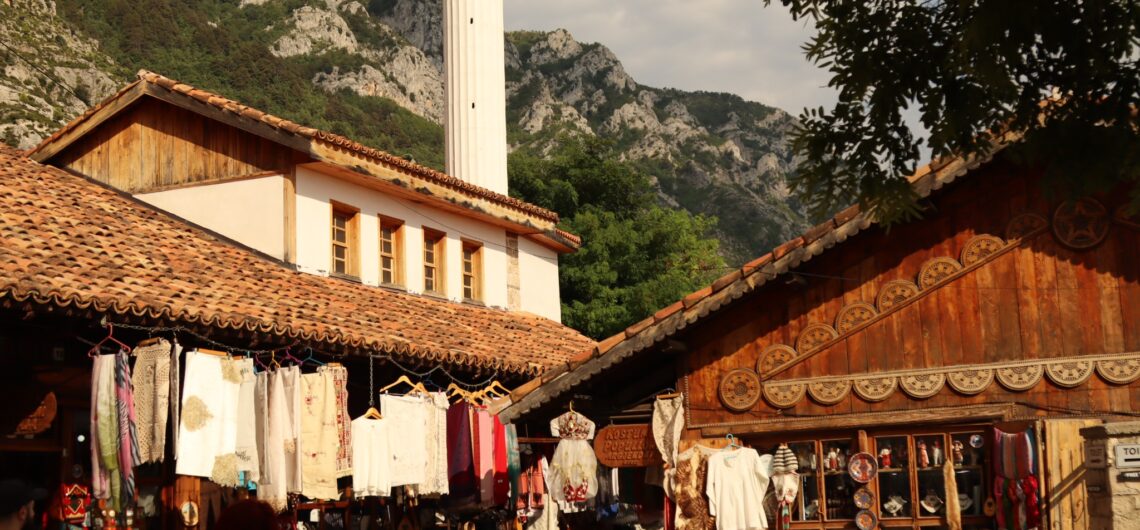
Souvenirs is a word often associated with tourist tat, but the Balkans is not a turbo-charged tourism industry, so things you can buy in markets still tend to be hand-crafted traditional gifts.
Plus, supporting local craftspeople is all part of being a conscientious traveller and leaving a positive impact.
These 12 souvenirs are traditional Balkan gifts we genuinely love, use and give to our friends. Some are practical, some beautiful, some edible, and all of them will have you hankering to go back long after you’ve unpacked your bag.
What to buy in the Balkans:
The best traditional gifts in the Balkans are locally made, small-batch products that reflect the region’s culture. Look for:
- Rakia (fruit brandy) from family-run distilleries
- Regional wines from lesser-known Balkan vineyards
- Handmade ceramics and traditional pottery
- Embroidered textiles and handwoven rugs
- Olive oil, preserves and other small-batch food products
- Herbal teas and natural, plant-based cosmetics
- Artisan jewellery inspired by local heritage
Scroll down to find out where to find the best of each…
Handwoven Kilims: Albanian and Serbian Rugs
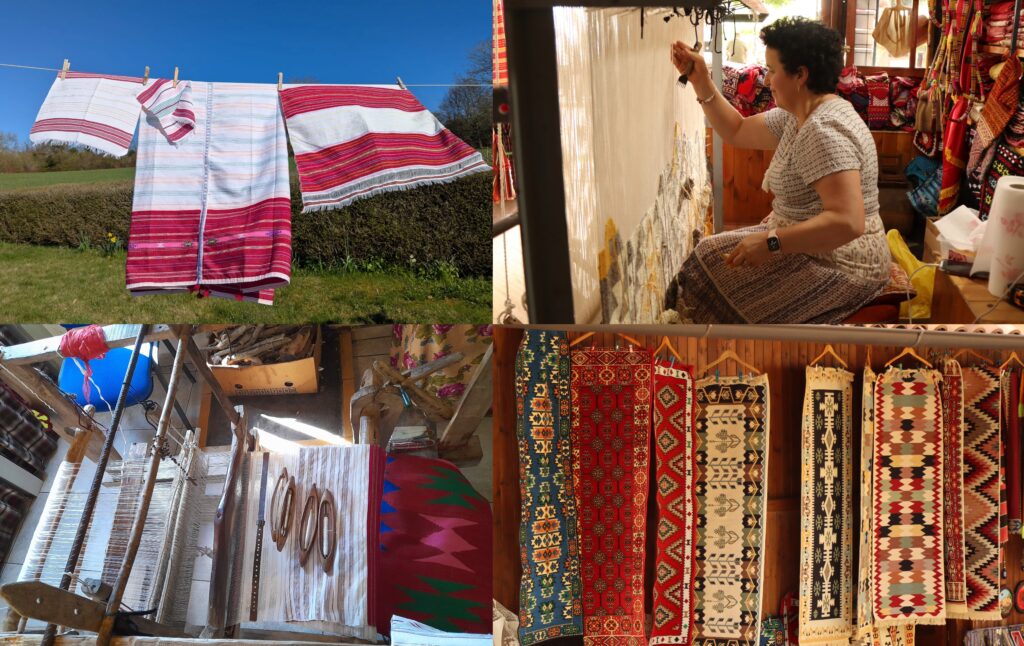
Among the best traditional gifts to buy in the Balkans, a handwoven kilim dates back centuries. Distinct traditions are found in Albania’s Lake Shkodra region and Serbia’s Pirot near the Stara Planina. Albanian kilim weaving dates back to Ottoman times, when rugs were gifted as dowries (paja), and the motifs woven into each piece told the story of a specific place, family and tribe.
Our Multi-activity holiday in Albania includes a visit to the kilim factory on the shores of Lake Shkodra where you meet the weavers and see the rugs.
Heading up the women-led weaving cooperative is Nebija Qotaj. She quietly keeps the ancient craft of rug weaving alive. Nebija first sat behind a loom at just ten years old, taught by her mother and grandmother. Today, she and her colleagues produce handloom kilims and linens in warm ochres, rusts and earthy reds.
Pirot, in southern Serbia, is also highly renowned for its beautiful kilims, woven from wool of the sheep raised on the nearby Stara Planina mountains. We visit on our Serbia hiking holiday.
Priglavke: Hand-Knitted Wool Socks and Traditional Woollens
All across the Balkans, you can find thick blankets, bonnets, traditional jumpers and other cosy woollens, hand-knitted by women.
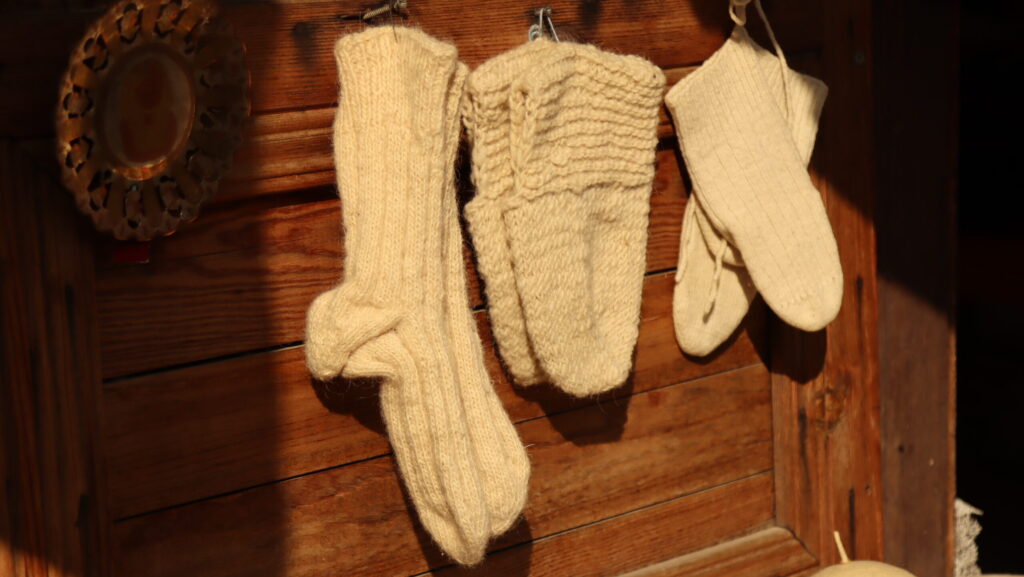
Best of all are Priglavke: a traditional Bosnian hand-knitted wool sock designed for people who take their winters seriously. Worn by shepherds, hikers and anyone who knows what cold mountain mornings actually feel like, priglavke are thick, durable and very warm – the kind of souvenir that is genuinely useful back home.
A recent instagram story went viral about an American lady who hiked 14 kms into the mountains to buy socks from an elderly Bosnian woman. We don’t blame her – after a long hike or kayak, priglavke are pure therapy for the feet.
You will have a chance to find knitted socks on our Bosnia hiking holiday when we visit Lukomir village, where knitting is a local speciality.
Carnival Masks from Albania and Montenegro
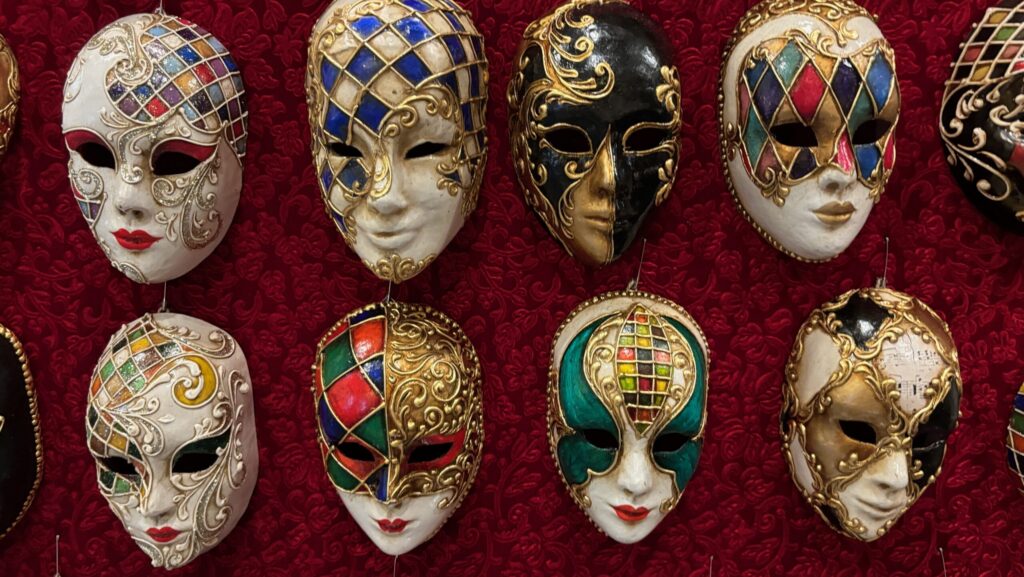
Here’s something most travellers to the Balkans don’t expect: some of the finest carnival masks in the world aren’t made in Venice, but in Shkodër, Albania. The Venice Art mask factory, run by Edmond Angoni and his family, has been supplying Venice’s famous carnival with handcrafted masks for decades.
Theatrical, beautifully detailed and far from gaudy, these masks are some of the most fun souvenirs you can buy in Albania. Hang them on your wall or keep them in the dressing up box! We visit on our North Albania activity holiday.
Across the border in Montenegro, the walled city of Kotor has its own mask-making tradition, shaped by nearly four centuries of Venetian rule along the Adriatic coast (1420 to 1797).
Shkodër and Kotor throw their own Mardi Gras masked carnivals in February, which you can read about in our festivals blog post.
Ajvar: The Balkan Pantry Essential
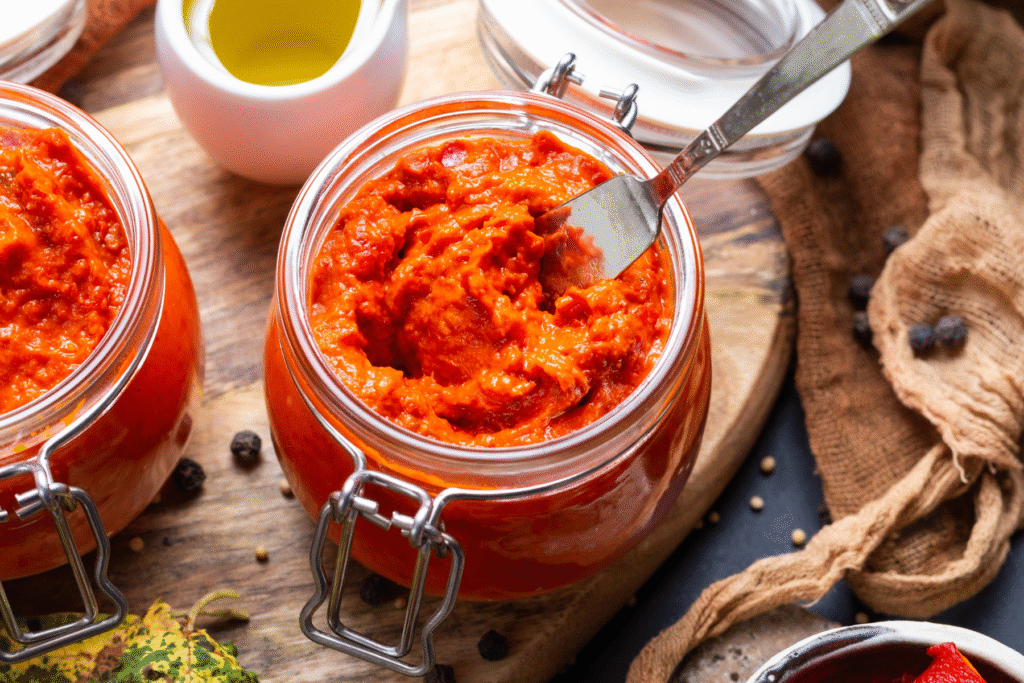
If there’s one edible souvenir everyone wants to take home, it’s ajvar. This roasted red pepper spread is a staple across the region and true comfort food when spread on thick toast. Every family claims theirs is best. It’s eaten with grilled meats, cheese, bread, eggs — or straight from the jar if no one’s looking.
You can find excellent versions back home by Macedonian brand Pelagonia, but buying a homemade jar in the Balkans hits differently.
Our North Macedonia Activity holiday includes a wander around Skopje’s old town bazaar where you will find plenty of shops selling ajvar.
Balkan Wines and Rakia
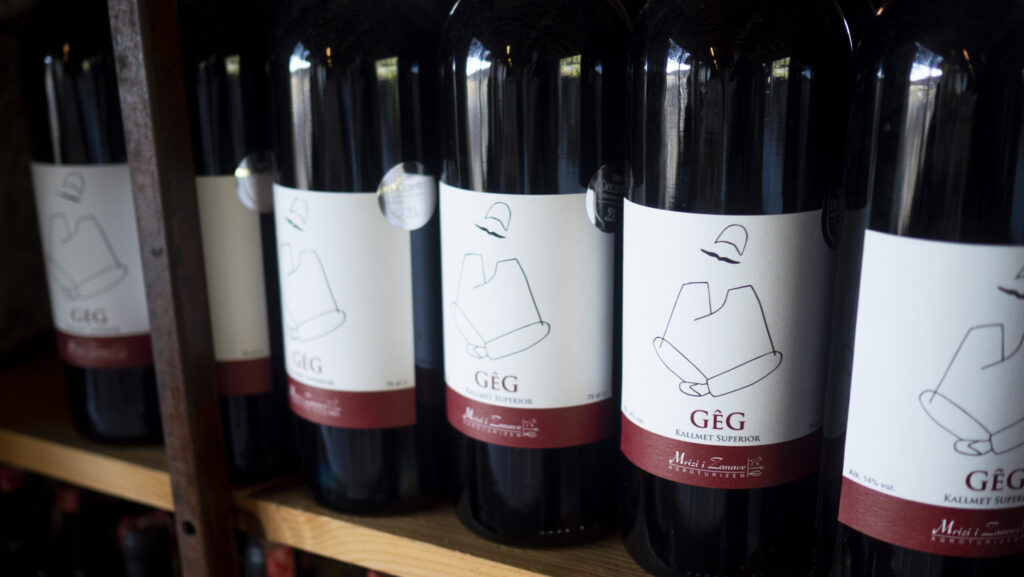
The Balkans quietly produce some of Europe’s most exciting new wines, from Croatia’s Plavac Mali, Montenegro’s bold Vranac to Serbia’s revived Prokupac. Even wine critic Jancis Robinson is a fan. See our complete guide to Balkan wines to get detailed info on the best labels and vineyards.
If you get offered a bottle of a homemade rakia or vinjak as a gift, then you’ve clearly won over the heart of your Balkan host. Rakia/rakija comes in every flavour, as it is produced from whatever fruit a family grows. It never tastes quite the same back home as it did on holiday, but you can always give it to unsuspecting guests.
Bear in mind that wines from non-EU countries are hard to source in the UK, so if you discover a bottle from a boutique winery that you love, bring it home. Else you may be able to find an equivalent at an online wine retailer like Tanners.
Copper Coffee Pots from Sarajevo
One of the most distinctive souvenirs you can buy in Sarajevo is a piece of handcrafted copperwork, and nowhere is better to find it than the clanging workshops and coffee-scented alleys of Baščaršija, the city’s ancient bazaar. Copperwork arrived in Bosnia with the Ottomans, and Sarajevo quickly became famous for it.
During our Bosnia holidays we spend time in Sarajevo where you can explore the Baščaršija and even try your own coppersmithing, or get a pot hand-engraved with your name.
We love the work of Nermina Alić, Sarajevo’s only female coppersmith. The trade traditionally passed from father to son, but Nermina learned the craft from her father, Hadžan Alić, helping in the workshop for years before taking it over in 2007.
Her pieces are beautiful but made to be used: coffee sets, trays, džezvas and water vessels, each hand-hammered and etched with delicate patterns. She also hosts workshops.
Bulgarian Rose Products from the Thracian Valley
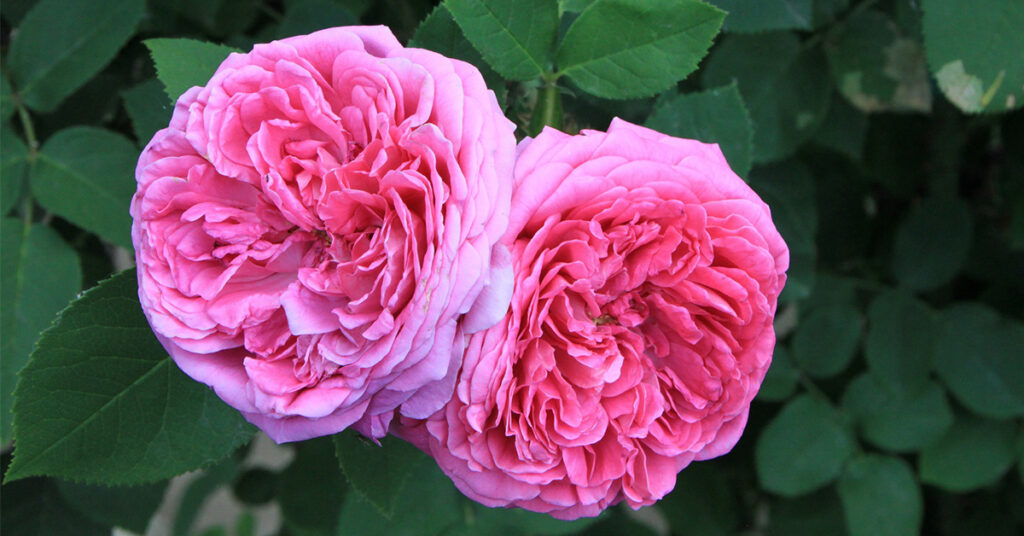
If you visit Bulgaria in May-June, you’ll find planty of roadside stalls selling rose oil, perfumes, teas and jams.
Throughout May and June damascene roses bloom across central Bulgaria, in a valley that produces over 50% of the world’s rose exports for essential oils, perfumes, cosmetics and food. The intensely fragrant flower is rich, sweet and heady.
The Thracian valley itself is closer to Plovdiv than Sofia, where we are based on our Bulgaria holidays. However, whose to say you can’t extend for a road trip after hiking the Plana Planina with us?
FAQs:
Will I have time for shopping on an Undiscovered Balkans active holiday?
Yes! We have days off and time spent in capital cities, for example:
- Bosnia hiking holiday – Lukomir village, famous for thick hand-knitted socks
- Multi-activity trips in Albania –a visit to the kilim factory in Shkoder
- Serbia holidays – include time spent in Belgrade to explore the flea markets
- North Macedonia Activity holiday– a day in Skopje’s old town bazaar
What food can you bring back?
No fresh food, plants, fruits or vegetables. Cheese is a grey area – if it’s live and gooey, it’s probably a no. If it’s a hard, compact cheese then it should be fine.
Can I take honey?
And we mean the kind of honey a beekeeper sells by the side of a road! The answer is yes- jams and honey are encouraged.
Also, it’s a great idea to buy jams at the source, because fruit pickers and gatherers are paid extremely little for their labour. When local people make their own jam they can sell their berries at a fairer price. So, every pot of jam helps.
How much rakia and wine is allowed in luggage?
When returning to the UK, you are allowed to bring the following in your hold luggage for personal use according to GOV.uk:
- Wine (still) – 18 litres (24 standard bottles)
- Spirits and other liquors over 22% alcohol – 4 litres (around 5 bottles)
- Alcoholic drinks up to 22% alcohol (not including beer or still wine) – 9 litres. This would be sparkling wine, fortified wine (for example port, sherry) or cider
Are things cheap to buy in the Balkans?
Except for honey, which can be unusually expensive, most traditional Balkan gifts are much cheaper here.
If you go over the allowances, don’t be tempted to go through the green channel. HM Customs and Excise sometimes come down hard on those who exceed their limits without declaring it.
Remember even after paying duty, most items you bring home should still work out as excellent value.
Feeling inspired? Subscribe to our free monthly newsletter for more travel-inspired tips about the Balkans, first dibs on our offers and tours, and our special subscriber discount.
Comments