
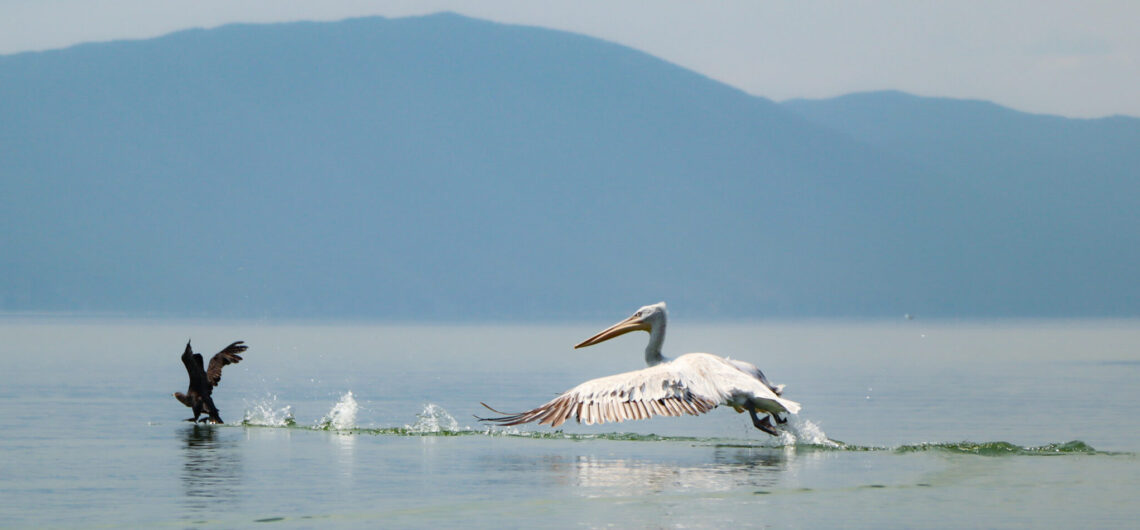
If you’re planning a trip around wildlife in Montenegro or Albania and wondering what you might encounter, prepare to be surprised. The Balkans is one of Europe’s last great wildlife frontiers, a region where bears still roam mountain forests, wolves howl across river valleys, and pelicans the size of small children patrol vast spring-fed lakes.
With over 40% of Montenegro and 2/3 of Albania covered in forest and mountain wilderness, this corner of the western Balkans shelters species that vanished from most of Western Europe long ago. For birdwatchers, nature lovers and wildlife photographers, Montenegro and Albania offer some of the best wildlife watching in Europe.
The Balkans is one of the most species-rich regions in Europe for birdlife, with over 270 bird species recorded in Montenegro alone. Rare and migratory birds flock to key sites including Lake Skadar, a candidate UNESCO biosphere reserve that stretches into Albania, and the salt flats near Ulcinj, where flamingos, cormorants, Dalmatian pelicans, eagles, and all manner of waders can all be spotted (with patience and some good binoculars!)
On our cross-border hiking journey from Albania to Montenegro for example, we follow the Via Dinarica trail through some of the most untouched wilderness in Europe: the Albanian Alps, Valbona Valley, Accursed mountains down to the shores of Lake Skadar. Scroll down to find 15 of our favourite wild animals of the Balkans, and where to find them.
What wildlife can you see in Montenegro and Albania?
Montenegro and Albania are home to a wide range of wildlife across mountains, forests, wetlands, and coastal habitats. Species commonly found in the region include brown bears, wolves, lynx, golden eagles, flamingos, pelicans, and dolphins, alongside many smaller mammals, reptiles, and amphibians.
Mammals: Brown bear, Golden Jackal, wildcat, grey wolf, Eurasian lynx, chamois, red deer, wild boar, otter
Birds: Dalmatian pelican, flamingo, Golden eagle, peregrine falcon, eagle owl, Wallcreeper, white stork, Three-toed woodpecker
Reptiles & amphibians: Loggerhead sea turtle (nesting on beaches), Hermann’s tortoise, nose-horned viper, fire salamander
Marine life: Bottlenose dolphin in the Adriatic; monk seal (rare)
Jump to: Frequently Asked Questions about Wildlife in Montenegro and Albania
1. Dalmatian Pelican: Europe’s largest freshwater bird
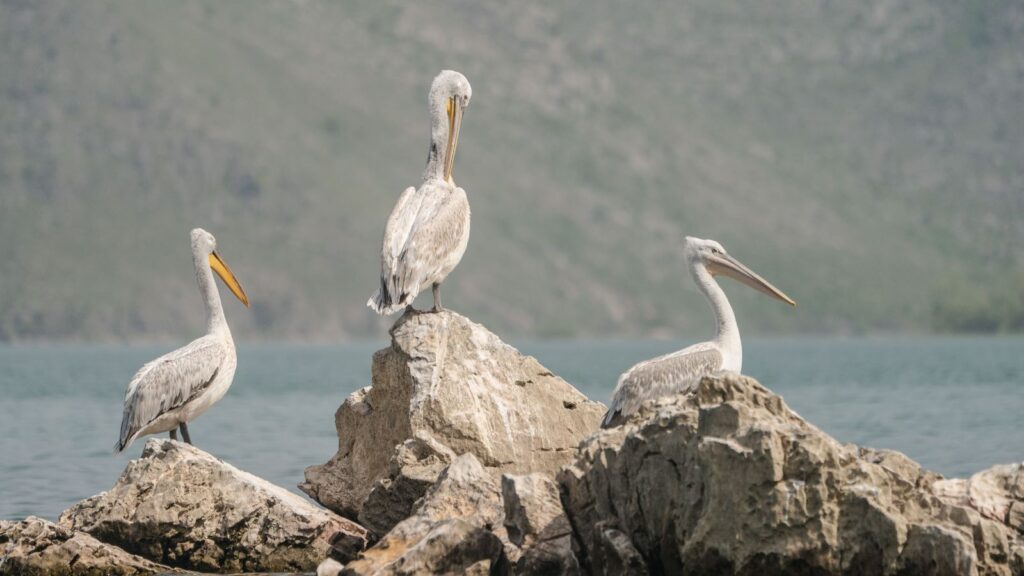
Lake Skadar holds one of the largest Dalmatian Pelican colonies in the world, with around 300 birds resident in its wetlands. Watch these birds glide low over the reed beds at dawn or spread their huge wings over the open water.
In recent years, the pelicans have taken to nesting on a karst rock islet in remote waters close to the Montenegro/Albania border. Their sheer size is remarkable —wingspans of three metres and weighing around 9.5 kg, the Dalmatian Pelican is the world’s heaviest flying freshwater bird and among its largest. Patient conservation work in Montenegro and Albania has helped increase numbers, although these rare birds remain extremely vulnerable.
You’ll also find a significant pelican colony at Lake Prespa on the Albania-Greece-North Macedonia border, and a smaller one at Divjakë-Karavasta National Park on Albania’s Adriatic coast.
2. Wild Horses of the Albanian and Montenegrin mountains
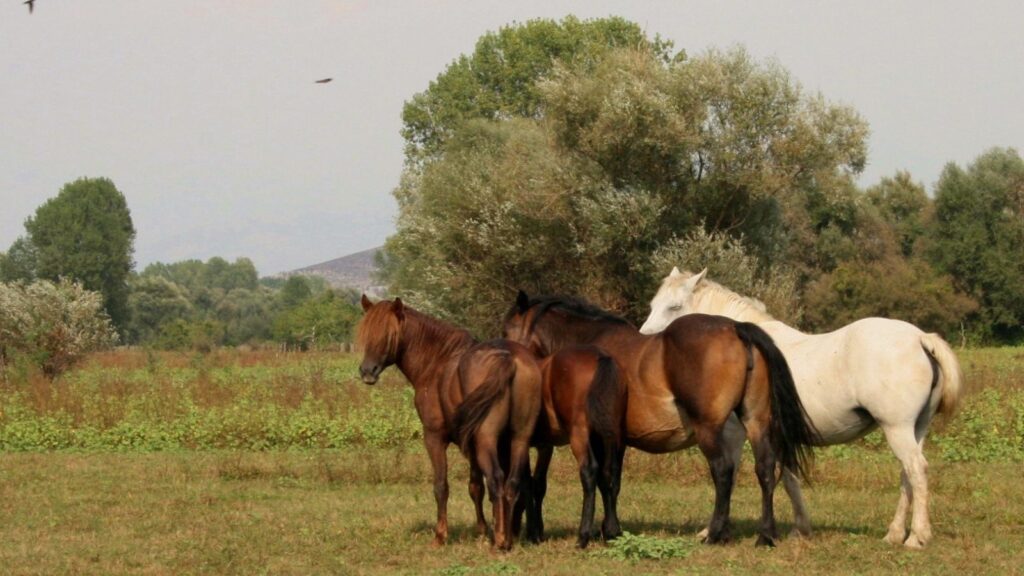
Small herds of feral horses roam the lower mountain ranges of North Albania and Montenegro, and they’re a genuinely unexpected sight. Their story begins in the 1990s, when rural families fleeing the conflicts in Bosnia and Herzegovina left their working horses behind in the mountains. Left to fend for themselves, the horses adapted well.
Over the past 30 years their numbers have grown and their range has expanded into Albania’s northern highlands and the floodplains along the shores of Lake Skadar, Montenegro. Watch them graze in these landscapes completely unmanaged, but don’t be tempted to hitch a ride!
3. Golden Eagle: the national symbol of Albania
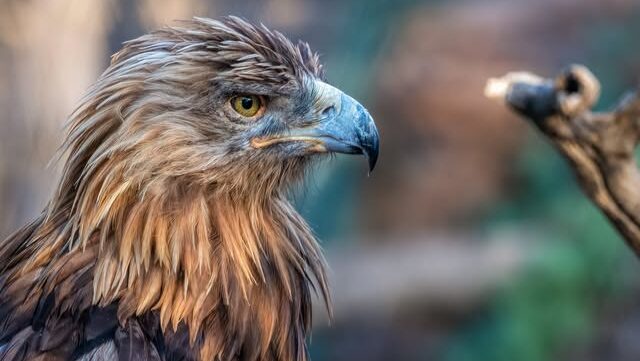
The Golden Eagle is the national symbol of Albania, called Shqipëri in its own language, which translates as ‘Land of the Eagles’. The double-headed eagle on the flag represents the freedom, strength, and independence of this bird of prey.
Sadly, fewer than 25 to 63 breeding pairs remain in Albania, a decline of 50 to 60% over the past two decades, driven by illegal killing, poisoning and habitat loss. Spotting one riding thermals above the Accursed Mountains on a hiking trip is a majestic sight worth pausing for. You are most likely to see them on our North Albania activity holiday although there is always a chance for a lucky sighting in mountainous areas across the Balkans.
4. Eurasian Golden Jackal: the Balkans’ nocturnal canine
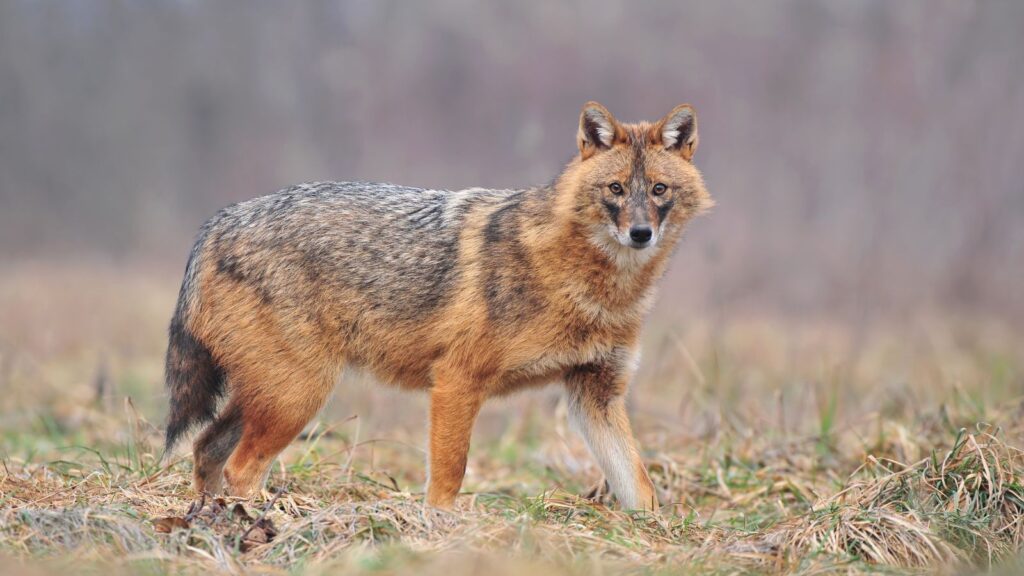
You are far more likely to hear a Golden Jackal than see one. Nocturnal and cautious, these wolf-like canines announce themselves after dark with a high-pitched wailing howl that carries across open valleys.
They have a sleek coat ranging from pale yellow to tawny in winter, and shorter legs than a wolf. Opportunistic, they feed on whatever the landscape offers: rodents, birds, reptiles, fruit and scraps.
Despite their numbers sitting at around 200 individuals in Montenegro, they are still subject to regulated hunting seasons, which remains a point of contention among conservationists in the region. They are listed as Least Concern on the IUCN Red List due to their high adaptability and wide distribution. In Croatia, however, the state compensates farmers for any damage caused by jackals, and hunting wild animals is banned.
5. Wild Boar: the Balkans’ truffle-loving forest dweller
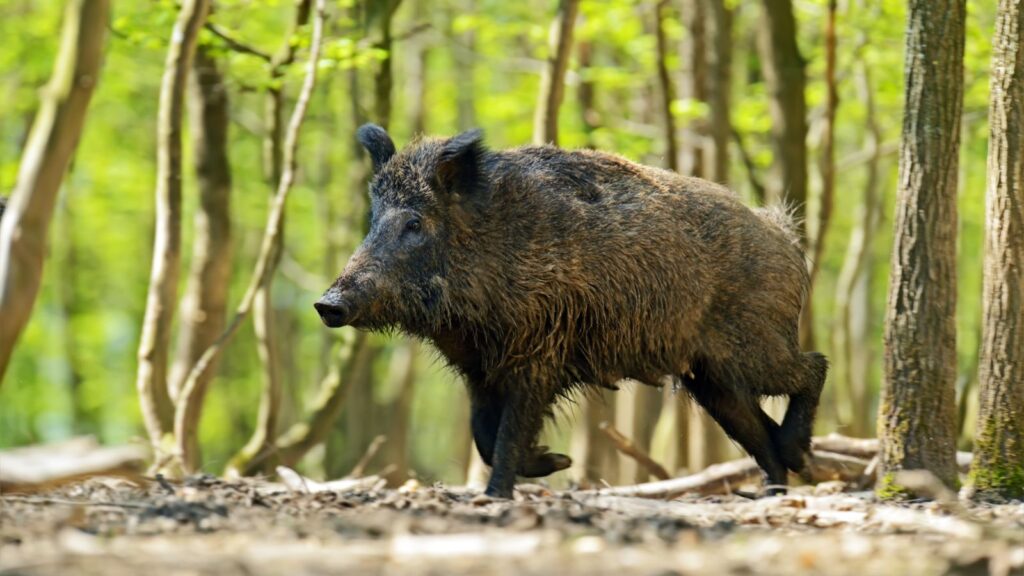
Also known as a wild pig or wild swine, these woodland rootlers are nocturnal, but we have it on good authority from past guests that some of them didn’t get that memo. Fear not if you do encounter one on a hike, like most wild animals, they’re shy and would only bite if cornered.
They thrive in the mix of deciduous woodland and wetland habitat found across the Dinaric range, and the relative lack of intensive agriculture in these countries has been good for them. They also know where to root for truffles…
Related:
- Protecting the Dalmatian Pelicans of Lake Skadar
- The 7 best national parks in the Western Balkans
- 10 tips for travelling sustainably in the Balkans
6. Eurasian Brown Bear: the king of the Dinaric Alps
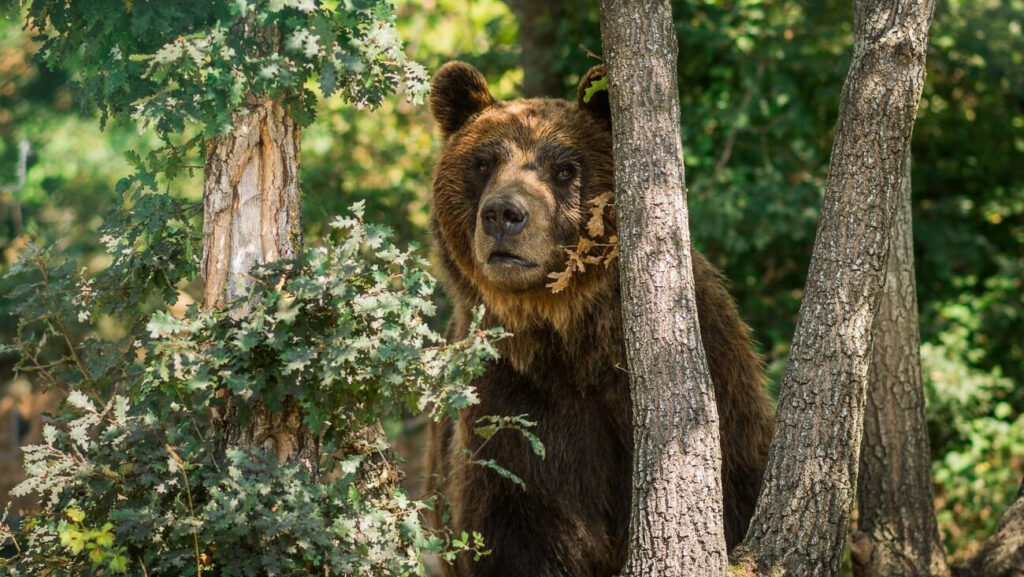
While Brown Bear is found across Europe, the largest populations thrive in Romania and the Western Balkans. Preferring densely wooded mountain regions, they are found in the Dinaric Alps, and in remote areas of Montenegro and Albania, like Valbona National Park. These elusive, nocturnal creatures are rarely spotted during daytime hikes and will almost always avoid human contact.
Make lots of noise while hiking usually scares away brown bears. If you find yourself suddenly very close, or encounter a mother with cubs, the general advice is to back away slowly and calmly, or to lie face down and cover your neck with hands. Very very rarely is this relevant!
For those not keen on a wild encounter, you see and support the conservation of Brown bears at the Prishtina bear sanctuary on our Kosovo Activity holiday.
7. Fire Salamander: a mystical amphibian
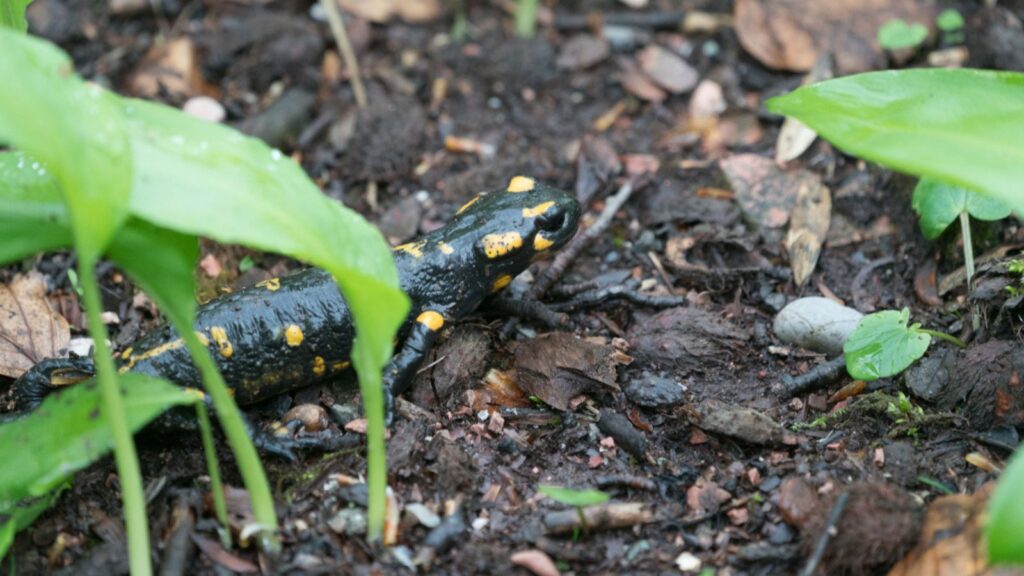
This striking amphibian is Europe’s largest salamander, growing up to 20cm. And they can live for up to 50 years! Characterised by their neon yellow and orange markings, they can be found in deciduous forests at altitudes of between 250 and 1,000 metres above sea level.
They like to sit in puddles and ponds or among fallen bark and leaf litter along hiking trails in the Dinaric Alps. They move slowly and seem unbothered by attention, which makes sense when you consider that some salamandars may have hatched 50 years ago.
Spring and autumn are the best seasons to look for them.
8. Hermann’s Tortoise: a loveable resident of the Balkan lowlands
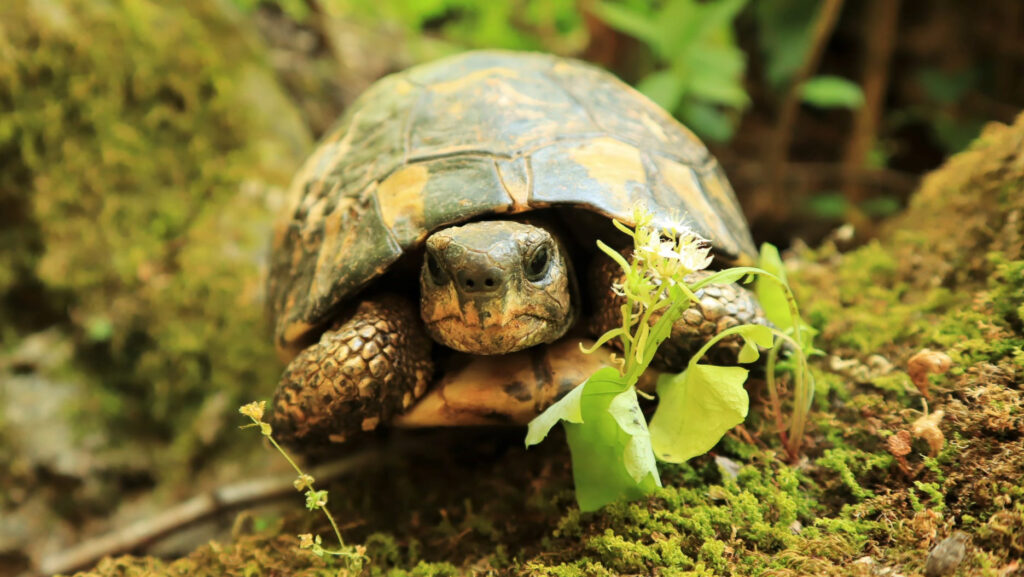
Hermann’s Tortoise (Testudo hermanni) is a charming resident of the Balkans that’s common to spot, from spring to autumn, in the lowlands. They like dry habitats, scrubland, rocky hillsides and sun-warmed meadows of Albania and Montenegro.
Unlike turtles, these land-dwelling tortoises pick their way around with a slow purposefulness. They can move faster than you’d expect when they want to: up to 8 km/hour.
Females grow larger and sport flat shells underneath, while males have curved undersides (for reasons you can guess…). At Lake Prespa, the males outnumber females 19 to 1 and some serious rebalancing is needed!
Related:
9. Flamingo: yes, you really can see flamingos in the Balkans!
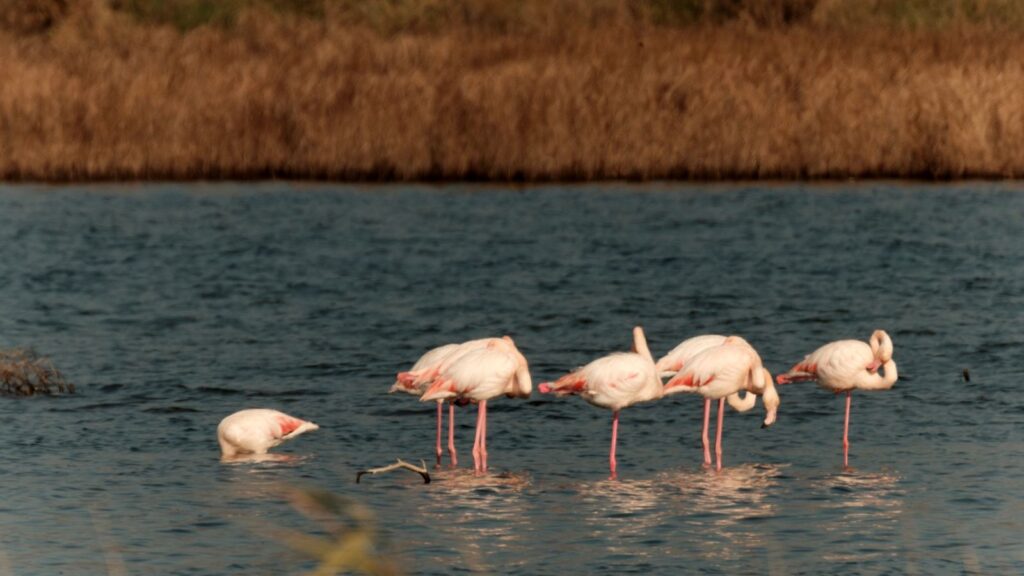
The rumours are true: pink flamingos are big in the Balkans! Who needs Mexico when you can see these blushing beauties in just a couple of hours’ flight time from the UK?
Flamingo colonies have established themselves at Divjakë-Karavasta National Park and the Vjosa-Narta lagoon in Albania, as well as the saltpans at Ulcinj in Montenegro.
The Albanian coastal lagoons in particular have become important wetland habitats where shallow water and mudflats give flamingos exactly what they need to feed.
If birdwatching in Albania is on your radar, the Vjosa-Narta lagoon at the right time of year is worth building into an extended stay on a South Albania Activity Holiday. Seeing them here in Europe still catches people off guard!
10. Eurasian Wolf: the inspiration behind Montenegrin boys’ names
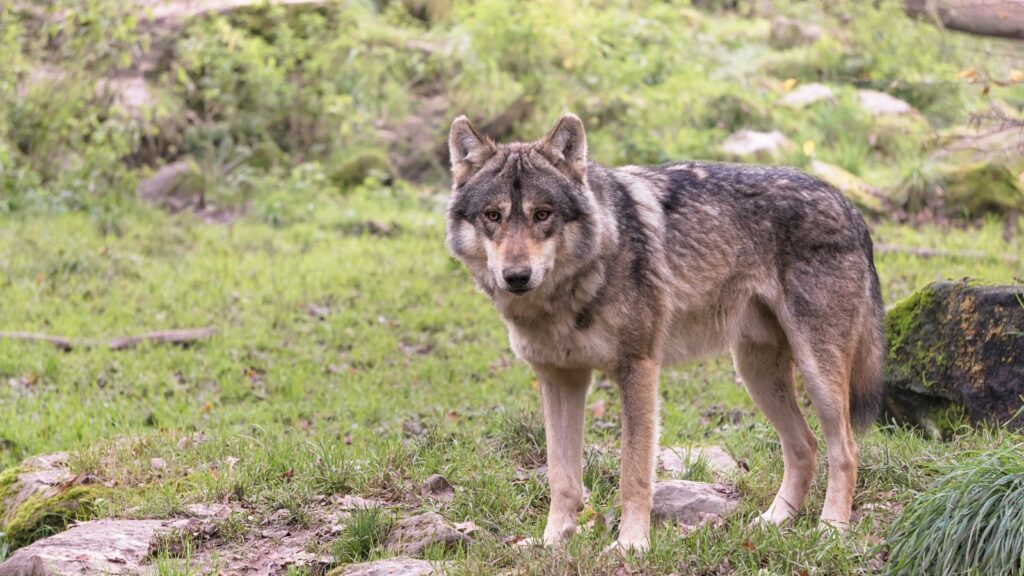
The Eurasian Wolf – aka the Grey Wolf – is the national animal of Serbia, and together with Montenegro, the name Vuk, meaning wolf, remains one of the most common boys’ names. They like forests, mountains and open terrain – places where the combination of low human density and intact prey populations has allowed them to hold on.
While they have disappeared from much of the rest of Europe, the Balkans has retained a viable population that is gradually growing. You are unlikely to spot one on a hiking trip, but you may hear them howling at a night…
11. Eurasian Scops-Owl: the tiny bird with the loud alarm call
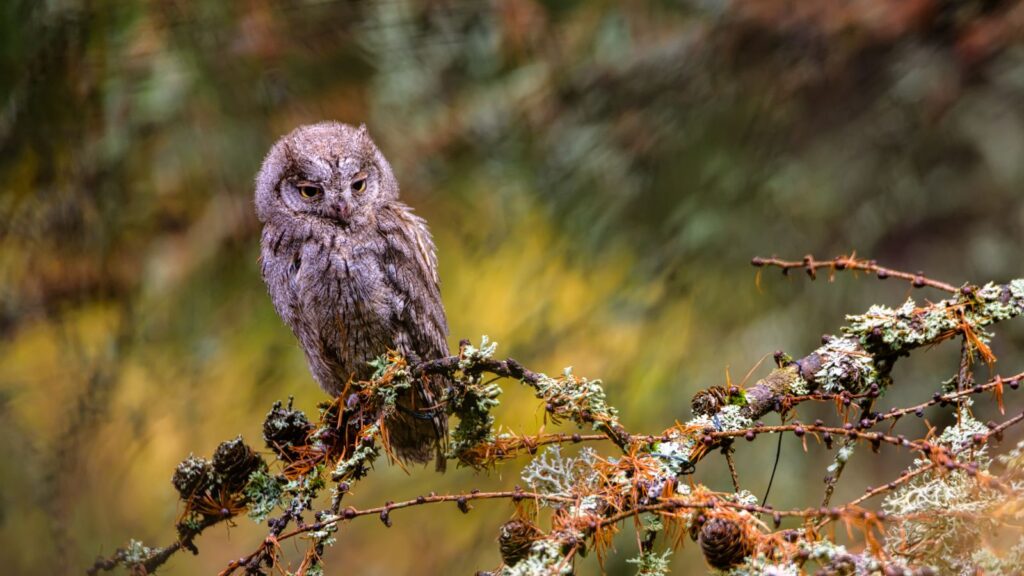
There have been many occasions when we’ve hunkered down for the night at Villa Miela and thought somebody’s car alarm had been set off when actually, it was the twit-twoos of the Scops-Owl. This small Old World owl is identifiable by its striking yellow eyes, streaky grey plumage and two crests which look like ears, distinguishing it from the Little Owl. Eurasian Scops-Owls are found across Europe and parts of Asia in wooded areas.
Lake Skadar National Park, with its mix of wetland, scrub and riparian woodland, is a perfect habitat for them. It’s a reliable place to hear the owl on a still evening, which, in the Balkans, is most evenings. You can join in from Villa Miela on our birdwatching holiday.
12. Balkan Lynx: Europe’s most endangered wild cat
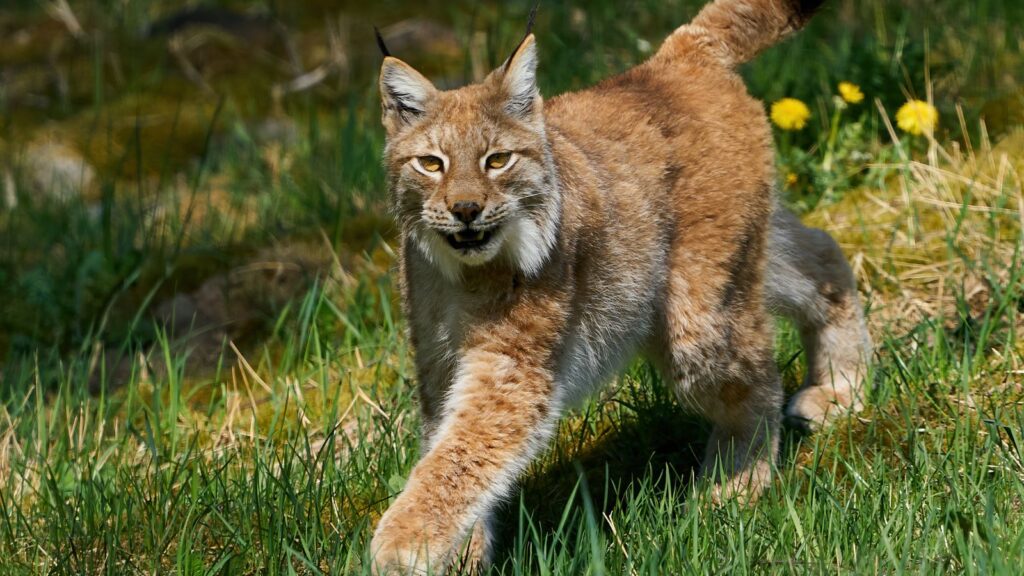
A subspecies of the Eurasian Lynx, this wild cat is Europe’s third-largest predator. It’s sadly endangered and therefore rare, but naturalists have found evidence of its habitation in Albania, Kosovo, the western parts of North Macedonia and more recently, Montenegro.
We won’t lie, it’s very unlikely you’ll spot one of these in the flesh. You have a better chance of encountering one when asking for change at a cafe in North Macedonia – the Balkan Lynx is a national symbol and pictured on the five dinar coin.
13. Bottlenose Dolphin: the Adriatic’s most playful residents
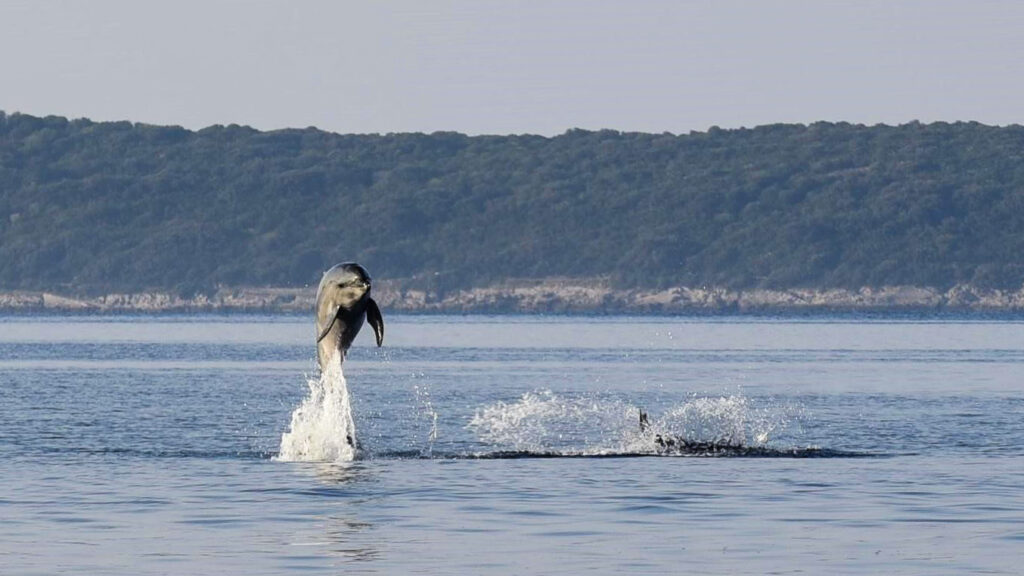
Dolphins are the playful stars of the Adriatic Sea, often seen off the coasts of Croatia, Montenegro, and Albania. The most common species in the Balkans is the bottlenose dolphin (Tursiops truncatus), famous for its intelligence and acrobatics.
These social creatures live in pods and can often be spotted leaping through the waves or following boats, whether at Karaburun-Sazan Marine Park in Albania or the Bay of Kotor in Montenegro. They play a key role in the marine ecosystem, but numbers are sadly under pressure due to habitat changes and pollution. For a closer look, we recommend spending a day with the Montenegro Dolphin Research Project.
14. Albanian Water Frog: a species found nowhere else on Earth
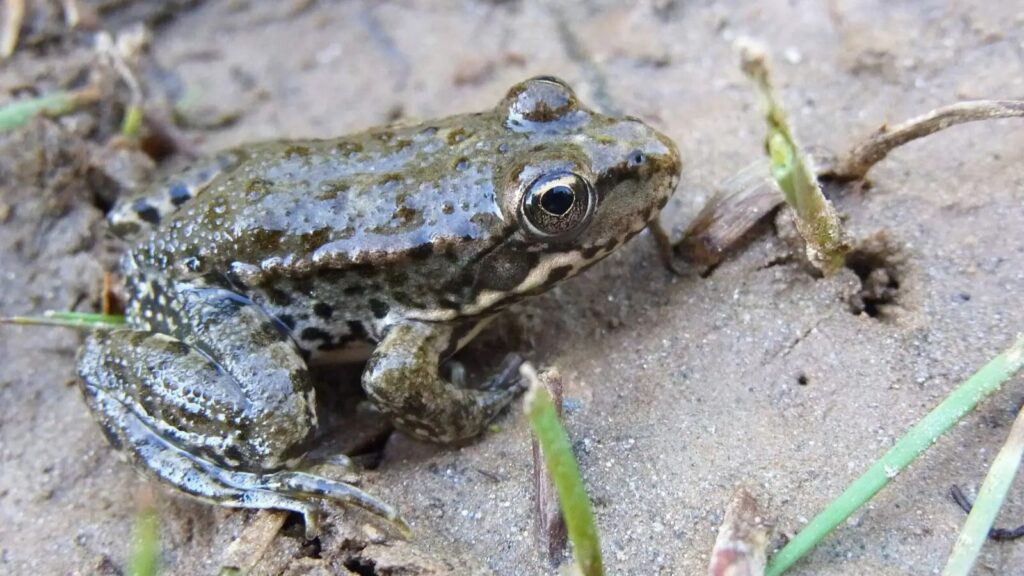
As the name suggests, this vocal little amphibian is native to Albania and parts of Montenegro. You can see (and hear) it at Lake Skadar/Lake Shkodra in Montenegro/Albania and around other rivers and lakes in the region. They’re particularly noisy around mating season in the spring, when their croak echoes all around the wetlands, especially at night.
Our South Albania Coast-to-Coast Holiday is great for spotting amphibious wildlife. From wild swimming in Lake Ohrid to exploring the hermit caves of Prespa and rafting on the Vjosa River, it’s designed for travellers who, like us, seek places that are truly off the beaten track.
15. Chamois: the antelope-goat of the Dinaric Alps
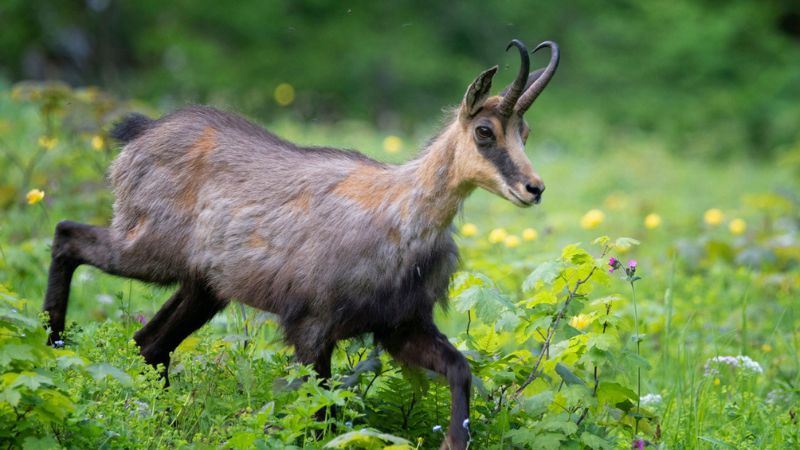
Our hiking groups in the mountains are always impressed to spot this sure-footed alpine species cut a striking figure on the mountainside. Semi goat semi antelope, they have warm brown coats that deepen to near-black in winter, with a pale face marked by a distinctive dark stripe running from the eye to the muzzle. Their legs are dark and sturdy, ending in specialised hooves with rubbery pads that grip rock like velcro. This is why they are able to walk along sheer cliff faces, somehow defying gravity.
Look out for their characteristic curved horns. As you hike, scan the high slopes with binoculars to spot them picking their way along a rocky ridge.
Frequently Asked Questions about Wildlife in Montenegro and Albania
Where to find wildlife in Montenegro?
Montenegro’s best wildlife areas are its national parks and remote mountain regions, where bears, wolves, and rare birds still thrive.
Durmitor National Park – bears, wolves, chamois, eagles in the mountains
Biogradska Gora National Park – one of Europe’s last old-growth forests; great for bears and woodland birds
Skadar Lake National Park – outstanding birdwatching (herons, pelicans, cormorants); otters too
Prokletije National Park – lynx, chamois, golden eagle in remote highland terrain
Where to find wildlife in Albania?
Albania offers some of the most diverse wildlife habitats in the Balkans, from coastal lagoons to rugged mountain ranges. These protected areas are the best places to experience it:
Prespa National Park – terrapin, cormorants, otters, bears (rare) in surrounding forests
Lake Shkodra/Skadar (shared with Montenegro) – Dalmatian pelicans, waterbirds, otters, jackal
Llogara National Park – wolves, wildcats, birds of prey in the Ceraunian Mountains
Karavasta Lagoon (Divjakë-Karavasta NP) – flamingos, pelicans, wading birds; loggerhead turtle nesting nearby
Albanian Alps / Theth and Valbona National Parks – bears, wolves, chamois, eagles
When is the best time to see wildlife in Albania?
Spring (Apr–Jun) and autumn (Sep–Oct) are ideal — birds are migrating, mammals are active, and it’s not too hot.
Are there dangerous animals in Montenegro and Albania?
Bears, wolves and lynx are present but very rarely seen — they avoid humans. Follow standard precautions in forests (make noise, don’t leave food out).
Do I need a guide?
In the Balkans, it is always better to have a guide with you, especially in remote areas like Prokletije or the Albanian Alps. Guides know animal territories and safe trails. That said, it can be hard to find specialists in wildlife in Montenegro or Albania who also have good English. If you plan to travel independently, it is best to contact the national parks directly and ask. For something more tailor-made, we can help you craft an itinerary around wildlife spotting, because we know the local experts who can make it happen. Send us an email or WhatsApp message to talk more.
Which of your trips is best for a wildlife holiday?
All of our trips offer excellent wildlife opportunities in the Balkans, depending on what you want to see.
We have a whole tour dedicated to bird watching in Montenegro, at Skadar Lake and Durmitor national parks. Skadar Lake is among the best sites for waterbirds in the Balkans, with rare species like the Dalmatian pelican. You will also see them on our Lake Skadar activity holiday.
On our North Albania activity holiday you’re likely to see the many wonderful animals who live in the wild Accursed mountains.
Our Montenegro hiking adventure is also great for spotting everything from eagles to (potentially) hearing wolves and seeing chamois
Or, we can craft a Tailor-made itinerary around wildlife spotting with our great network of local guides.
For every trip booked, we donate 1% to local conservation, so by booking with us, your visit helps support Balkan wildlife too.
Feeling inspired? Subscribe to our free monthly newsletter for more Balkan travel inspiration, 5% off tours, and first dibs on our new trips and offers.
Comments