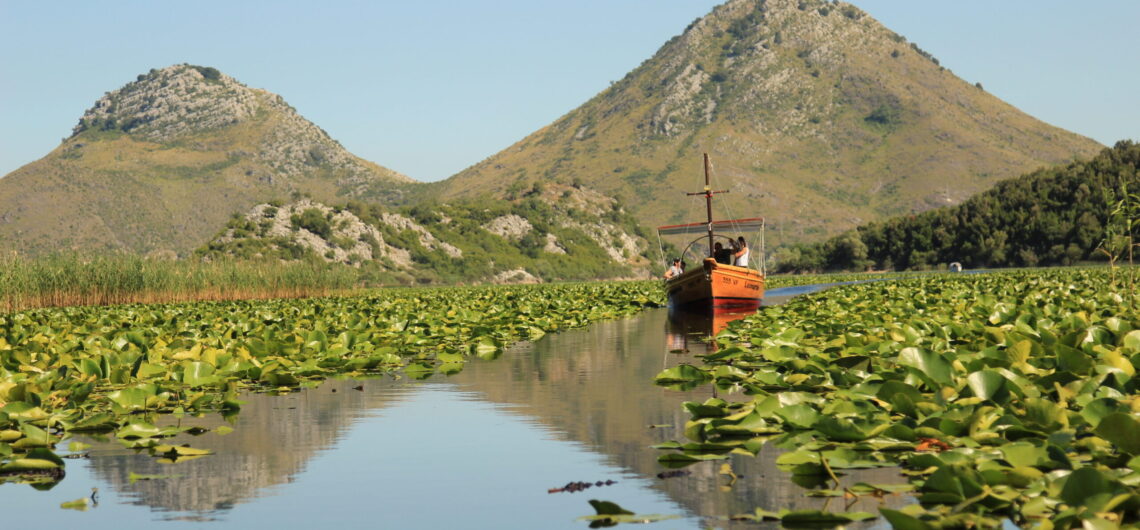
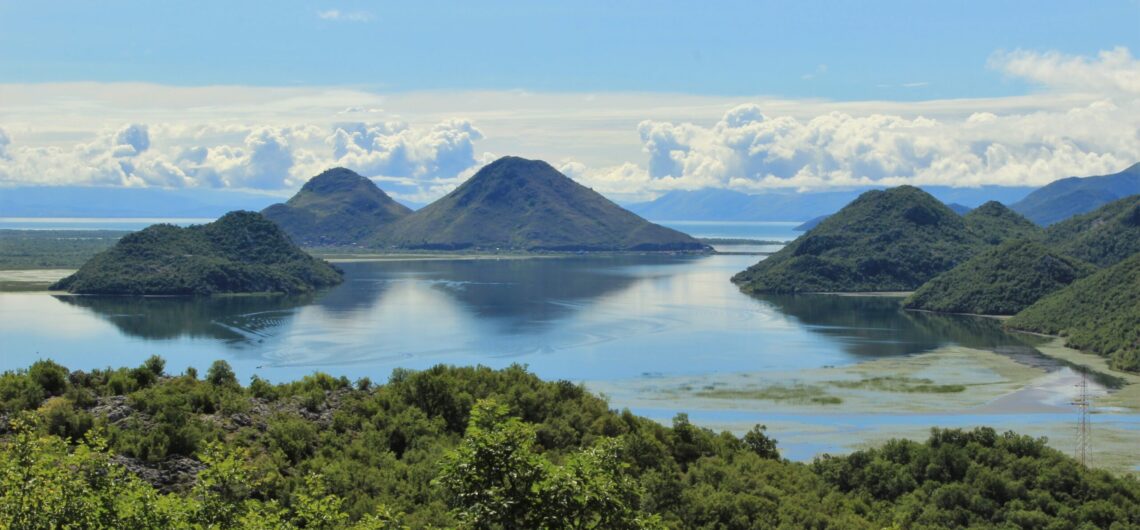
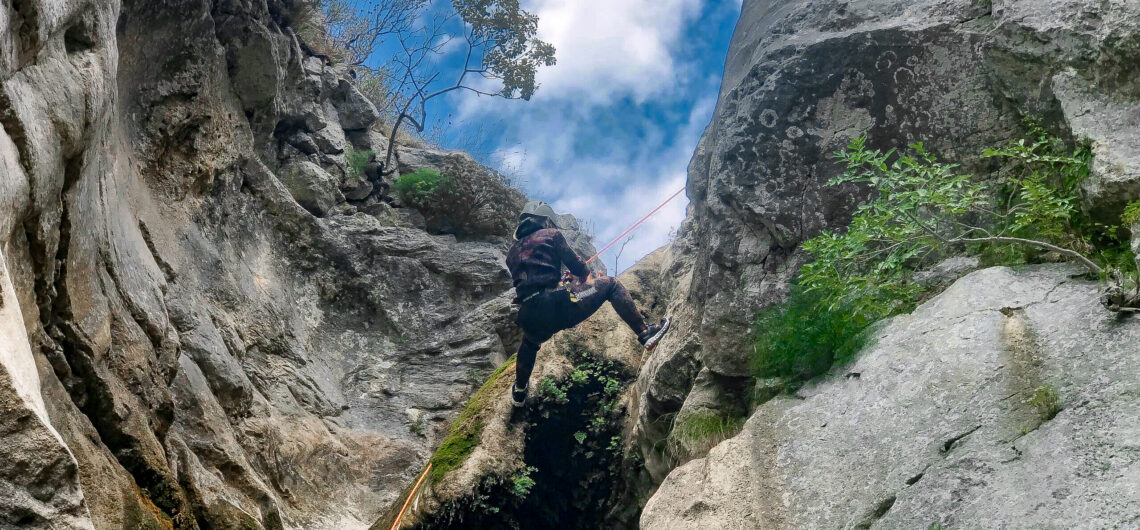
If you’re looking for the best places to go canyoning in the Balkans, you’re in the right place. From Montenegro’s dramatic gorges to Bosnia & Herzegovina's hidden turquoise pools, this region is by default one of Europe’s top canyoning destinations. We've been sliding and scrambling through the Balkans' wild rivers for more than a decade, so it's time to share what we've learnt. Many canyons in the Balkans are still relatively unknown, meaning you can experience incredible canyoning adventures without the mass tourism found in the Alps or Pyrenees. Below we explain what canyoning actually involves and round up some of our favourite spots to do it, from Montenegro and Croatia, to Serbia and Bosnia & Herzegovina. Ready for an adrenalin adventure? Join us for guided canyoning in Montenegro or the Balkans on one of our multi-active holidays. Jump to: What is canyoning? The best canyoning spots in Montenegro The best canyoning spots in Serbia The best canyoning spots in Croatia The best canyoning spots in Bosnia & Herzegovina FAQs What is canyoning? Canyoning (sometimes called canyoneering) can mean different things. In parts of the Balkans you may see “canyoning” advertised, but it is simply walking or wading through a canyon or river gorge – fun, but on the softer end of adventure travel. In this guide, we're focusing on canyoning as a proper outdoor adventure sport that involves descending through a canyon using a mix of techniques, which include: Abseiling (rappelling) down waterfalls Sliding down natural rock chutes Jumping into deep pools Swimming through narrow gorges Scrambling over rocks It's exhilarating, fun and requires specialist equipment such as ropes, harnesses, helmets and wetsuits. On our trips, you will always be guided by licensed professionals who will manage the ropes as you navigate your way through the natural watercourse and
If you’re looking for the best places to go canyoning in the Balkans, you’re in the right place. From Montenegro’s dramatic gorges to Bosnia & Herzegovina’s hidden turquoise pools, this region is by default one of Europe’s top canyoning destinations. We’ve been sliding and scrambling through the Balkans’ wild rivers for more than a decade,
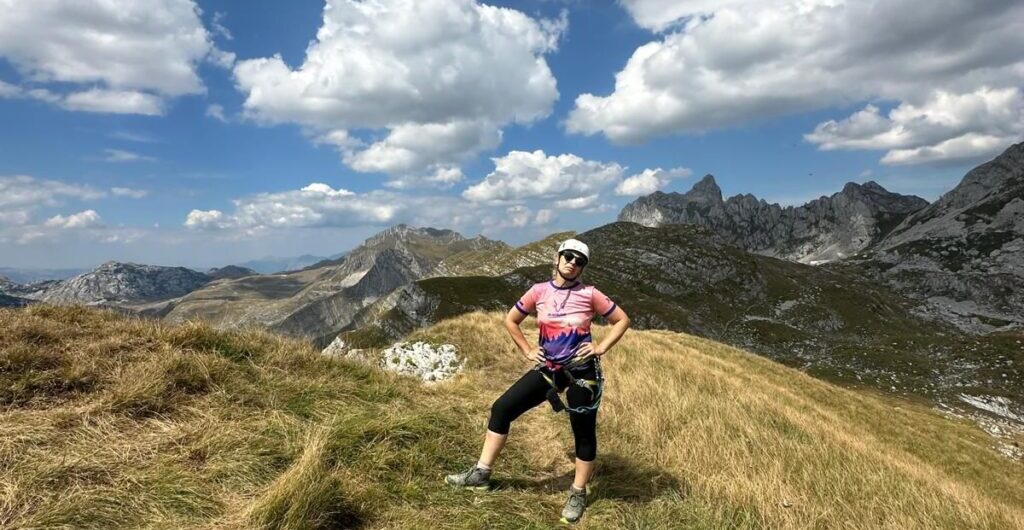
Given that Undiscovered Balkans started life in Montenegro, it feels only right to introduce you to the woman leading the way on our Montenegro family adventure. Meet Ana; a true local, and the kind of companion who knows every bend in the road, hidden trail and story worth telling. We chat with Ana in winter when she’s in Podgorica resting and recharging before the busy months ahead (which seem to start earlier every year). Ana has spent years guiding travellers through Montenegro, first on cultural tours, and now on active family holidays that take in Via ferrata, kayaking through the Tara Canyon or hiking Montenegro’s wild terrain. In summer she bases herself in Kotor. When guests arrive, Ana always tells them: "By the end of this trip I want you to teach me something I didn’t know. I’m local here, but you’re local somewhere else. Let’s swap stories." Tell us a little bit about you. What inspired you to become an adventure guide? I trained as an ambassador in Podgorica, but I started working as a culture tour guide because I love Montenegro and wanted to share this love. In many ways, I'm still an ambassador. Then, I leapt at the chance to work on Undiscovered Balkans' adventure tours because it offered so much variety. One day I'll be on the coast, the next in the mountains, the day after watching pelicans on Lake Skadar. I still try to teach Montenegrin culture along the way. I tell stories linking to the nature, geography and history around us, or whatever fits the journey we’re on. What is your favourite thing about being an adventure guide? I love the 7-day structure because I get to stay longer with a group and we see more places together. Family trips are always fun because they
Given that Undiscovered Balkans started life in Montenegro, it feels only right to introduce you to the woman leading the way on our Montenegro family adventure. Meet Ana; a true local, and the kind of companion who knows every bend in the road, hidden trail and story worth telling. We chat with Ana in winter
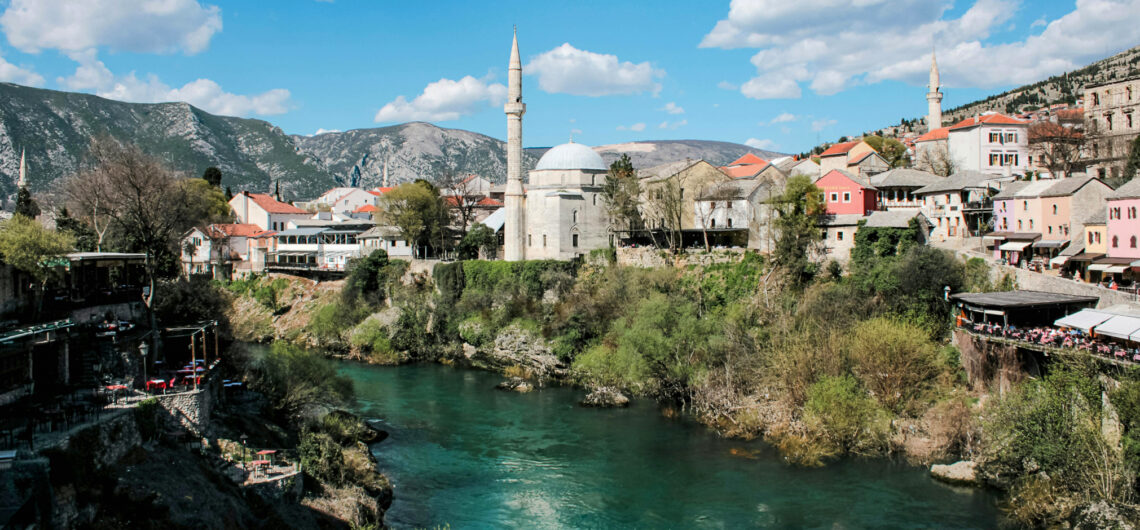
Cultural heritage isn’t kept behind museum glass in the Balkans—it’s lived, breathed, eaten, sung, crafted and danced. From Ottoman cities like Berat and Mostar to natural wonders such as Durmitor National Park, Albanian folk singing to lacemaking in Croatia, UNESCO World Heritage in the Balkans is a multi-sensory tapestry of the region’s diverse natural and cultural offerings. In light of Lake Skadar being nominated to become a UNESCO Biosphere Reserve in October 2025, we’ve rounded up some of the region’s cultural and natural highlights—many of which you can see on our holidays in Montenegro, Albania, Serbia, Bulgaria and Croatia. UNESCO natural heritage in the Balkans Durmitor National Park, Montenegro Characterized by towering limestone peaks and glacial lakes, Durmitor National Park in Montenegro is undeniably breathtaking. It’s home to one of Europe’s deepest canyons and the stunning Black Lake. “I’ll never forget my first glimpse of Durmitor National Park, like a real-life Hobbit land, all jagged peaks in stunning formations, and wispy clouds, with wild horses roaming the grassy meadows,” says UB co-founder Emma. “The landscape’s so epic it’s hard to take it all in.” Visit Durmitor National Park on our Montenegro family activity holiday. Lake Skadar, Montenegro & Albania Lake Skadar straddles the border between Montenegro and Albania and is the largest lake in Southern Europe at roughly 400 square kilometres (is actual size depends seasonal water level variations). This biodiversity hotspot is teeming with wildlife and an important nesting site for the endangered Dalmatian Pelican, which our guests love to spot during kayaking safaris on our Lake Skadar holiday, and on boat trips. In 2025, the Montenegrin and Albanian governments both nominated Lake Skadar to become a UNESCO Biosphere Reserve, which means it will enjoy greater environmental protection and extend the so-called 'Amazon of Europe' deeper into Southeast Europe.
Cultural heritage isn’t kept behind museum glass in the Balkans—it’s lived, breathed, eaten, sung, crafted and danced. From Ottoman cities like Berat and Mostar to natural wonders such as Durmitor National Park, Albanian folk singing to lacemaking in Croatia, UNESCO World Heritage in the Balkans is a multi-sensory tapestry of the region’s diverse natural and
Booking your September sun holiday in Europe and not sure where to go? Look no further than the Balkans. Croatia, Albania, Montenegro and Bosnia & Herzegovina all remain hot and sunny well into October (which is why lots of our trips run until then). In fact, our active holidays such as hiking and kayaking trips are best enjoyed during shoulder season, when it’s slightly cooler. With the kids back in school, you’ll be holidaying with a more mature crowd—ideal timing as it’s wine making season and we’re known to linger longer at wineries for tastings when there are no children around. Or leave it until October for the chance to try making rakija and forage for pomegranates. Related: Festivals in Croatia, Montenegro, Albania, Serbia & Kosovo in 2026 'Race-cations' and marathons in the Balkans in 2026 How fit do you need to be for an active holiday? (plus 8-week training plan) Croatia in September Ever been island hopping in Croatia? We bet you’ve never done it like this. Choose between two action-packed adventures in Southern Dalmatia in which you’ll kayak to some of Croatia’s best kept secrets and have a chance to see Dubrovnik with far fewer people clogging up its cobbled streets. Based in Ston, our seven-day Multi-Activity Holiday in Southern Dalmatia takes place around the beautiful Peljesac Peninsula, an hour away from Dubrovnik. You’ll discover the rich nature of the Neretva Delta, marvel at the lost Roman city of Narona, sip and cycle in Croatia’s wine country, taste some of the world’s best oysters and hike ‘Europe’s Great Wall of China’. There’s also the option to visit Dubrovnik for the day. Alternatively, paddle to secluded beaches, hidden caves and picture postcard monasteries around the Elafiti Islands on our 10 day Croatia to Montenegro lake & sea kayaking holiday. We’ll
Booking your September sun holiday in Europe and not sure where to go? Look no further than the Balkans. Croatia, Albania, Montenegro and Bosnia & Herzegovina all remain hot and sunny well into October (which is why lots of our trips run until then). In fact, our active holidays such as hiking and kayaking trips
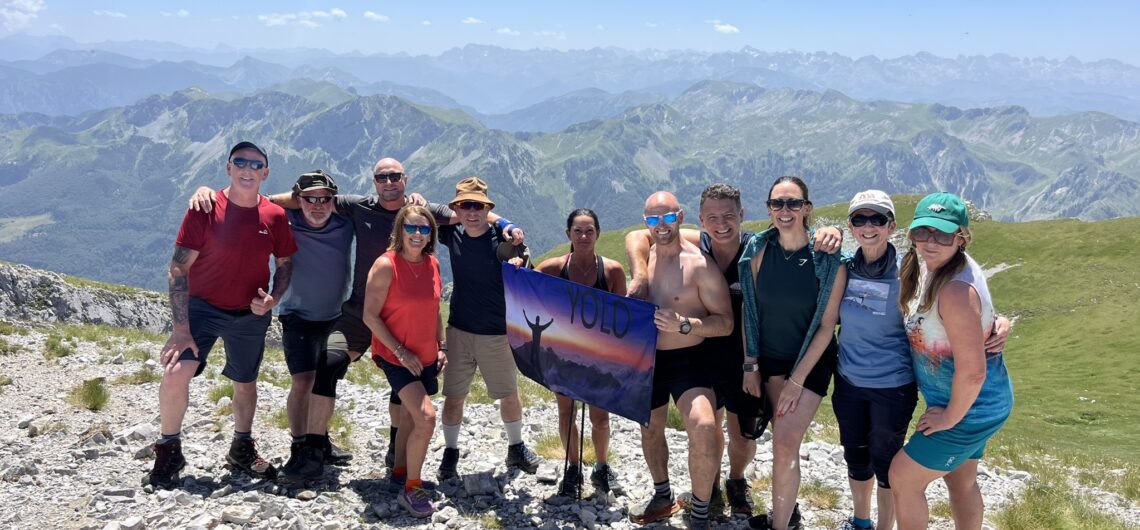
Ever considered hiking the Peaks of the Balkans (POTB)? Read what our past guest Simon and his hiking group YOLO thought. In July 2024, they embarked on our week-long Montenegro to Albania hiking adventure, which includes a snippet of the POTB trail. Here’s how they got on. British hiker Simon Crowther first laid eyes on the Balkans in 1997 when he was deployed in Bosnia and Herzegovina under NATO following the Bosnian War. Even then, in the aftermath of the devastation, he was in awe of the astounding natural splendor in the Balkans and vowed to come back. ‘I saw a heck of a lot of the country and it really blew me away just how stunningly beautiful it was,’ he says. 20 years later, he started holidaying with his family in Croatia, combining relaxing on the beach with mini road trips to Bosnia and Montenegro. The more he saw, the more he wanted to see (yep, we get that). And last year, he convinced his hiking group - YOLO - to pay a visit. YOLO (great name btw, guys) is a Northwest England-based walking group born from a men’s boxing club. It’s been going for almost 15 years and now has around 200 members, both male and female, of all ages and backgrounds. Throughout the year, the group gets together for hikes in Snowdonia, the Yorkshire Dales and the Lake District, and they also organise an annual overseas expedition. Past trips include Basecamp Everest in Nepal, Mount Tucolin in Morocco, and Spain’s Sierra Nevada. Why the Balkans? ‘It was a bit of a competition between me and Kevin [one of the YOLO founders]. Kevin wanted to go around Mont Blanc. There's a hike around the foothills… and I thought that was a bit pedestrian, a bit boring. I wanted
Ever considered hiking the Peaks of the Balkans (POTB)? Read what our past guest Simon and his hiking group YOLO thought. In July 2024, they embarked on our week-long Montenegro to Albania hiking adventure, which includes a snippet of the POTB trail. Here’s how they got on. British hiker Simon Crowther first laid eyes on
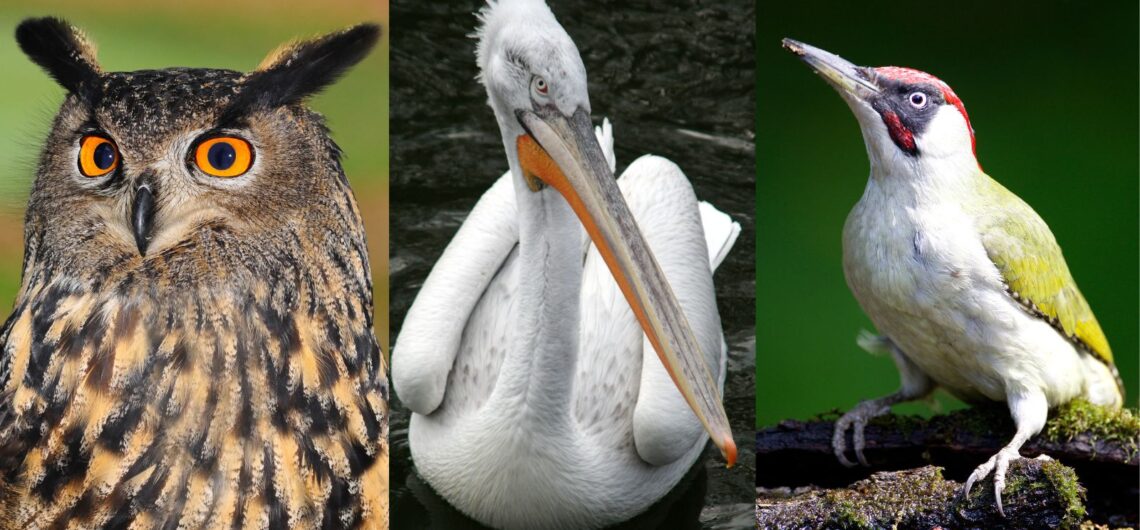
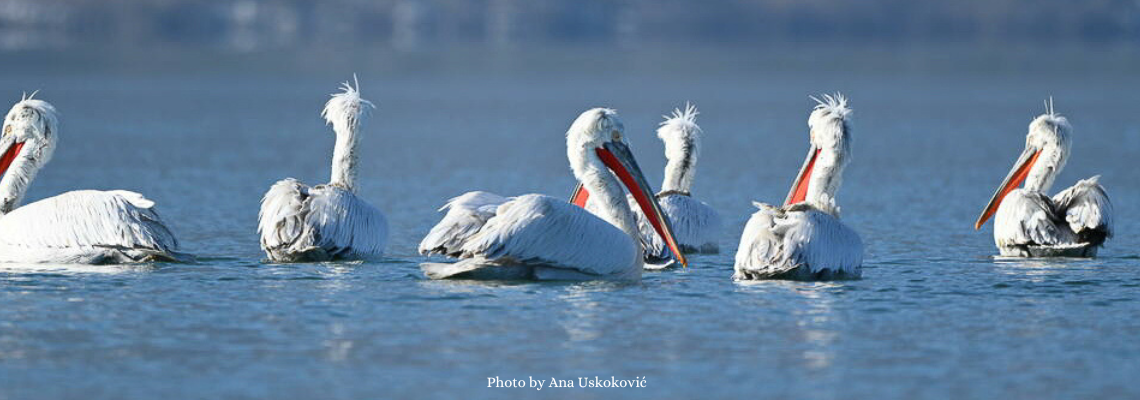
With such vast swathes of untouched wilderness in Montenegro, and indeed other Balkan countries, there’s a lot of wildlife to discover out there, particularly of the bird variety. Whether you’re a seasoned twitcher or a casual admirer of our feathered friends, we’ve listed 13 birds you can expect to see in Montenegro, where we run our birdwatching holiday, and other parts of the Balkans. Most of the birds below can be found around wetlands such as Lake Skadar, or mountainous regions like Durmitor; both locations on our birding week. How many can you tick off the list? 1. Dalmatian Pelican The Dalmatian Pelican is the world’s largest flying freshwater bird with males boasting a wingspan of up to 3.5 metres and weighing around 9.5kg. These remarkable birds have called Lake Skadar home since at least the 19th century and when we first arrived there in 2008, they were critically endangered. Thanks to conservation efforts since then which we’ve supported, their numbers are on the rise. The work to save this species is far from done, but they’re heading in the right direction - there’s now a 300-strong colony at Lake Skadar (Lake Shkodra on the Albanian side). You can also find them on Lake Prespa, shared by Albania and Greece, which you can visit on our South Albania holiday. 2. Pygmy Cormorant Pygmy Cormorants are about the size of a mallard and their colour changes slightly with the seasons. In summer, adults are dark with a bronze-green hue and in winter, they have a white throat and their breast feathers turn lighter. Their short bill, stubby neck and small body distinguishes them from other cormorants. These little freshwater birds can be found in wetlands and deltas across southeast Europe, with Lake Skadar home to the world's second largest colony. When
With such vast swathes of untouched wilderness in Montenegro, and indeed other Balkan countries, there’s a lot of wildlife to discover out there, particularly of the bird variety. Whether you’re a seasoned twitcher or a casual admirer of our feathered friends, we’ve listed 13 birds you can expect to see in Montenegro, where we run
“Look up! Pelicans! Dead Ahead...” "Oh yeah? Wow!" Catching a glimpse of these extraordinary birds is a highlight for so many guests on our kayaking trips at Lake Skadar, but did you know that holidaying with us has helped fund urgent Dalmatian Pelican conservation work? Thanks to our Book to Give Back scheme, we have been able to make the biggest donation in our company’s history to help one of the world’s most threatened waterbirds continue to thrive in Montenegro at a time of crisis. We donated €3,000 to our charity partner CZIP, Montenegro’s equivalent of the RSPB, in April last year, and as a direct result, works completed in December to give vital new protection to the colony at Lake Skadar. A new nesting site they adopted last year is now safeguarded with buoys and signs to keep people at a safe distance and help these magnificent birds to breed undisturbed. The protection measures come just in time for winter breeding season — ornithologists counted 49 nests on the island in last week's winter count — and we’re all hoping to see lots of healthy chicks come March. On the brink The Dalmatian Pelican is the world’s largest pelican and heaviest flying freshwater bird, weighing in at 9.5kg respectively with a wingspan of up to 3 metres. They can be found in wetlands across southeast Europe, including a population of 71 breeding pairs at Lake Skadar, which is shared by Montenegro and Albania (Albanian name, Shkodra Lake). Sizeable colonies are also at Romania's Danube-Delta, Albania's Divjakë-Karavasta, and on Lake Prespa, shared by Albania and Greece. Sadly, the species is endangered. Irresponsible tourism and poaching near nesting sites are two of the greatest human threats, next to construction near their habitats and natural threats such as bird flu and extreme
“Look up! Pelicans! Dead Ahead…” “Oh yeah? Wow!” Catching a glimpse of these extraordinary birds is a highlight for so many guests on our kayaking trips at Lake Skadar, but did you know that holidaying with us has helped fund urgent Dalmatian Pelican conservation work? Thanks to our Book to Give Back scheme, we have
Are you coming to find your zen on our Montenegro yoga retreat next year? Or considering it? Get a taste of what's to come as we catch up with our lead yogi Fiona Morris. Fiona is a yoga & pilates instructor and personal trainer based in Nottingham, UK. She turned to yoga after her corporate job left her feeling burned out and after a scary wake up call one night (which we’ll let her explain below), she turned to yoga full time as a teacher. And luckily for us she did because her first retreat with us at Villa Miela this year was a huge hit all around. Read on to find out more about Fiona and the retreat. Places are available now for one of the 2025 yoga retreats, book here. How long have you taught yoga for and what inspired you to do it? I’ve been teaching since 2016. Initially, I completed the teacher training to deepen my own practice after burnout from a hectic and unfulfilling corporate career. I was in a graduate management role that had me working a weekly rotation of 12-hour day shifts followed by 12-hour night shifts and I drifted off at the wheel one night. Luckily, I only curbed it before waking up but that was enough of a wake up call (excuse the pun), to know that I needed out. The plan initially was to teach one or two yoga classes a week around a full time job again, which I did in the beginning, but I just loved teaching so much. It felt like such an honour to hold a safe space for people for an hour or so, it all felt so right, so I took the plunge and went full-time freelance with it. How did you come to
Are you coming to find your zen on our Montenegro yoga retreat next year? Or considering it? Get a taste of what’s to come as we catch up with our lead yogi Fiona Morris. Fiona is a yoga & pilates instructor and personal trainer based in Nottingham, UK. She turned to yoga after her corporate
Wait what? Balkan countries produce wine? Yes they do, as it happens, and some are not just good. They're VERY good. Wine season is fast approaching and we just so happen to have holiday bases in two of the finest wine countries in the Balkan region: Croatia and Montenegro. In late August and September, it’s busy on the vineyards as vintners begin harvesting, but they’ll always welcome visitors. On both our week-long adventure near Dubrovnik in Croatia and our original crowd pleaser holiday at Villa Miela in Montenegro, we’re surrounded by family-owned vineyards which offer tours and tastings. If you’re joining us on a trip at this time of year, know that you’ll certainly get a chance to sample something grape. Read on for a taste of Balkan wines. Dingač Croatian wine Croatia is best known for full bodied red varieties which grow mostly along the coast in Dalmatia, the most famous being Dingač. It’s found in the steep hilly subregion of the same name on the Pelješac peninsula in Southern Dalmatia. Dingač is not a grape variety itself, it’s made from the Plavac Mali (‘little blue’) grape of Dalmatia. It was officially protected under Croatian law as a premium wine in 1965, but the tradition of winemaking in the Dingač region goes back centuries. Likened to a Mediterranean wine, Dingač is big, fruity and tannic, so it’s a perfect pairing to those hearty meat dishes and strong cheeses. On our week-long Croatia activity holiday, we have a sip and cycle day around the vineyards of Dingač. It’s a wonderful cultural experience with epic views of the vines against the backdrop of the Adriatic. Subscribe to our monthly newsletter for travel inspiration and offers on holidays in the Balkans Vranac & Krstač of Montenegro Lake Skadar is Montenegro’s wine country
Wait what? Balkan countries produce wine? Yes they do, as it happens, and some are not just good. They’re VERY good. Wine season is fast approaching and we just so happen to have holiday bases in two of the finest wine countries in the Balkan region: Croatia and Montenegro. In late August and September, it’s
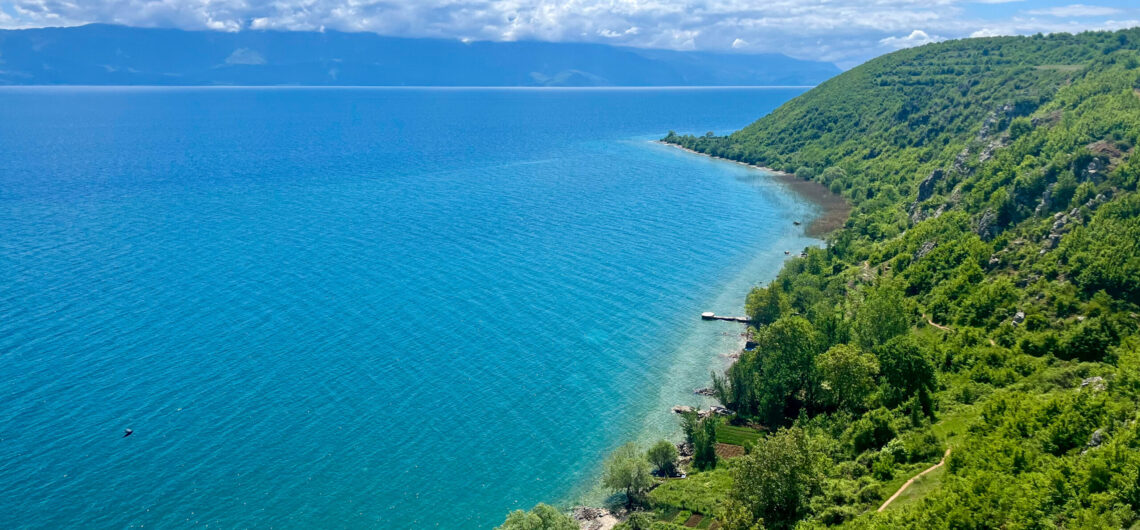
Often considered Montenegro’s answer to Lake Como, the glorious Lake Skadar in the south has no shortage of epic views, stunning wildlife and intrepid adventures to experience. That’s why so many of our holidays are based there. We caught up with co-founder Ben who first designed this one-of-a-kind kayaking holiday in 2018. "These kinds of paddling trips are popular in Sweden, the US, Canada and New Zealand but no-one had ever thought to put one together on the largest lake in the Balkans," says Ben. "The staggering scenery and sheer variety of terrain practically demanded someone create this itinerary!" "It’s like a Lake Skadar Greatest Hits reel. Montenegro’s most famous viewpoint? Check. Paddling past waterlily fields? Check. Jumping off bridges? Check. Chasing kingfishers down water channels? Check. Learning to catch your own dinner and make fire with no matches? Visit a lake-side village only accessible by boat? See some Dalmatian pelicans? Check, check and check! And if you book this season, you’ll be some of the first visitors to see the new Dalmatian Pelican colony on Mali Moračnik island." It’s like a Lake Skadar Greatest Hits reel This adventure didn’t come together overnight. Once it was up and running, it did take a few seasons to get right; our adventure leaders had to make adjustments according to fluctuating water levels (some floodplains dry up in July) and how much ground - or rather, water could be comfortably covered by their fellow kayakers in various temperatures. Experience was key to string the best beauty and nature spots together into an epic 60-80km expedition. "I think we've got the balance spot on now so that the trip can be enjoyed by both experienced paddlers and relative beginners," says Ben. "I was really keen to avoid the need for a road-bound support crew,
Often considered Montenegro’s answer to Lake Como, the glorious Lake Skadar in the south has no shortage of epic views, stunning wildlife and intrepid adventures to experience. That’s why so many of our holidays are based there. We caught up with co-founder Ben who first designed this one-of-a-kind kayaking holiday in 2018. “These kinds of
This website uses cookies to improve your experience. You may opt-out if you wish. Cookie settingsACCEPT
Privacy & Cookies Policy
Privacy Overview
We use cookies to improve your experience while navigating our website. Of these cookies, those that are categorized as necessary are stored in your browser as they are essential for the basic functionality of the website. We also use third-party cookies that help us analyze and understand how you use this website. These cookies will be stored in your browser only with your consent. You also have the option to opt-out of these cookies. However, opting out of some of these cookies may have an effect on your browsing experience.
Necessary cookies are absolutely essential for this website to function properly. This category only includes cookies that ensure basic functionality and security features of the website. These cookies do not store any personal information.
Any cookies that may not be particularly necessary for this website to function and are used specifically to collect user personal data via analytics, ads, other embedded contents are termed as non-necessary cookies. It is mandatory to procure user consent prior to using these cookies on this website.