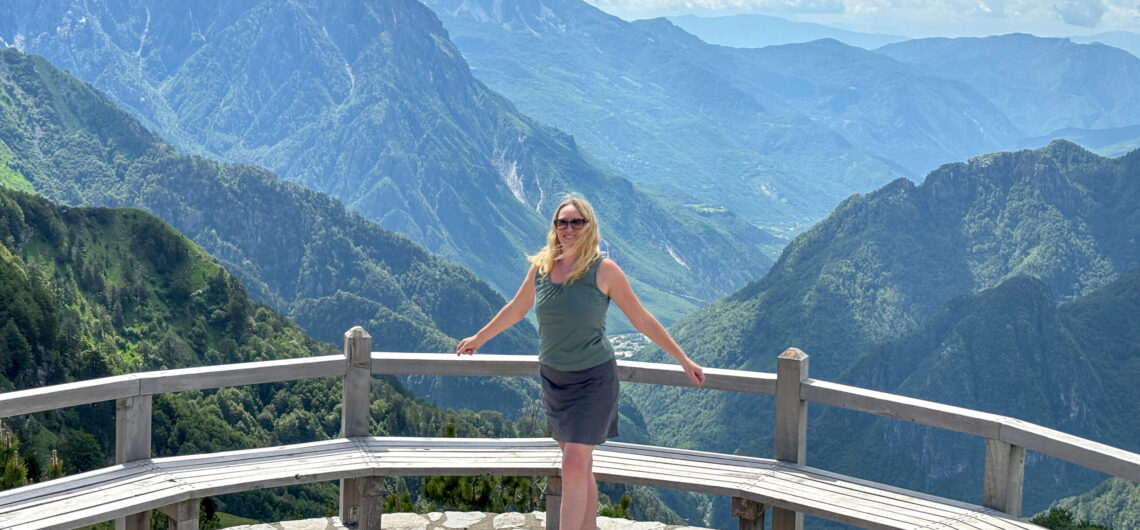
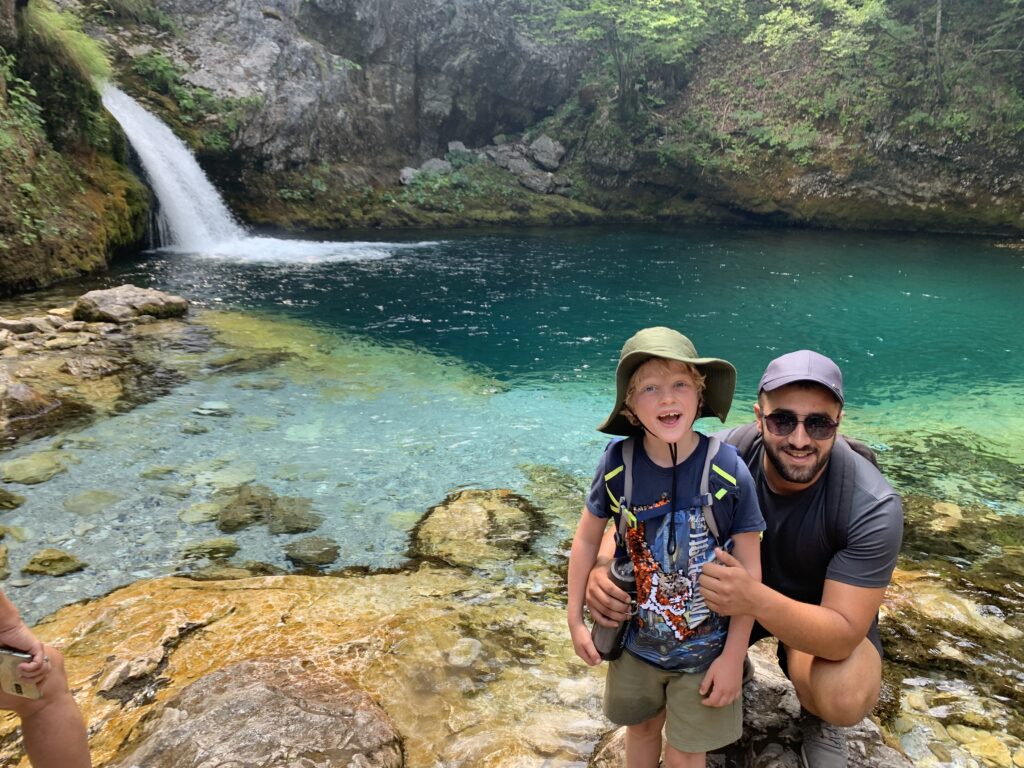
Mention you’re heading to Bosnia, Albania, Serbia, or Kosovo and someone will inevitably ask “is that… safe?” The answer, with enormous confidence, is yes. Overwhelmingly, statistically, experience-backed yes. We travel to Albania and the rest of the Balkans as a family, with kids and as a solo female traveller on the Undiscovered Balkans team too.
While there were conflicts in the region 30 years ago, those days are firmly behind us. What remains is extraordinary food, boundless hospitality, a family-friendly society and locals who will invite you in for coffee before you’ve even asked for directions.
A word about recent protests…
Questions we’re seeing being asked by tourists on social media:
Is Albania safe to visit in 2026? Albania protests — should I cancel my trip? Is Tirana safe for tourists during protests? Are the Albania protests affecting tourists? Is the Albanian coast safe to visit?
Here’s our response:
The recent wave of protests, in Albania and also Serbia, have been peaceful, youth and civil society-led protests aimed at infrastructure issues, and halting billionaire-backed projects from destroying nature.
In Albania, there are no riots — the point of these protests is they are peaceful. Most days, you will just see crowds of people walking through the city together, holding placards, their kids, or even an inflatable pink flamingo. Families bring their children and set up street crèches. It’s colourful, environment-focused and many people bring cardboard flamingos or blow-up ones as the protest symbol.
The Flamingo protest is actually something you might find inspiring to see on our Albania holidays, although we hope for a swift resolution preserving Albania’s rich natural heritage (please sign and share the petition).
In Serbia, the peaceful protest routes are clearly marked and shared on social media — so you can avoid the city centre at busy hours. If you join our Serbia Activity Holiday, we do spend time in Belgrade, but we stay up-to-date on the routes.
Balkan countries are among Europe’s safest
A UN report on crime in the Balkans found that Western Europe has over twice the burglary, over four times as much assault, and fifteen times as much robbery as South East Europe. For example, Croatia ranks 19th out of 163 countries on the Global Peace Index for 2025, keeping it firmly in the top 20 safest countries in the world. A weekend in Rome carries more statistical risk than two weeks bouncing between Kotor, Sarajevo, and Sofia!
Croatia, Montenegro, Bosnia & Herzegovina, Serbia, North Macedonia, Kosovo, and Bulgaria all welcome millions of tourists every year with low violent crime rates and strong hospitality traditions, where the biggest danger is eating too much čevapi.
So, with that established, here are the tips that will help you feel safer in situations which we can’t always predict. The Balkans are not a risk to manage, but having common sense as a traveller is always good!
Check out our small-group adventures in the Balkans.
How to Travel Safely in the Balkans (Yes, it really is very safe)
Get travel insurance
This is the single most useful thing you can do before you visit the Balkans. Roads in northern Montenegro and rural Bosnia are, let’s say, characterful. Mountain weather changes fast. Adventures happen. Sort your insurance before you leave, not from a hospital waiting room in Podgorica!
Related: Driving in the Balkans: A guide to Albania, Montenegro & beyond
Check the legal requirements
Register as a tourist where required. Hotels and most short-term rentals will register for you, but there are some cases where you need to check. Tourists are required to register with local police within 24 hours of arriving in Montenegro and whenever they change address. If you’re staying with a friend or in a private apartment, check. Border police can ask for proof on your way out, and a €200 fine is a rotten souvenir.
Go easy on the moonshine
Watch out for the rakija/raki. It is delicious. It is also approximately the strength of rocket fuel. Balkan spirits contain around 53% alcohol, and being visibly drunk is considered a sign of bad character. Pace yourself, say “živjeli or “gazuar”, look your host in the eye, and stop before the third round. Nobody wins the rakija game.
Tread carefully with political chat
Avoid political rabbit holes. Each country in the Balkans has a complicated recent history and people feel it deeply. The Yugoslav wars, NATO bombing, Kosovo independence, who said what to whom in 1993: these are not first-date conversation topics. Listen more than you speak, and if things get heated, compliment the food. There is always excellent food to compliment.
Know your taxis
Taxis: agree on a price first and check for a meter. Uber does not operate across most of the Balkans. Taxis do, and though rare, some drivers will take advantage of tourists who don’t ask upfront. Agree on the fare before you get in, or use an app where available. We recommend CarGo app in Serbia and the Yellow taxi or Sarajevo cabs Whatsapp in Bosnia. If a price seems outrageous, it probably is. Also, taxi drivers can be very opinionated about politics. See above.
Don’t lose all your money on data roaming charges!
Use local SIM cards. Montenegro mobile providers like Telekom and m:tel offer prepaid plans with enormous data allowances for tourists for just €15 to €25. Similar deals exist across the region. Being able to navigate, translate, and call for help is worth far more than roaming charges.
Related: From eSims to currency: How to prepare for your trip to the Balkans
Stay on the hiking path
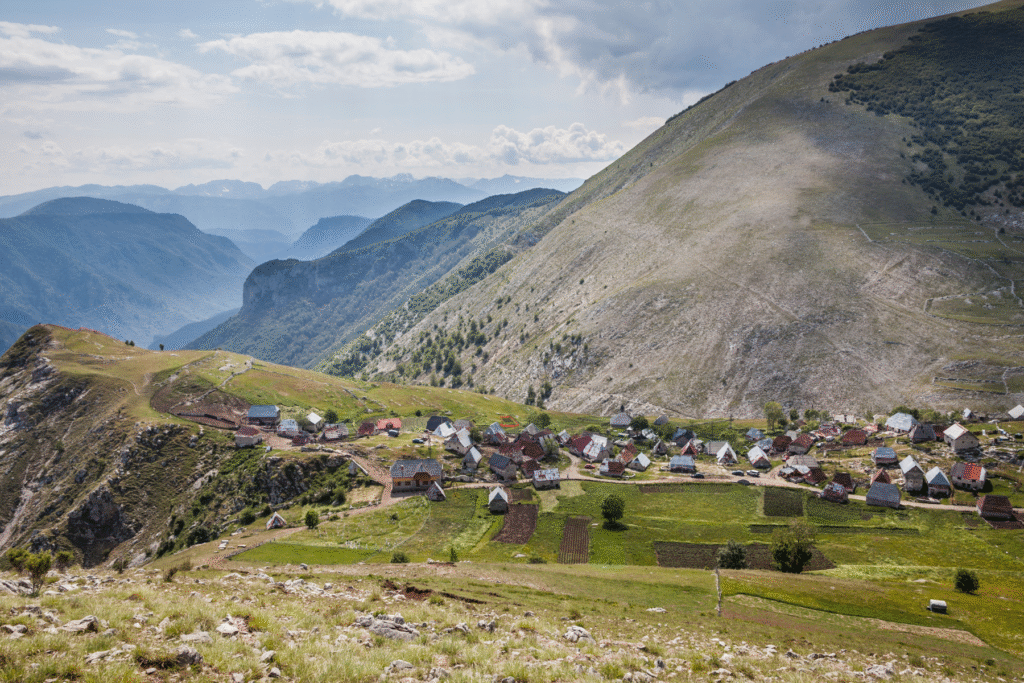
In Bosnia: stick to marked trails in nature. All the main hiking routes and national parks are well trodden but it’s worth remembering that parts of the country were once a warzone. Though its only in 2% of the country, landmines are still present in parts of Bosnia & Herzegovina. In areas where they remain, you will likely see warning signs reading “Pazi – mine.” Stick to marked paths and do not venture into open fields. This is not a dramatic warning, just a sensible one.
All the routes on our Bosnia Hiking holiday and other Bosnian holidays are well-trodden by us, our guides, and thousands of hikers before you.
Related: The best hiking trails in Bosnia and Herzegovina
Learn your Ps & Qs
Learn a few words of the local language. “Hvala” (thank you) in Serbian, Croatian, Bosnian. “Faleminderit” in Albanian. “Blagodarya” in Bulgarian. People in the Balkans are friendly to begin with, but when they see you making an effort, the warmth increases considerably, instant friendships are unlocked. This is even more true the further off the beaten path you go.
Dressing at religious sites
Dress modestly at religious sites. Shoulders and knees covered at mosques, monasteries, and orthodox churches. This is true whether you’re in Sarajevo, Prishtina, Ohrid, or Ostrog. It’s respectful, takes thirty seconds, and locals genuinely appreciate it.
Related: The best UNESCO sites and sounds in the Balkans
Is the Balkans safe for solo female travellers?
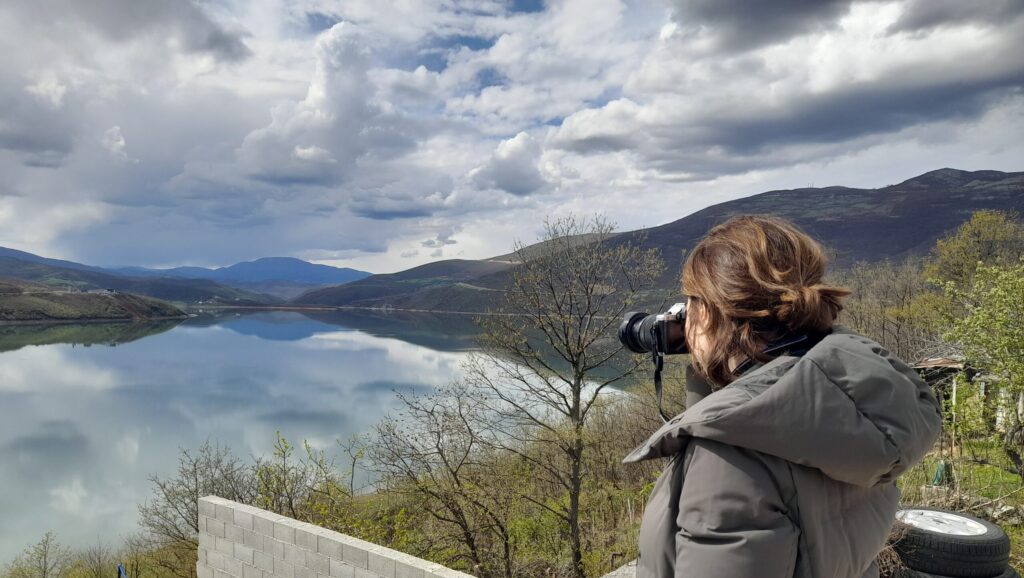
The Balkans are a relatively safe place for women travelling alone, but you wouldn’t be the first to wonder is Albania safe to visit alone? Or Bosnia? Or Serbia? Thousands of solo female travellers move through these countries every year without incident, and many describe it as among the most welcoming travel they’ve done anywhere.
There are no special precautions needed beyond those you’d apply anywhere: use common sense, don’t do things you wouldn’t do at home, and be aware that petty crime happens everywhere. A few things worth knowing:
– Stay in central on your first night in the Balkans
Staying in a central, busy area gives you plenty of accommodation options and, if you want some social life, a good accomodation makes it easy to meet people quickly. It also means that if you’re arriving on a late flight, you will feel comfortable driving into a central city area with life around, not a quiet backstreet. Get your bearings before exploring further afield.
– Night-time common sense applies
Stick to well-lit streets after dark, avoid quiet areas alone late at night, and trust your instincts. Usually you will see people and children out on the streets until late in the Balkans, which is comforting. The language barrier is rarely an issue, as many people speak English, especially in tourist areas.
– Try not to be offended if…
Male waiters or taxi drivers defer to the man to take your order or bill. While times are changing, the Balkans are still quite traditional countries with patriarchal structures (despite the evidently strong females). Men are still expected to be the providers in the family, so it’s usually on them to pay. Just politely do your thing, and try not to let it affect you.
Related:
- The 7 best things to do in North Macedonia with kids
- Where to go wild swimming in Albania – 9 stunning spots for swimmers
- Finding strength through yoga in Montenegro
What Balkans holidays do you run that are good for solo female travellers?
Undiscovered Balkans has so many small group trips running throughout the year, including our Bosnia Hiking Holiday, Bosnia Activity Holiday, Montenegro Activity Holiday, Lake Skadar Villa Holiday, and Serbia Activity Holiday.
We also do yoga retreats and art retreats at our base in Montenegro, Villa Miela, a lovely house on Lake Skadar where you are bound to meet lots of fellow inspiring women of all ages!
What Balkans holidays do you run that are good for family travel?
Undiscovered Balkans has many family-friendly small group trips running through the school holidays, from Easter or May half term, to the long summer break, including our North Albania Activity Holiday, Montenegro Family Adventure, Bosnia Activity Holiday, Lake Skadar Villa Holiday, North Macedonia Activity Holiday and Serbia Activity Holiday.
All our trips are locally-led, removing hassle, worries, and making sure your travels focus on all the best bits.
Feeling inspired? Subscribe to our free monthly newsletter for more travel-inspired tips about the Balkans, first dibs on our offers and tours, and our special subscriber discount.
Comments