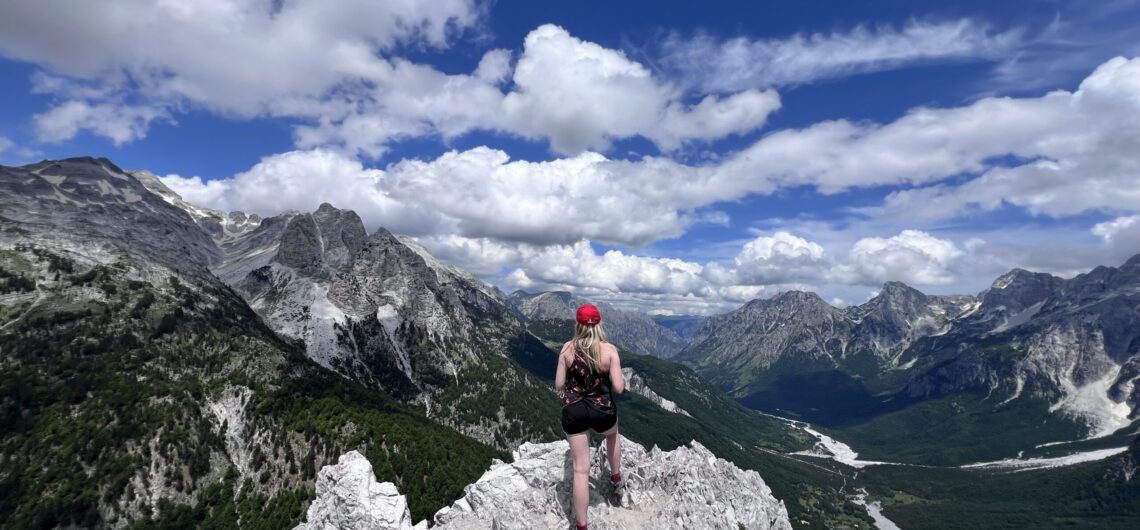
Ten years ago, the path over the Valbona Pass was a shepherds’ route between two isolated villages, walked mostly by locals and the occasional determined backpacker. Today it’s the most famous trek in Albania and one of the best known in the Balkans. Theth, a village of around 200 residents, now welcomes something like 15,000 visitors across the four months it’s properly accessible, and its old stone tower houses have become guesthouses run by the families who grew up in them. That’s a remarkable thing for a valley that was almost empty a generation ago.
It has also made those few hours over the pass the busiest walking in the country, which is good news if you like the idea of spreading that success a little further. The valleys and ranges either side of Theth have the same limestone peaks, the same shepherd hospitality and a fraction of the footfall, and the guesthouses there are just getting started. This is a country with the Accursed Mountains in the north, gentle monastery-dotted hills in the south, and a new long distance trail along its eastern borderlands. Walk the famous trail, then keep going.
The Valbona to Theth pass is also far from the only route worth lacing up your boots for. Our Albania itineraries take in everything from a sacred mountain outside Berat to homestay hiking in rural Zagoria, and the trails in between are just as rewarding. Here are more, each one already part of an Undiscovered Balkans trip.
1. Theth to Valbona: the introduction to hiking in Albania
The hike from Valbona to Theth has become Albania’s best known trail for good reason, a high mountain pass through the Accursed Mountains with views that live up to the name. The trail climbs from one glacial valley over a high pass and down into the next, with the limestone walls of the Accursed Mountains rising on both sides the whole way. It takes most people six or seven hours, horses can carry your bags, and the hospitality at either end is genuinely warm.
What’s changed is the speed of it all. A new road opened in 2021 that cut the drive from Shkodër to Theth to around an hour and a half, and the village transformed almost overnight from remote outpost to bucket list stop. In peak summer you’ll share the pass with a steady stream of other hikers.
We still include it, because the landscape is truly extraordinary, it is still quieter than the busiest sections of Mont Blanc in high season, and because it’s the perfect introduction to the Albanian Alps. We just build it into trips that take you somewhere quieter afterwards, and time it to avoid the worst of the midday queue at the top.
2. Cross the border from Montenegro: the same mountains, almost nobody on them
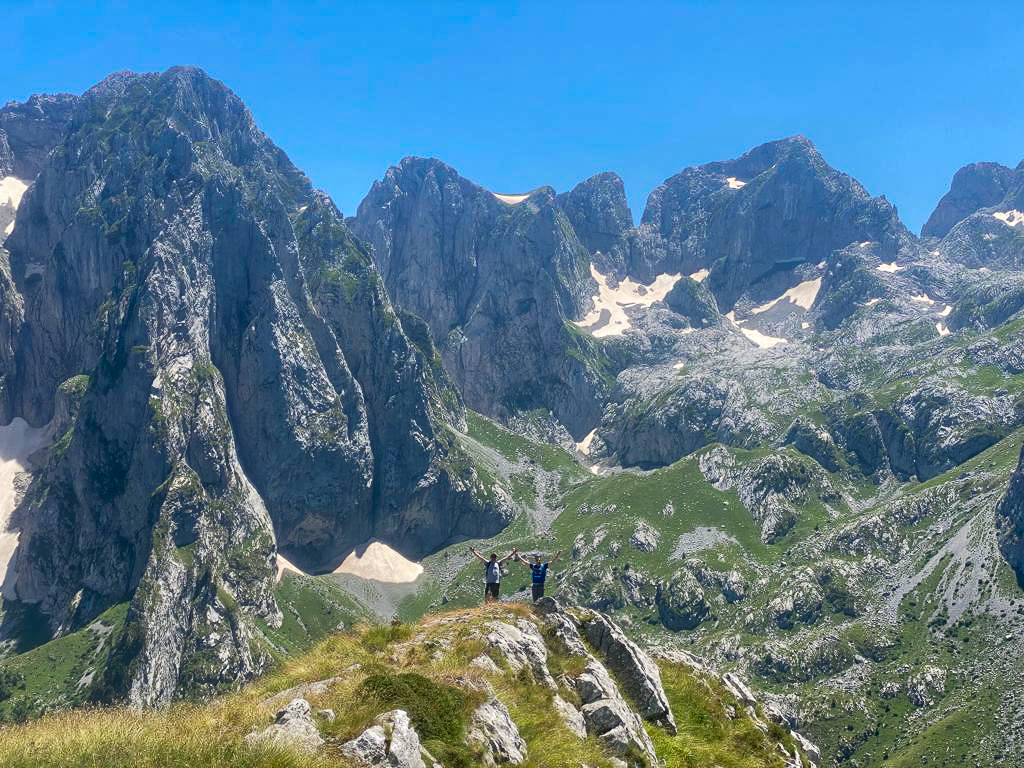
The so-called Accursed Mountains don’t stop at the border. They continue north into Montenegro as the Prokletije, and the walk that brings you from one country into the other is, to our minds, the most underrated day of hiking in the region.
Setting out from the Ropojana valley, the trail rises gently through forest and open valley floor to the pass at Qafa e Pejës, then drops the long way down into Theth with the peaks stacked up on either side. It’s the same scenery that draws everyone to the Valbona Pass, with a fraction of the people, and there’s something about walking across an international border on foot that no minibus transfer can replicate. You’ll need your passport in your pocket, and it’s a properly established crossing, so there’s nothing to worry about beyond your knees on the descent.
This is how our Via Dinarica trip through Montenegro and Albania brings guests into the country for the first time. Arriving in Theth on foot over a mountain pass is a very different experience from arriving by road.
3. Kelmend and Lëpushë: the quieter Theth, and a shepherd’s world still intact
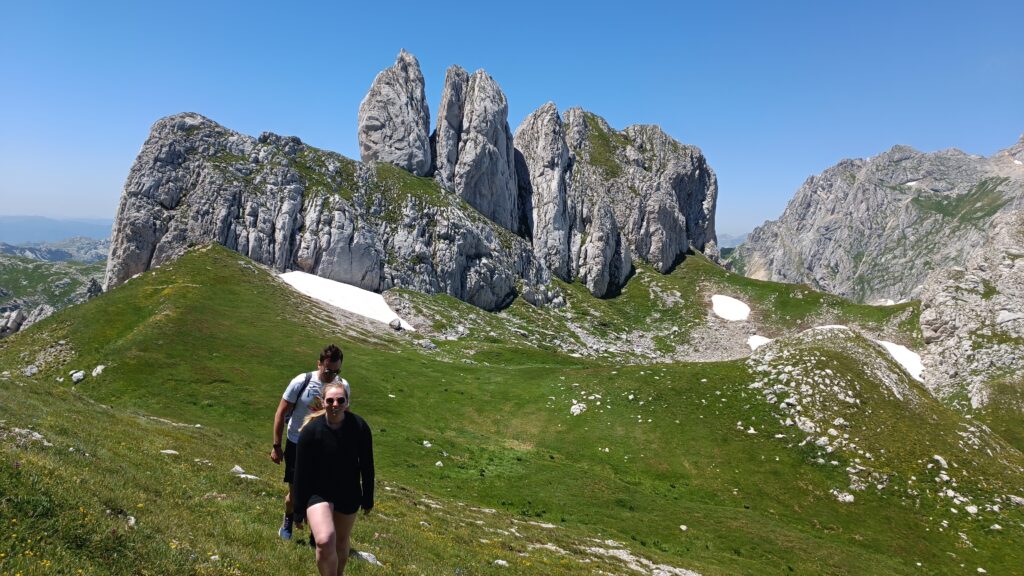
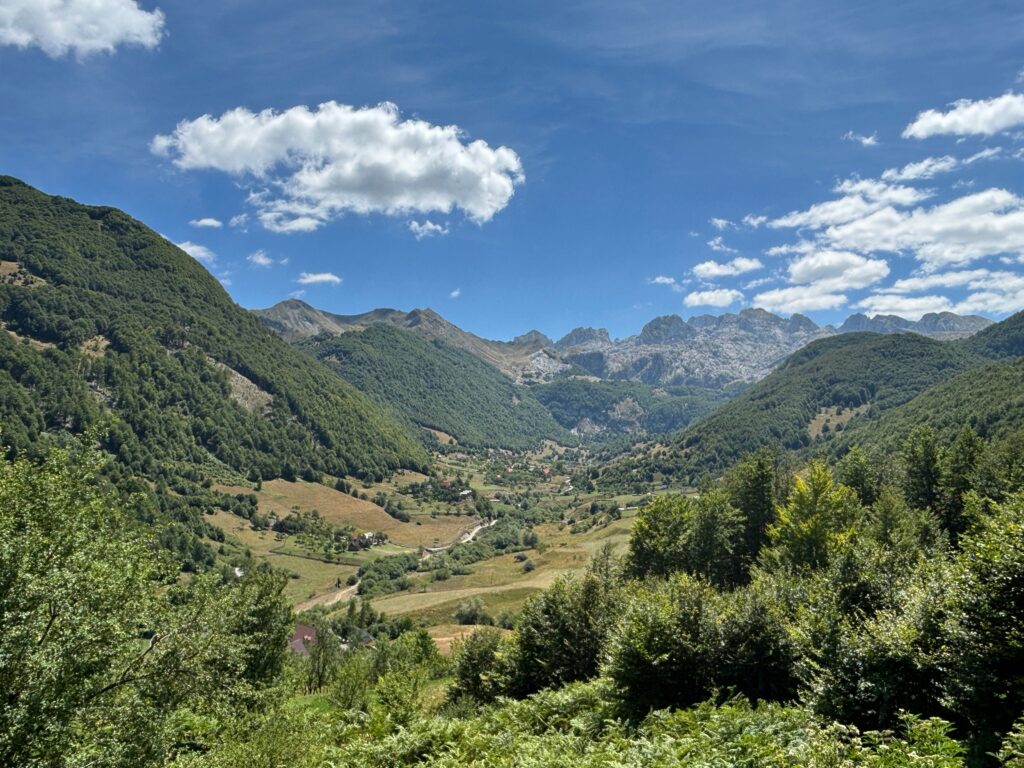
North west of Theth, tucked against the Montenegrin border, the Kelmend region is what a lot of people picture when they imagine Albania before the guidebooks arrived. Wide green valleys, wooden shepherd huts, haystacks, and a handful of family guesthouses in villages like Lëpushë and Vermosh.
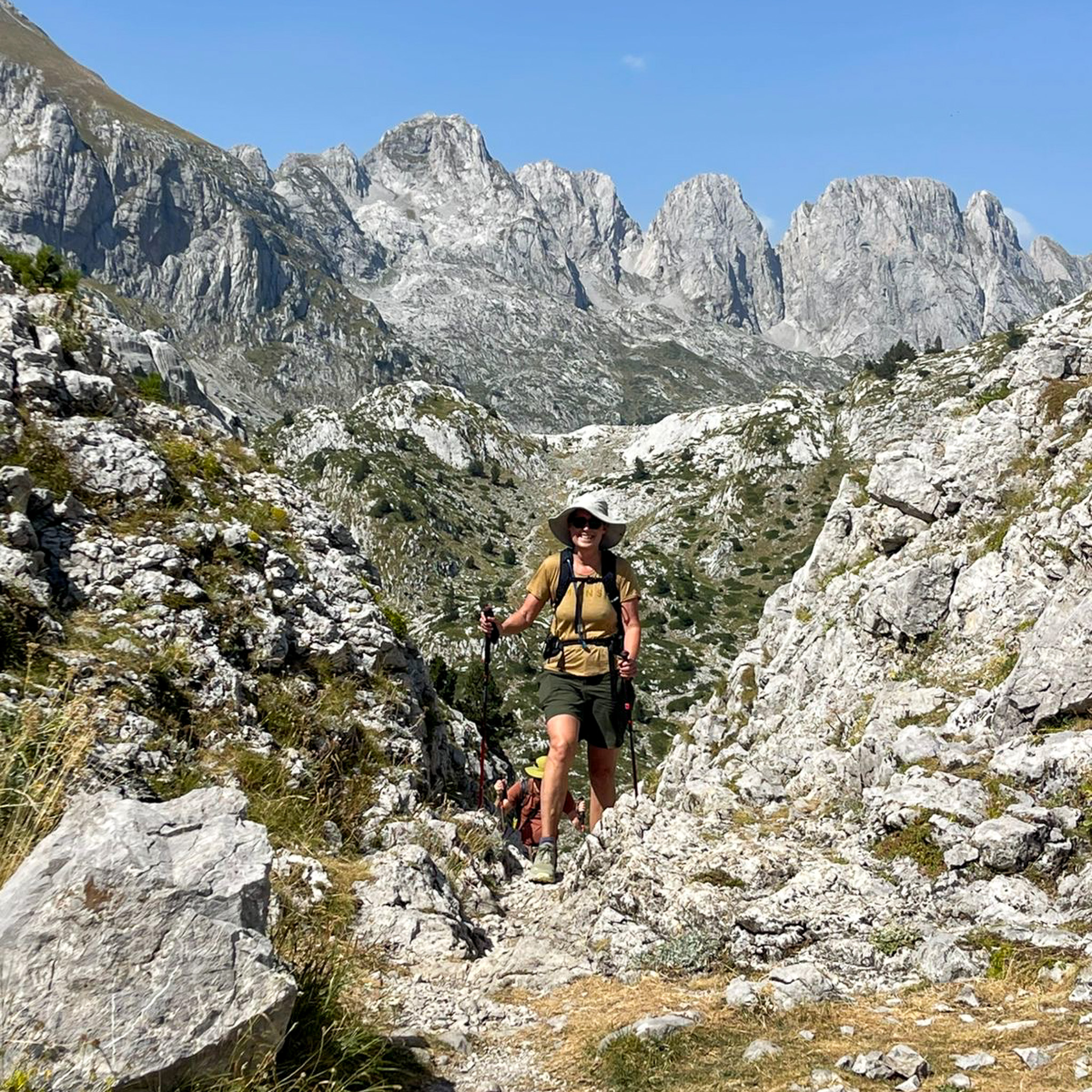
The walking here is gentler and more varied than the high alpine crossings. Our favourite is Maja e Vajushës, a 9km loop from Lëpushë climbing around 700m to a 2,057m summit that sits exactly on the invisible border with Montenegro, with the serrated Prokletije peaks laid out to the south. It takes about four and a half hours and asks for reasonable fitness rather than mountain experience.
What makes Kelmend special is what’s happening around the trail. This is one of the last places in Europe where transhumance is still a working way of life, with families moving their flocks up to summer pastures and back down again as they have for generations. Stay in the valley and you’ll drink coffee with the people doing it.
We hosted Guardian travel writer Holly Tuppen and her family here, and the region went on to feature in the paper’s destinations of 2025. It’s still quiet and just a stone’s throw from the famous Peaks of the Balkans trail.
Montenegro to Albania hiking holiday
Cross remote mountain passes, watch the light turn gold, and witness pastoral shepherd life as you join this 7-day guided highlands trek across two countries. Expect some of the most spectacular, untouched mountain landscapes in Europe, fields of wild flowers and experience the shared mountain culture of ancient borderland communities, once cut off from the world.
4. Homestay hiking in Zagoria: southern Albania at walking pace
Head south and the landscape changes completely. The drama of the Alps gives way to rolling hills, terraced fields, Ottoman stone bridges and Orthodox churches with Byzantine frescoes hidden in hamlets of three or four residents.
The Zagoria valley, in the Vjosa Wild River National Park, is walked on old caravan routes between villages, with days of around 11 to 14km and manageable climbs. It’s the kind of hiking where the point isn’t the summit. On our Zagoria hiking week here, you’ll walk from one family’s kitchen table to the next, staying with hosts like Noli and Margerita, village teachers in Limar who cook from what’s grown around them and talk about what life here was like under communism. On other days you’ll meet beekeepers, herb gatherers and stone masons.
One practical note: trail marking in southern Albania is close to non-existent, and the routes link villages that don’t appear on most maps. A guide isn’t a luxury here, it’s the only way this trip works at all, and it’s also what opens the doors you’d otherwise walk straight past.
5. The High Scardus Trail: the serious one
For hikers who want a genuine challenge, the High Scardus Trail is the newest long distance route in the Balkans, running through the borderlands where Albania, Kosovo and North Macedonia meet. It was voted the best tourism project in Europe at the International Tourism Awards in 2022, and it’s still barely walked compared with the Peaks of the Balkans.
The Albanian section is the heart of it. Days of 15 to 17km with 700 to 1,400m of ascent, ridgelines that criss-cross the border, and the summit of Mt Korab at 2,764m, the highest point in both Albania and North Macedonia. Between the big days you’ll sleep in a simple village pension in Radomire and, on one night, in the wooden huts of a shepherd family on a high pasture with no electricity, no phone signal and no shower. Just a bonfire and the entire sky.
This is high, remote, committing country where the weather turns fast. It suits hikers with multi-day or altitude experience, and it’s the trip people come back for after Albania has got under their skin.
6. Which Albanian hike suits you?
Want the classic without the crowds: the cross-border route from Montenegro into Theth, which gives you the Accursed Mountains at their best with a fraction of the foot traffic.
More interested in people than peaks: Zagoria, where the walking is moderate and the point of the day is who you meet at the end of it.
Fit, experienced and after a proper challenge: the High Scardus Trail, big ascents, high ridgelines, and nights in places most travellers will never see.
Only have a few days, or want the famous one: Theth to Valbona, ideally in June or September, and ideally with something quieter built in either side.
7. Come for the famous trail, stay for everything else
Albania rewards hikers who keep going past the obvious. The Valbona Pass earned its fame, and it belongs on any first trip here. But the country behind it, the shepherd valleys of Kelmend, the border ridges of the east, the monastery villages of the south, is where you’ll find the Albania people talk about when they come home.
We’ve spent years building relationships with the families, guides and guesthouses that make these trips possible, in places where turning up alone would mean a locked door and an unmarked path. If you’re weighing up Albania for a guided hiking holiday, or looking for somewhere in Europe that hasn’t been walked flat yet, this is the moment. Browse our range of Balkan hiking trips and get in touch.
FAQ: Hiking in Albania
Is Albania safe to hike in?
Yes, Albania is generally considered a very safe country for hikers, including those travelling solo. Trails around Theth and Valbona see heavy summer footfall, and while the quieter regions are more remote, none require anything beyond normal hiking preparation, sturdy boots, water, sun protection and a downloaded map or offline route.
Are there bears or wolves in Albania?
Both live in Albania’s forests and mountains, particularly in the more remote ranges, but sightings on popular trails are rare, since these animals generally avoid busy paths. You’re far more likely to run into a flock of sheep or a herd of cows than anything wilder. As with anywhere in bear country, keep to the trail and store food securely overnight.
When is the best time to hike in Albania?
June and September are the sweet spots, with settled weather and manageable temperatures. July and August are popular but can push past 35°C in the lowlands, and water sources on higher routes can run low. Snow closes many high mountain passes, including Qafa e Pejës and the Korab approach, from around November to April, so winter hiking on these routes isn’t recommended.
How crowded is the Theth to Valbona hike?
Busy in July and August, when Theth’s 200 or so residents host thousands of visitors a month. June and September are considerably quieter, and starting early gets you over the pass ahead of the bulk of walkers. The quieter alternatives in this article see a small fraction of that traffic.
Do I need a guide to hike in Albania?
Main trails like Theth to Valbona don’t require one. Everywhere else, it makes a real difference. Waymarking is inconsistent to non-existent in southern Albania, high routes like Korab are long and remote, and a local guide is the difference between walking past a shepherd’s hut and being invited into it.
Is it legal and easy to cross the Montenegro to Albania border on foot?
Yes, hikers regularly cross between Montenegro and Albania on trails like the Peaks of the Balkans and our own route via Qafa e Pejës. You’ll need your passport with you on the day, and our guides handle the logistics, but it’s a well established and legitimate way to cross.
What should I pack for high altitude Albanian hikes?
Layers are essential, since mountain weather changes fast even in summer, along with sturdy waterproof boots, a refillable water bottle, sun protection and a basic first aid kit. For the higher routes like Mt Korab, trekking poles make a real difference on the long descents.
Feeling inspired? Browse our range of adventure holidays and hiking tours in the Balkans and subscribe to our free monthly newsletter for more travel-inspired tips, offers and tours.
Comments