
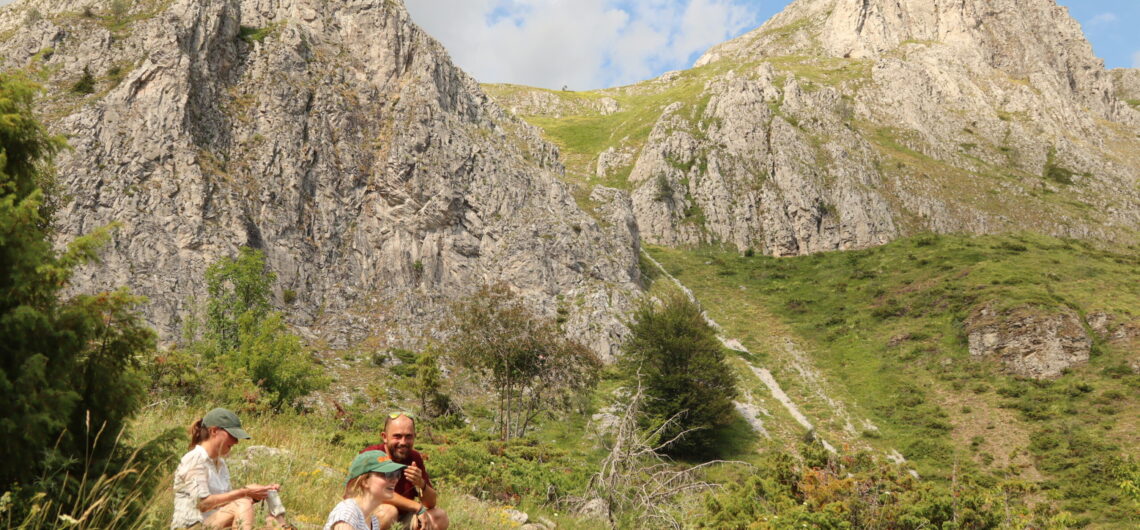
Did you know that 85% of North Macedonia is mountains? That puts this small, landlocked country in the world’s top ten most mountainous nations, ahead of places you’d assume were far more vertical. Most people have never set foot here, and even fewer know it exists at all as a hiking destination.
I first understood what that statistic actually feels like on a trail above Galičnik, a shepherd village so remote it’s still famous for the wedding festival that once lured its scattered families home once a year. The path had been a clear dirt track for twenty minutes, then it simply stopped existing. Our guide Vojo, who grew up on these mountains, didn’t hesitate, he just read the land, the sheep trails, the angle of a distant ridge, and kept walking. Ten minutes later a wild goat watched us from a rock ledge before disappearing over the skyline.
In essence, North Macedonia is one of the last places in Europe where you can hike for a full day and barely see another soul. Between Mavrovo National Park in the north and Pelister in the south, the country is stacked with viewpoint peaks, glacial lakes and shepherd trails that have barely changed in centuries. It’s also one of the few countries where you can still see chamois and wild goats while hiking, shepherds tending their flocks, and you can gorge on wild strawberries and sour cherries along the way.
Here are the greatest reasons to hike in Macedonia; an activity you can do on our 7 day North Macedonia Activity holiday or on our tailor made itineraries.
What hiking in Macedonia is actually like
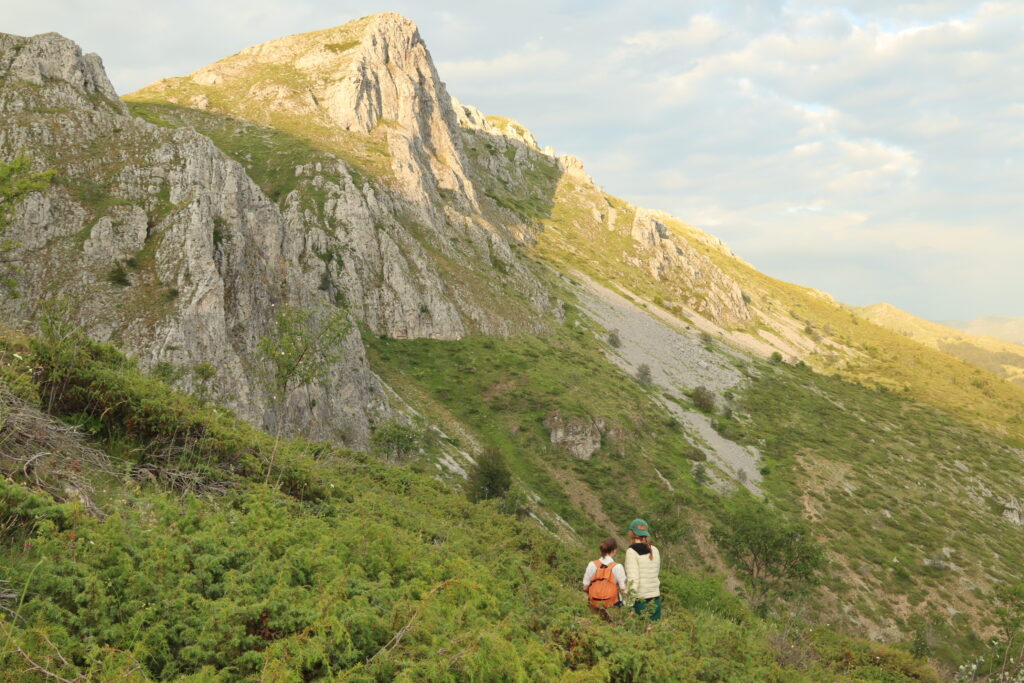
Trails in North Macedonia are old, in the best sense. Many started as shepherd routes centuries before anyone thought to call them hiking trails, and that history shows. Waymarking is patchy at best and can vanish entirely on quieter routes, so this isn’t a country where you follow a painted stripe on a rock and switch your brain off. Terrain ranges from gentle valley walks to steep, rocky ascents above 2,000m, but technical climbing is rare. Most of what you’ll do is simply walking, sometimes for hours, without seeing another hiker.
Where you can hike
The national parks are the easiest way to get your bearings. Mavrovo in the northwest is the country’s largest, a wilderness of pine forest, glacial lakes and the Korab and Bistra ranges rising behind traditional villages like Galičnik. We visit on our Mavrovo hiking day, with time in Galičnik afterwards.
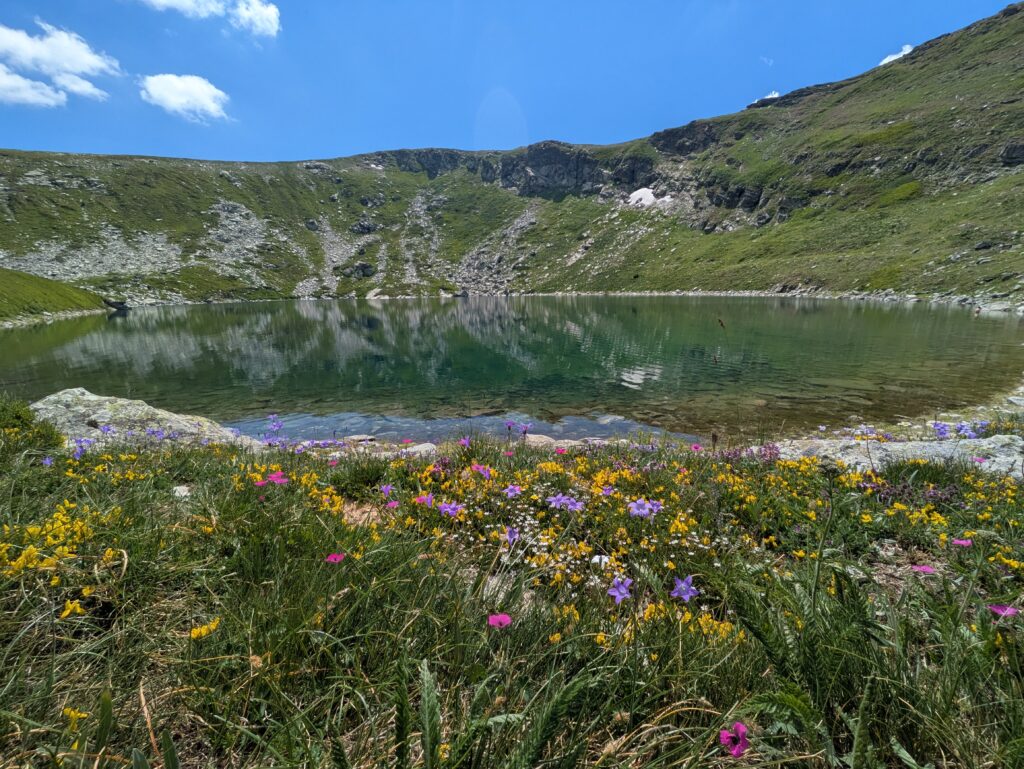
Pelister, the oldest national park, centres on a pair of glacial lakes and the endemic molika pine, first identified here in 1843. Hike to Pelister’s lakes on day 7 of our Macedonia holiday.
Galičica, squeezed between Lake Ohrid and Lake Prespa, offers the rare experience of seeing two very different lakes from a single ridge.
Further east, the Šar Mountains rise dramatically above Skopje and Tetovo, home to the country’s second highest peak, wilder and far less visited than the others. Together they cover pretty much every kind of landscape North Macedonia has to offer, from gentle forest to really high mountain.
When to go
Late spring through to October is the sweet spot. June brings wildflowers and full rivers, while September and early October give you clear skies and empty trails before the first snow returns to the highest ridges. Snow can still cling to shaded, higher ground well into early summer on the tallest peaks, so if you’re heading above 2,000m before July, pack for it. Full summer is glorious but hot, especially at lower altitude near the lakes.
Related:
- The Best Hikes in Serbia: Balkan Mountain Trails Guide
- 7 Balkan alternatives to the best hikes in Europe
- The best hiking trails in Bosnia and Herzegovina
What you’ll see along the way
Wildlife here still behaves like wildlife. Chamois and wild goats pick their way across scree slopes, brown bears and wolves live deeper in the forests of Mavrovo and Jasen, and golden eagles ride the thermals above the ridgelines. On the ground, wild strawberries and sour cherries grow right alongside the trail in early summer, and the high pastures fill with orchids and alpine clover. You’ll pass working shepherds bringing flocks down at dusk, much as their families have for generations.
Then there’s the history most visitors never expect to find here. On Pelister, trails wind past genuine First World War remains, trenches, bunkers and shell-scarred rock at a site called Crveni Steni, Red Rocks, where French led forces attacked entrenched positions in the autumn of 1917 during the Battle of Monastir. It’s a strange thing to stumble across a century old trench line while hiking through wildflowers, and it adds a layer of history and mystery to these mountains.
Why hike with a local guide
Trails that vanish, weather that turns fast at altitude, and wildlife makes a strong case for going with someone who knows the ground. You might also miss the change to talk with a shepherd about life out on the mountains, the unmarked fresh spring with the best water on the mountain, the viewing point from which you can see both lakes Ohrid and Prespa. Guides like Voji, who grew up in these villages, keep you on route and tell great stories along the way – even true ones!
If you want to experience this for yourself, our 7 day North Macedonia Activity Holiday and tailor made itineraries build in exactly this kind of hiking, guided, and led by locals who call the mountains home.
North Macedonia adventure holiday
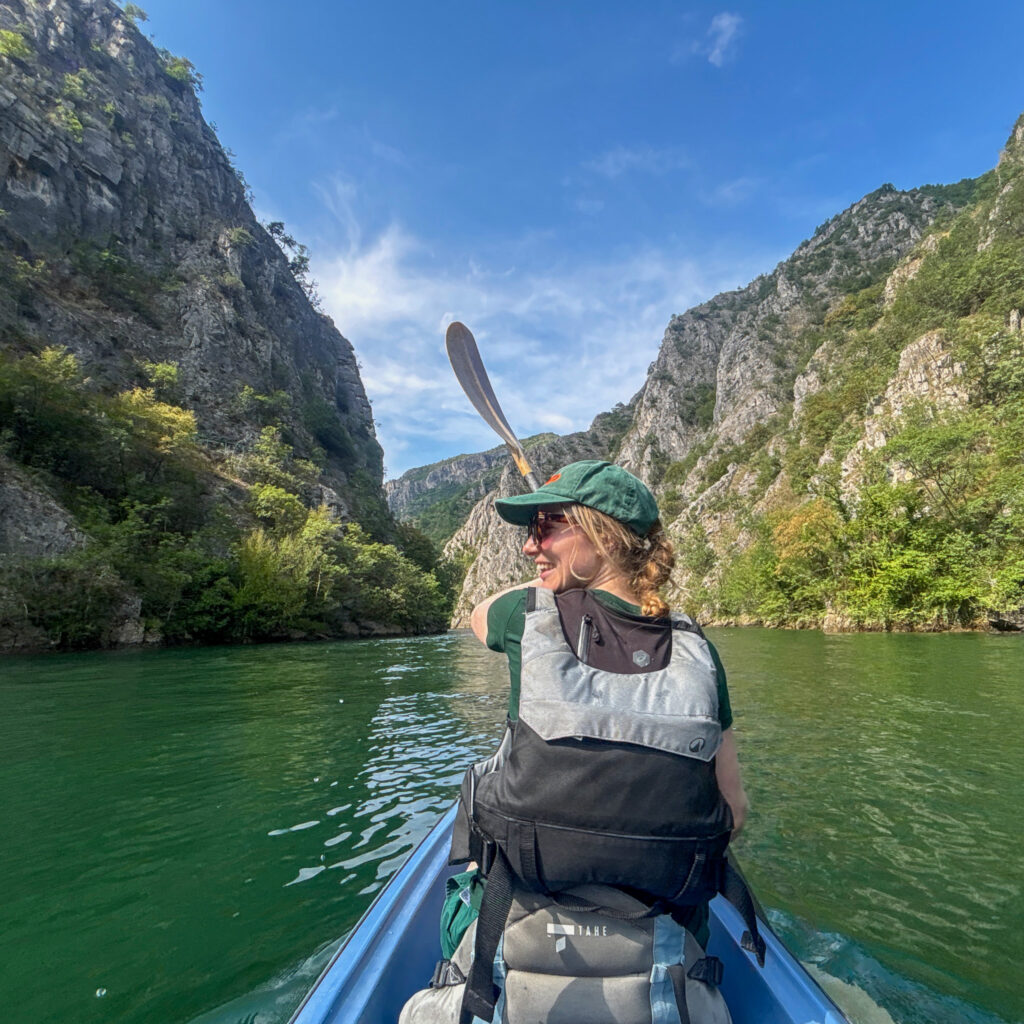
Explore the flavours of Macedonia as you hike through wild mountain landscapes, visit Europe’s oldest lake, taste local wines, discover ancient cities and experience the extraordinary mix of cultures that make North Macedonia one of the Balkans’ most rewarding destinations. Join one of our small-group adventures and discover a country that still feels wonderfully undiscovered.
FAQ: Hiking in North Macedonia
Is North Macedonia safe to hike in?
Yes. North Macedonia is generally considered a safe country to travel and hike in, with low rates of violent crime against visitors. The main risks are practical rather than personal: trail markings can be inconsistent on longer routes, so it’s worth downloading offline maps or hiking with a local guide. Summer temperatures can climb past 35°C, especially around Lake Ohrid, so carry more water than you think you’ll need and start early.
Are there bears or wolves in North Macedonia?
Yes, both live in North Macedonia’s forests, particularly in and around Mavrovo and Jasen. Brown bear numbers have grown in recent years, and sightings near villages have become more common, though attacks on hikers are extremely rare. As a general rule, keep to marked trails, make some noise as you walk, store food securely, and avoid hiking alone at dawn or dusk in bear country. Our guides are fully trained when it comes to wildlife in the mountains.
Are there dangerous snakes in North Macedonia?
There are a few venomous species, including the nose horned viper, mostly found in warm, rocky, low altitude areas rather than up on the high trails covered here. Bites are uncommon and rarely serious if treated promptly. Sturdy boots and staying on the path are the best precautions.
What about ticks and insects?
Ticks are a more realistic day to day concern than snakes or bears, particularly on lower Pelister trails in warmer months. Long trousers, insect repellent on socks and ankles, and a quick check after each hike are sensible habits.
Is there a wildfire risk when hiking in North Macedonia?
During hot, dry summers, forest fires can occur, particularly in the east of the country. Wildfire risk is another reason we tend to favour spring and autumn for our hiking trips.
When is the best time to hike in North Macedonia?
June and early autumn (September to early October) are the sweet spots, with mild temperatures and, depending on the route, some lingering snow on the higher peaks in spring rather than the depths of summer heat. Higher routes like the Šar Mountains can hold snow well into early summer.
Do I need to be an experienced hiker?
Not for most of the routes here. Medenica, Pelister’s Two Lakes and Galičica are all achievable for reasonably fit beginners with the right footwear. The Šar Mountains hike and the full Macedonian Traverse are better suited to hikers with some multi-day or high altitude experience, which is exactly why we treat them as tailor made options rather than standard itinerary stops.
Explore our North Macedonia food guide part of our Balkan food archive.
Feeling inspired? Browse our range of adventure holidays and hiking tours in the Balkans and subscribe to our free monthly newsletter for more travel-inspired tips, offers and tours.
Comments