
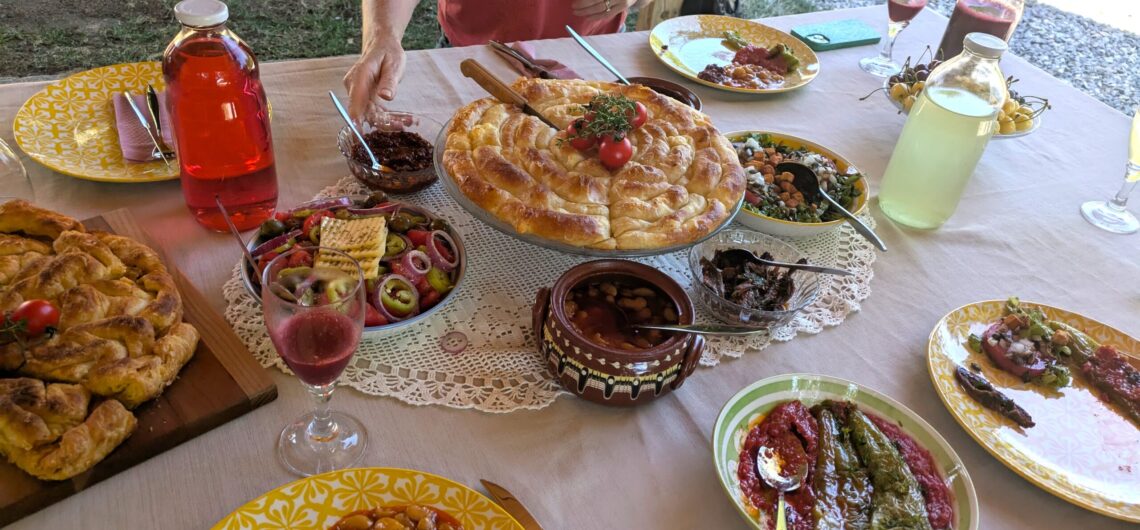
Macedonian chefs are gaining popularity outside the Balkans. Food brand Pelagonia has brought the iconic roasted pepper spread ‘ajvar’ to tables across Europe, landing shelf space in Waitrose and the Co-op, while Macedonian restaurants like Lacy Nook and Benugo have been making waves London. Plus, Macedonian wines are picking up Decanter gold awards.
Macedonia was once the market garden of Yugoslavia, known for its abundant fruit and veg. The apple orchards of Prespa, the grapes of Tikveš, juniper berries of Mavrovo, the white beans of Tetovo and the Vardar river feeding plump tomatoes and cabbages. This is a country where practically everything on the table was grown, foraged or fermented by someone within a few kilometres of where you’re sitting.
We just spent a wonderful week eating our way around North Macedonia and are pleased to report that hospitality was generous and genuine, portions are large, and its a largely vegetarian-friendly country.
Tavče gravče, a slow-cooked bean dish prepared in a clay pot, is the unofficial national dish of Macedonia. Elsewhere much of the key dishes have pan-Balkan and Ottoman influences. You can taste great grilled meat (as in Serbia), yoghurt and salads made with fresh vegetables and white cheese (as in Greece), as well as stuffed vegetable dishes and baklavas (as in Bosnia and Albania). (Explore our Balkan food archive)
Here’s your guide to eating and drinking your way through North Macedonia. All these acitivites are all found on our 7 day North Macedonia Activity holiday:
Visiting Skopje’s Old Bazaar ‘Slatkarnice’ patisseries
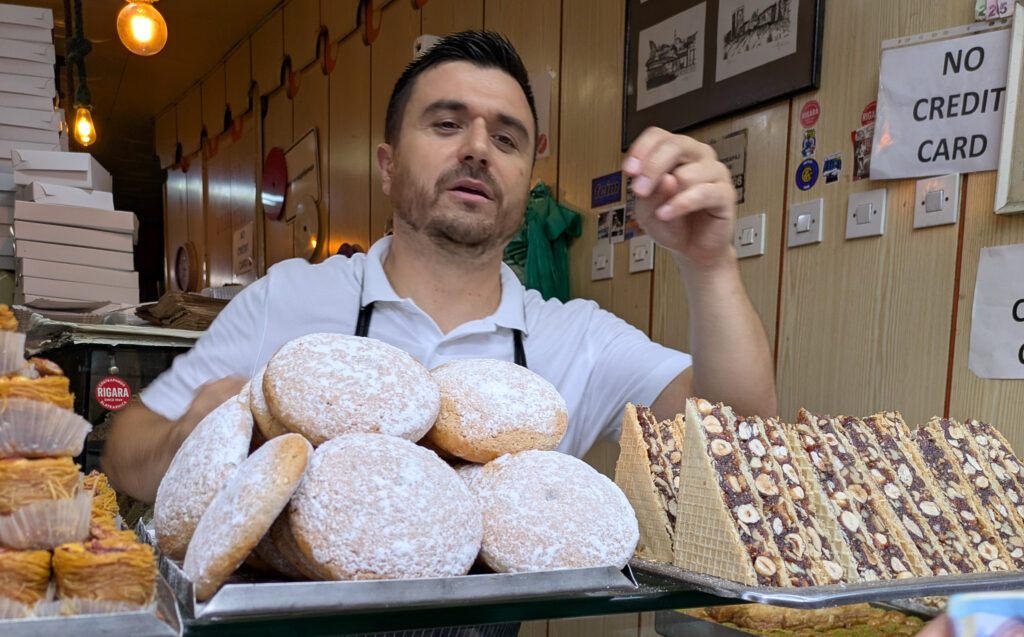
If you land in Skopje, head to the Čaršija, the old Ottoman bazaar to peruse the many slatkarnice: Balkan patisseries stacked with baklava and tulumbo for a quick sugar top-up. We love the small slatkarnice that sells a pistachio baklava named after Angela Merkel. Apparently the confectioner was a fan of hers.
Also at these dessert stops you’ll find Parachute cakes—known locally as padobranci (translates to parachute)—a traditional sandwich cookie that look similar to large French macarons but with a more chewy, nutty texture. Padobranci were created as a brilliant hack by Yugoslavian home cooks dealing with economic limitations.
Yugoslavian housewives substituted rare French almond flour with ground walnuts, which grew abundantly in local backyards across Macedonia, and swapped luxury imported goods like chocolate, cocoa, and almonds which were expensive or unavailable under state rationing for a rich filling made with egg, sugar and a bit of fat or cocoa. This created a decadent, fudgy cream without requiring actual imported chocolate bars. Ultimately, every Yugoslavian housewife had a recipe handwritten in her notebook because it allowed them to serve an elegant, fancy dessert at birthdays and family gatherings using basic courtyard ingredients: eggs, sugar, and walnuts.
The parachuter cookie’s name was inspired by the mid-century aviation boom in Yugoslavia. Paratroopers were highly romanticised as national heroes, and the round, domed shape of the cookie perfectly mimicked a deployed military parachute canopy.
Also in Skopje, savoury street food delights include lahmacun (a thin, spiced Turkish-style flatbread) from Galerija 7 bar.
Also, Burek, or “Banitsa sas Sirene,” if you’re feeling precise, the pan Balkan filo pastry, spiralled and filled with cheese, spinach, meat or potato. Order it warm, ideally from a bakery rather than a supermarket, and eat it standing up on the street like everyone else does— preferably for breakfast to fuel a day of kayaking and hiking.
Tavče gravče: comfort beans in a bowl
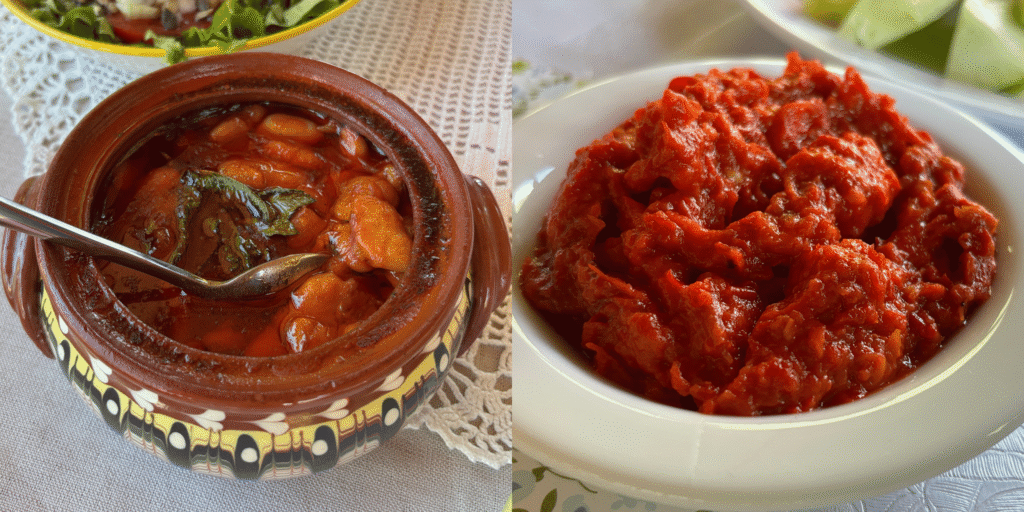
Tavče gravče is Macedonia’s answer to beans on toast: a rich, slow-baked bean stew, usually cooked in a clay dish with paprika, onion and a generous glug of oil. It’s humble, filling and delicious. An equivalent can be found in the slow-cooked Tuscan bean dishes of Italy.
We first properly tasted it at a wine tasting at a family-run orchard and restaurant in the landscapes around Lake Prespa which we visit on our 7 day North Macedonia Activity holiday, where the beans turned up alongside pindjur (a roasted pepper cousin of ajvar).
Ajvar: the pan-Balkan sauce that Macedonia has taken global
Ajvar (pronounced “ay-var”) is a roasted red pepper relish, introduced under Ottoman rule and adopted so thoroughly it now functions as a kind of edible national identity. Peppers and aubergine are grilled over charcoal until blackened, then peeled, blended and slowly simmered down until sweet, smoky and deep red. Late summer, when the pepper harvest comes, is when entire households disappear into their kitchens for a weekend of communal pepper-roasting.
You’ll find it on every table, spread on bread, served alongside grilled meats, or eaten straight from the jar with a spoon when nobody’s watching.If you take nothing else home from a Macedonian barbecue, take the habit of putting ajvar on absolutely everything.
If you want to try it before you go, Pelagonia, the Macedonian brand doing more than anyone to put ajvar on British shelves, is worth seeking out at Waitrose or the Co-op.
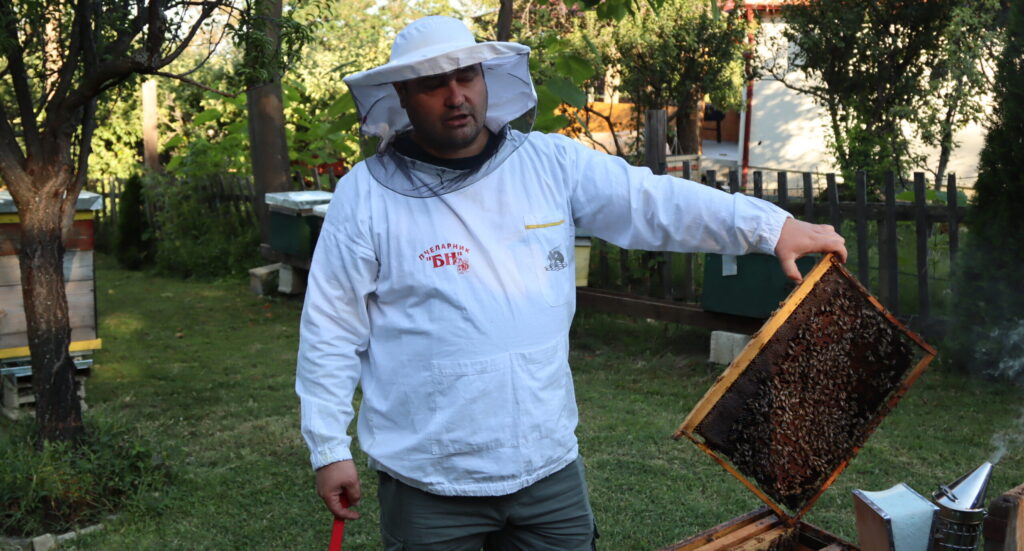
Honey and beekeepers: a tradition Macedonians keep alive
For something a little more hands-on, we loved our beekeeping session near Pelister national park, using techniques passed down through generations and practical tips for how not to upset several thousand bees at once!
Macedonian honey is particularly good due to all the wonderful wild flowers blooming across the hills. The pollen and royal jelly are used in traditional medicine to help boost the immune system and as a natural antispetic.
Before visiting Macedonia, we recommend you watch the film Honeyland free on Amazon Prime which tells the true story of a determined female beekeeper still foraging for wild honey by hand.
Wild strawberries and cherries
Speaking of wild foods, one thing we love to do while hiking in North Macedonia hikes is eating wild strawberries and cherries – a little burst of sweetness to fuel us along the way.
We found plenty of wild berries on our hikes in the Mavrovo, Pelister and Galičica national parks, which we visit on our 7 day North Macedonia Activity holiday.
Check with your guide before eating any wild berries (our guide is a seasoned forager so knows his wild food) then embrace your inner bear!
Ohridska Torta (Охридска торта)
A regional speciality from the lake city of Ohrid is this luxurious, dense celebration cake featuring walnut sponge layers filled with a sweet egg yolk cream. Both layers are enriched with grilijaš—a crunchy caramelised walnut powder.
Related:
- Undiscovered Tastes #3 – the perfect “peka/sač” recipe
- In conversation with Irina Janakievska, author of The Balkan Kitchen
- 10 traditional Balkan foods you have to try when you visit
- A guide to Albanian food and wine
Cheese and weddings in the village of Galičnik
High in the mountains, the village of Galičnik is famous for one thing above all: its annual wedding festival, a full traditional Macedonian wedding re-enacted each summer with costumes, music and dancing that draws crowds from across the country. But Galičnik is also home to its famous cheese, made from sheep’s milk. The sheep graze in the nearby Mavrovo mountains. It’s sharp and soft and goes very well with ajvar (see above).
The cheese itself is simply called ‘sir’ meaning cheese. It’s hard to bring home due to its softness so we recommend eating lashings of it while you are in Macedonia.
Apple and cherry orchards at Spirit of Prespa
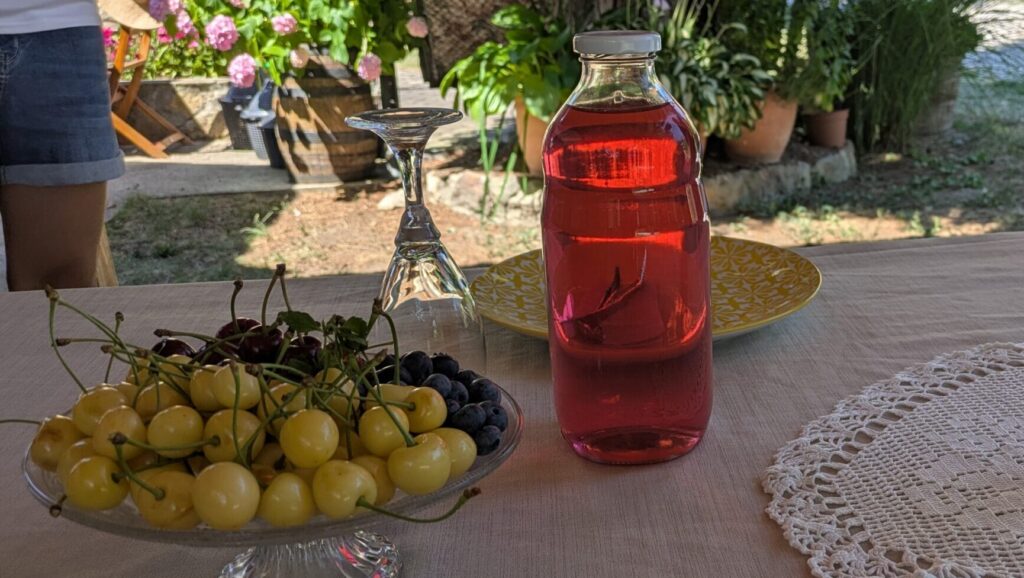
Near Lake Prespa, at around 800 metres above sea level, Spirit of Prespa is a fifth-generation family farm now run by sisters Ana and her sibling, growing apples, plums and cherries across land that’s been in the family since the 1960s. For years, most of their apples went to Russia; when that market disappeared, the family turned to agritourism instead, opening the orchards to visitors in 2018. It’s since become one of the loveliest places in the region to sit down for lunch beneath the trees, with coffee, homemade jam and a slice of gjomleze, a savoury layered pastry cooked in thin sheets over an open fire under a iron sac pot for up to five hours. Wash it down with the farm’s own rakija, distilled from their apples, plums and cherries.
Then, take a tractor ride around the orchard to pick your own cherries!
The Macedonian wine nobody told you about
Macedonia produces more wine than most people realise. Tikveš, the largest winemaker in the Balkans, has a 140-year history and a growing shelf of international awards to show for it, Decanter gold among them. If you’re near Lake Ohrid, you can find a Tikveš shop without much trouble; if you’re near Prespa, head instead to Alesto for something smaller, family-run with a reputation for quaffable yet affordable creations (and some stunning views). Wine tastings are an optional activity on our North Macedonia Activity Holiday.
Kavadarci town in the Tikveš region is conveniently close to one of Macedonia’s famous Roman sites, Stobi, dating from 2nd-6th century AD. Take sun cream and water if visiting in summer!
Other grapes worth knowing are Vranec, Macedonia’s signature red — deep, full-bodied, all dark fruit and spice — alongside Kratošija, a Primitivo relative that makes intense, structured reds, and Stanušina, a lighter, more delicate red used for some genuinely excellent rosés. On the white side, look out for Smederevka, crisp and citrusy, and Temjanika, an aromatic, Muscat-like white that goes rather well with a plate of tavče gravče, as it happens.
See also: Sip your way through the Balkan wine regions
Macedonian gin at Mavrovo
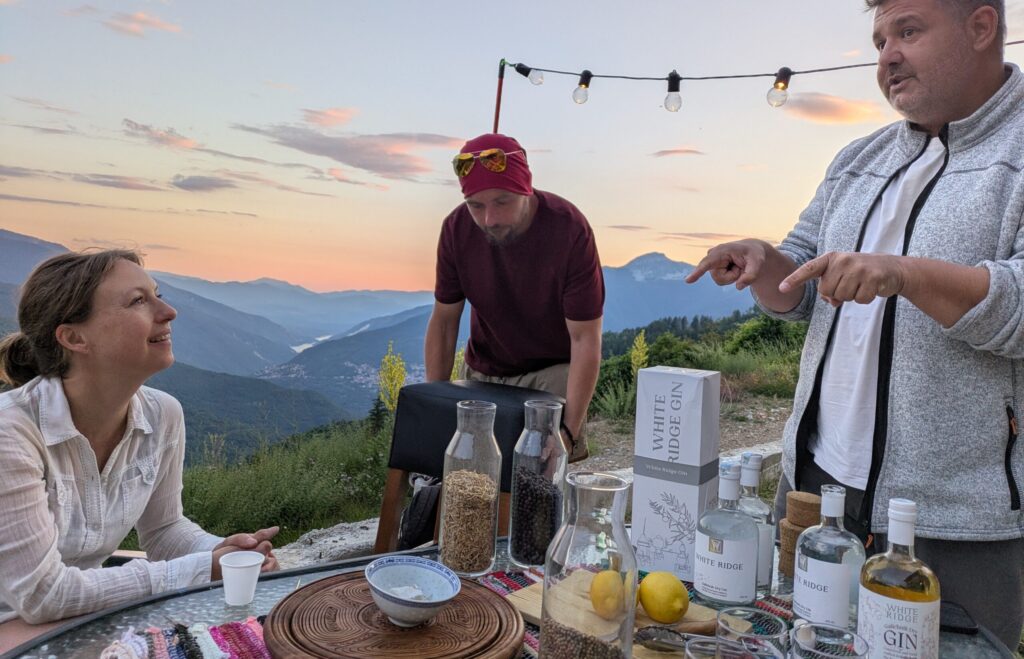
Did you know Macedonia exports 60% of Europe’s juniper berries? Known as the “Home of Juniper” the Bistra mountain region junipers are highly sought after by global gin distillers due to the high concentration of essential oils (like pinene and sabinene) in the wild-harvested, organic berries. But it was only recently that Macedonians began to make their own gin from their own crop. We love the White Ridge gin for its aromatic blend of juniper, elderflower, mountain tea and citrus peel.
Matka Canyon Ice cream delights
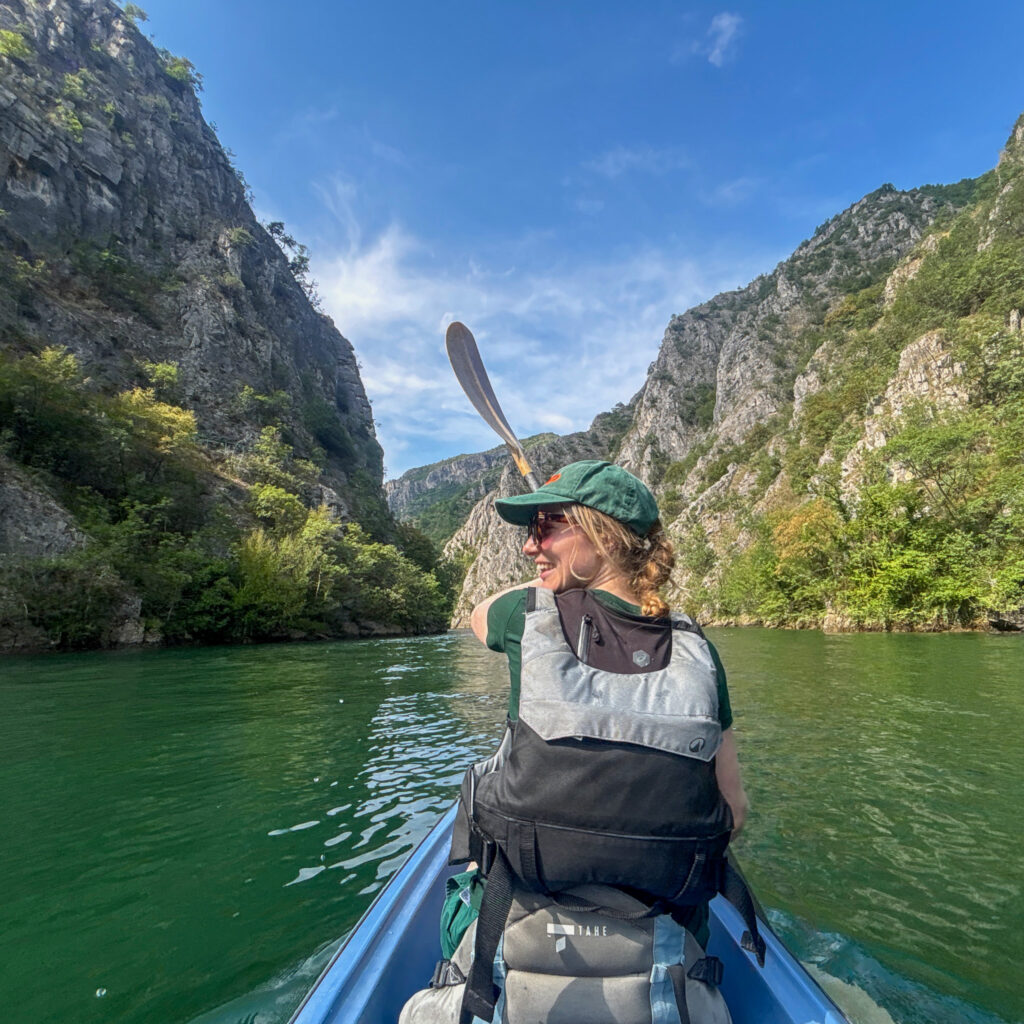
Just 30 minutes from Skopje, Matka Canyon is one of the most popular day trips in the country and great fun with kids. The main activity here is taking a boat trip along the canyon river to Vrelo Cave, a deep and mysterious underwater cave. The scenery is spectacular, and once inside, you can have fun spotting eerie stalactites and singing echoes into the depths. As you walk down to the boats you’ll pass a row of ice cream stands selling flavours you’ve never seen before, including “Facebook” and “TikTok.” This always seems to delight younger travellers (though we hate to think what they put inside them).
North Macedonia adventure holiday
Explore the flavours of Macedonia as you visit Europe’s oldest lake, hike through wild mountain landscapes, taste local wines, discover ancient cities and experience the extraordinary mix of cultures that make North Macedonia one of the Balkans’ most rewarding destinations. Join one of our small-group adventures and discover a country that still feels wonderfully undiscovered.
Quick Foodie FAQs: Macedonia 🇲🇰
Is Macedonian food spicy?
Not especially — Macedonian cooking leans on paprika, roasted peppers and charcoal smoke rather than chilli heat, so most dishes are gentle even by British standards. If you want a bit more kick, ask for lutenica instead of ajvar: it’s ajvar’s spicier cousin, made with extra carrot, onion and tomato alongside the peppers.
Is there anything for vegetarians and vegans?
More than you’d expect from a country famous for grilled meat. Ajvar, lutenica, tavče gravče, stuffed peppers without the meat, gevrek (sesame bread rings) and most salads are naturally vegan, while burek and shopska salad cover vegetarians nicely. It’s genuinely one of the more plant-based-friendly countries in the Balkans — see our full vegan and free-from Balkans guide for more.
Do restaurants have kids’ menus?
Dedicated “kids’ menus” are rare outside Skopje’s more touristy spots, but it’s rarely an issue in practice — portions are generous, staples like burek, tavče gravče and grilled meats are mild and simple, and splitting an adult portion between two children is completely normal here. Bring a fussy eater and they’ll likely leave a convert to at least one Macedonian carb.
Is tap water safe to drink?
Yes, tap water in Skopje, Ohrid and most towns is generally safe to drink, in fact it’s quite delicious. The water is very soft, coming from mountain springs, so wll make your hair soft too.
Do you need to tip in restaurants?
It’s appreciated rather than expected. Round up or leave 10–15% if a service charge isn’t already added — cash is usually easiest.
Is Macedonian food similar to Greek or Turkish food?
There’s plenty of overlap, thanks to centuries of Ottoman rule and Macedonia’s position wedged between Greece, Bulgaria and Albania. Expect the same grilled meats, filo pastries, stuffed vegetables and yoghurt-based dishes you’d find across the wider region — Macedonia just puts its own spin on it, with ajvar and tavče gravče as the local flag-bearers.
Feeling inspired? Browse our range of adventure holidays and hiking tours in the Balkans and subscribe to our free monthly newsletter for more travel-inspired tips, offers and tours.
Comments