
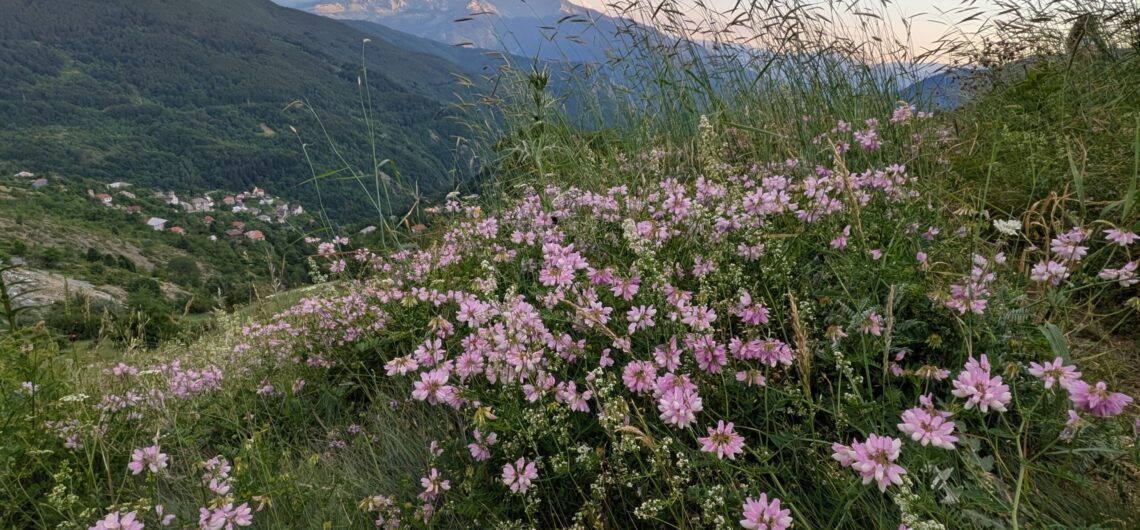
Late spring and summer are wildflower season in the Balkans, and every hike in the mountains brings a bouquet of colour. Wild orchids carpet the meadows, blue forget-me-nots dot the slopes, and pink gentians climb straight up against snow-capped peaks. Seen from a distance the meadows look subtle; up close they’re intense, every blade humming with bees and every flower peeking out from beneath its neighbour. The Balkans is a region that never needed to re-wild, because so much of it has never tamed in the first place.
Because the Balkans span such a range of elevations, you can chase the bloom for months, starting low in spring and following the flowers uphill as summer arrives. As a rule, May is best for wildflowers on the lower valley slopes, while June and July bring the real spectacle to the high alpine meadows above 1,500m, right through to carpets of white edelweiss on the highest pastures.
We’ve picked out 7 of our favourite hiking routes across seven Balkan countries where the trail and the wildflowers are equally good reasons to go — led by the Balkans’ flagship long-distance trail, and running from Albania’s Accursed Mountains to Bulgaria’s Pirin and North Macedonia’s Pelister; all of which feature on our hiking holidays.
It’s no surprise wildflowers are woven so deeply into Balkan culture. They flavour age-old recipes and home remedies, and lend their names and colours to national symbols — the Bosnian lily among the best known. Foraging wild greens and flowers is still a way of life, and you’ll find elderflower cordial, nettle and mountain-herb pies on the menu of any good village guesthouse. The region is also serious orchid country: an estimated 80 species and subspecies grow here, including the exceedingly rare lady’s slipper orchid, a prize find for anyone who knows to look.
⬇️ Scroll down for our pick of wildflower hikes in the Balkans
Related:
1. The Peaks of the Balkans Trail, cross-border
Distance: 192km (119 miles) | Difficulty: Moderate/challenging | Best time: early July
Our flagship wildflower hike. This circular route spans northern Albania, western Kosovo and eastern Montenegro, trekking over high mountain passes and dropping into remote shepherd’s villages where traditional ways of farming are still practised. Early July is the sweet spot — high passes are more likely to be clear of snow while the meadows are still in full flower. Doing the whole loop takes 10–13 days, but our shortened Vusanje-to-Valbona version gives you the same drama — high passes, remote villages, big skies — without the full multi-week commitment. Our Montenegro to Albania hiking holiday follows one of its most beautiful sections, and we also offer a family-friendly version.
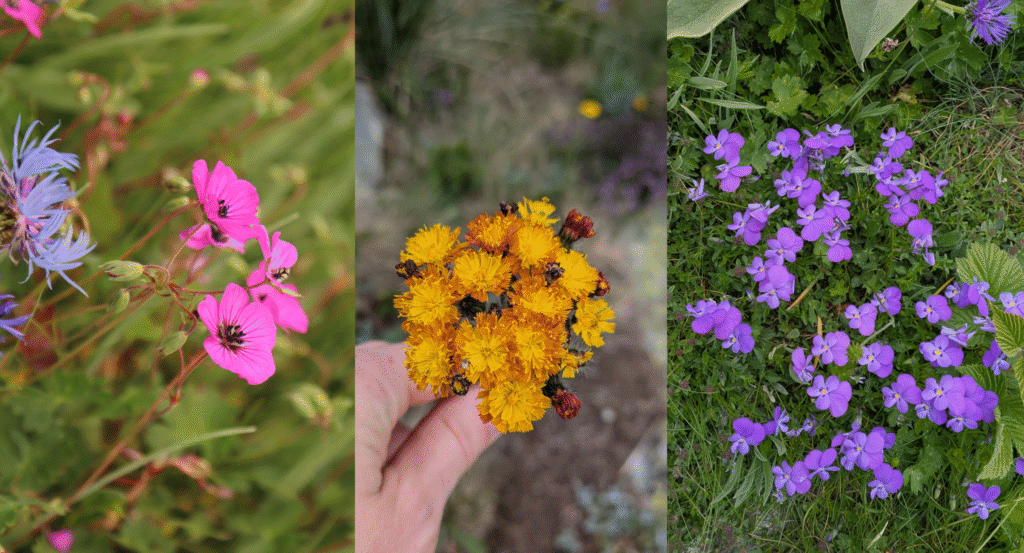
Wildflowers: because this loop stays almost entirely within the Accursed Mountains, June and early July turn its high passes into pink gentians, cobalt-blue nivalis and forget-me-nots, with wild blueberries lower down and sheets of white edelweiss on the highest ground. The shepherd meadows around villages like Theth and Vusanje are still cut by hand and stacked the old way, which keeps them far richer in flowers, bees and birdlife than a machine-mown meadow ever could be.
2. Theth to Valbona, Albania
Distance: 18km | Difficulty: Moderate | Best time: June–July, with July more reliable
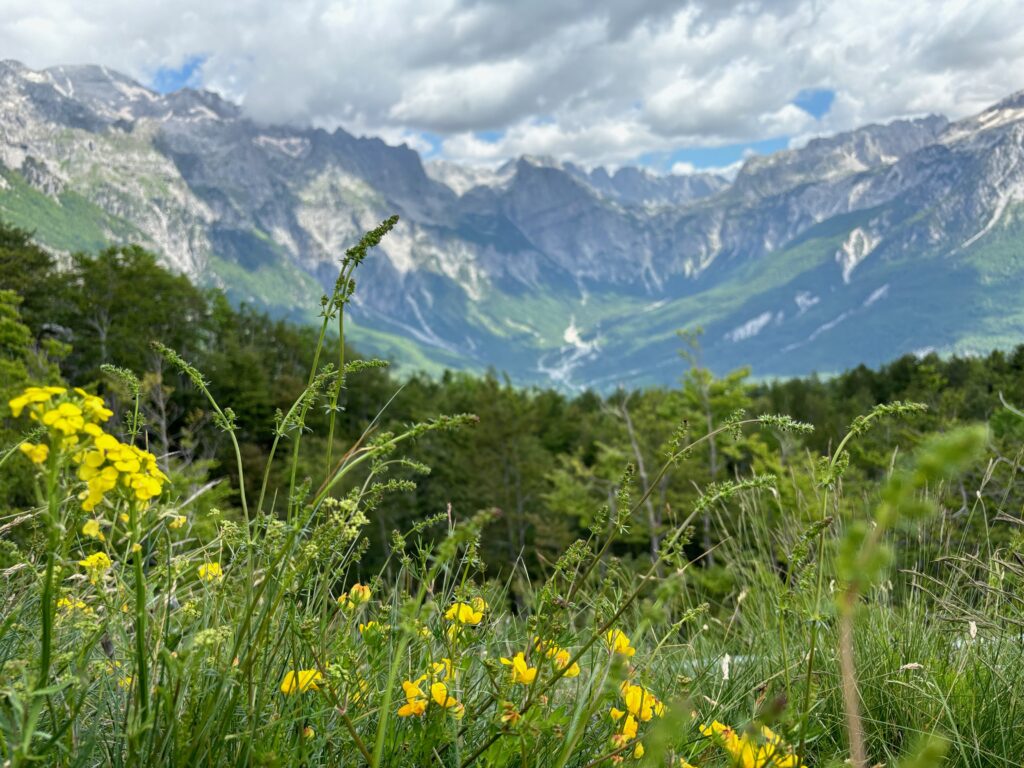
The shorter classic of the same mountain range — a single, spectacular day through the Albanian Alps rather than a multi-day undertaking. The trail climbs through beech forest into open alpine meadow before dropping through dramatic karst scenery to Valbona, taking around seven hours with roughly 1,100m of elevation gain.
We hike it as part of our 3-day Albanian Alps hiking adventure, and also on our 7-day North Albania activity holiday, starting with a traditional farm homestay in Theth before crossing to Valbona and returning to Shkodër by ferry across Lake Komani.
Wildflowers: come in June and the high pastures either side of the pass erupt with colour — pink gentians, cobalt-blue nivalis and forget-me-nots scattered through the grass, with wild blueberry bushes lower down. Hold out until July and the upper slopes carpet themselves in edelweiss.
3. Durmitor National Park, Montenegro
Distance: up to 22km round trip if summiting | Difficulty: Easy/moderate for the meadows, challenging to the summit | Best time: late June–July
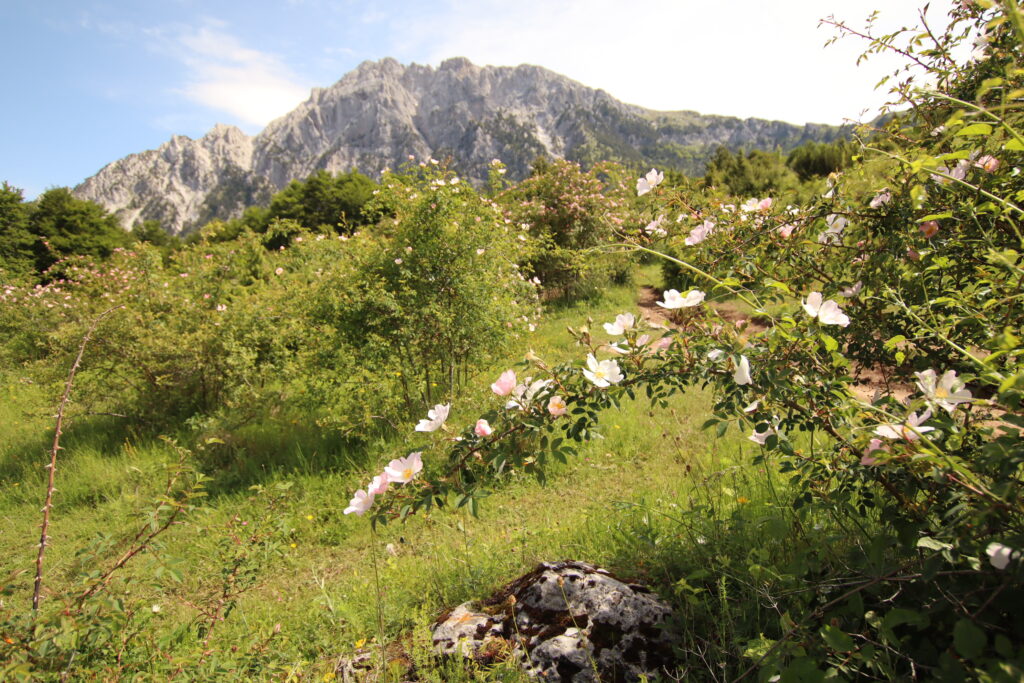
Durmitor National Park has UNESCO protection and no fewer than 48 peaks above 2,000m, but the real reward here is the walk in, not just the summit. From Black Lake (Crno Jezero) near Žabljak, the trail climbs through forest and opens out into the alpine meadows below Sedlo Pass and Prutaš (2,394m) — one of the most beautiful stretches of pasture in the Dinaric Alps, with distinct echoes of Tolkien’s ‘The Shire’.
Strong hikers can continue on to Bobotov Kuk, Montenegro’s highest peak, but it’s a serious extension (around 22km round trip from Black Lake, roughly 1,500m of elevation gain, 10–12 hours) and very much optional.
We bring groups to climb one of Durmitor’s peaks on our week-long mountain hiking tour in Montenegro.
Wildflowers: the meadows below Prutaš and Sedlo are classic Balkan alpine territory — gentians, golden buttercups and orchids threaded through the grass, with the Dinaric Alps’ signature Bosnian lily an occasional, unmistakable find. Late June into July is when the meadows are at their fullest, without the early-season snow patches that can still linger on the higher ground.
4. Sutjeska & Zelengora, Bosnia and Herzegovina
Distance: ~9km round trip to Trnovačko Lake | Difficulty: Easy/moderate | Best time: late June–July
Bosnia’s oldest national park is really two experiences in one. Down in the valley, Sutjeska protects Perućica, one of Europe’s last primeval forests; up above the treeline, neighbouring Zelengora is all open pasture and glacial lakes — nine of them, known locally as the “Mountain Eyes.”
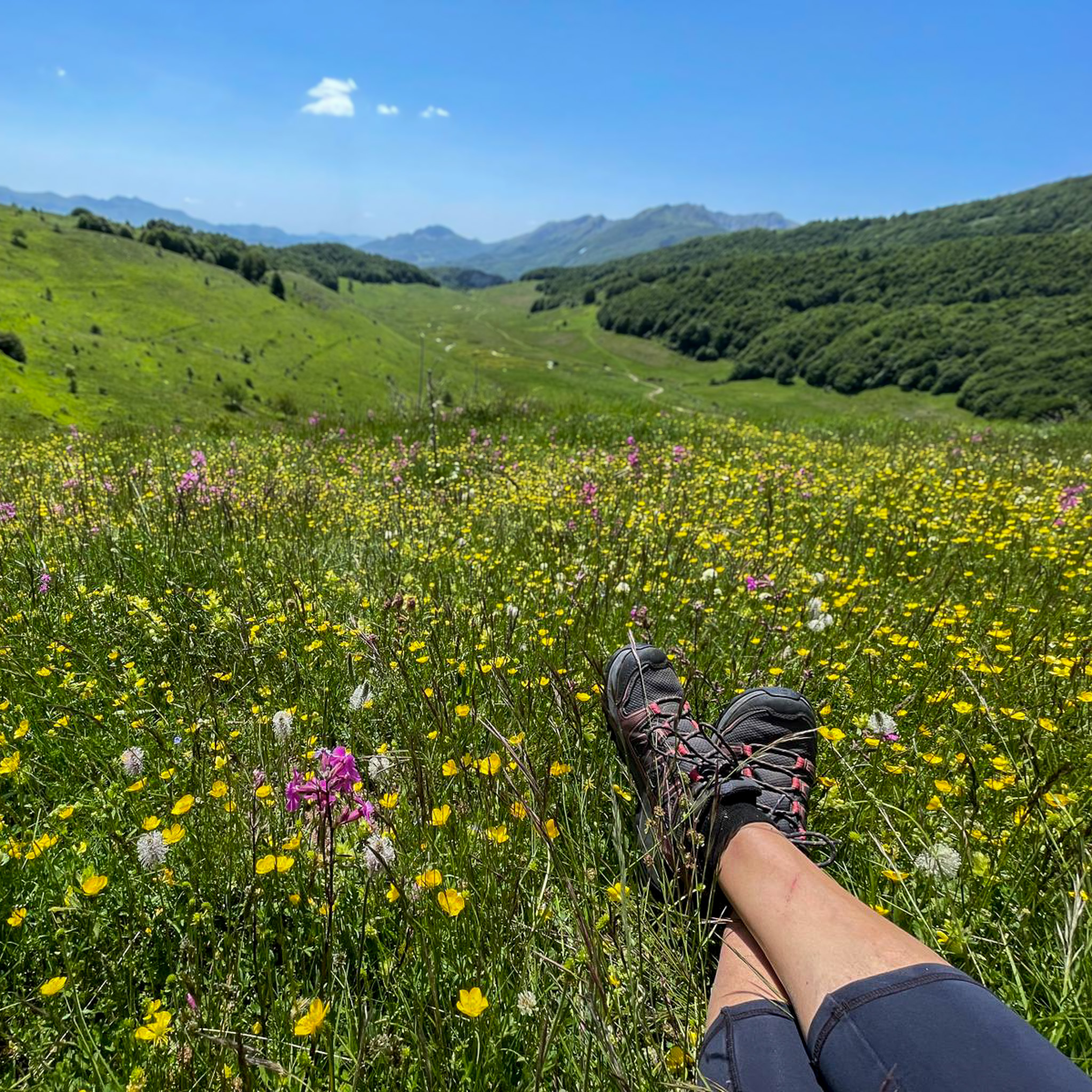
The easiest introduction is the walk to Trnovačko Lake: starting at Prijevor (1,659m), a flower-filled meadow gives way to scree before an easy hour-and-a-quarter descent to a heart-shaped lake beneath Mount Maglić.
For a gentler, more pastoral day, the loop around Zelengora’s Donje and Gornje Bare lakes is flat and open rather than summit-driven — walking through vast meadows rather than up a steep wall — including the flower-carpeted stretch locals call Tepih Livada, the “carpet meadow.”
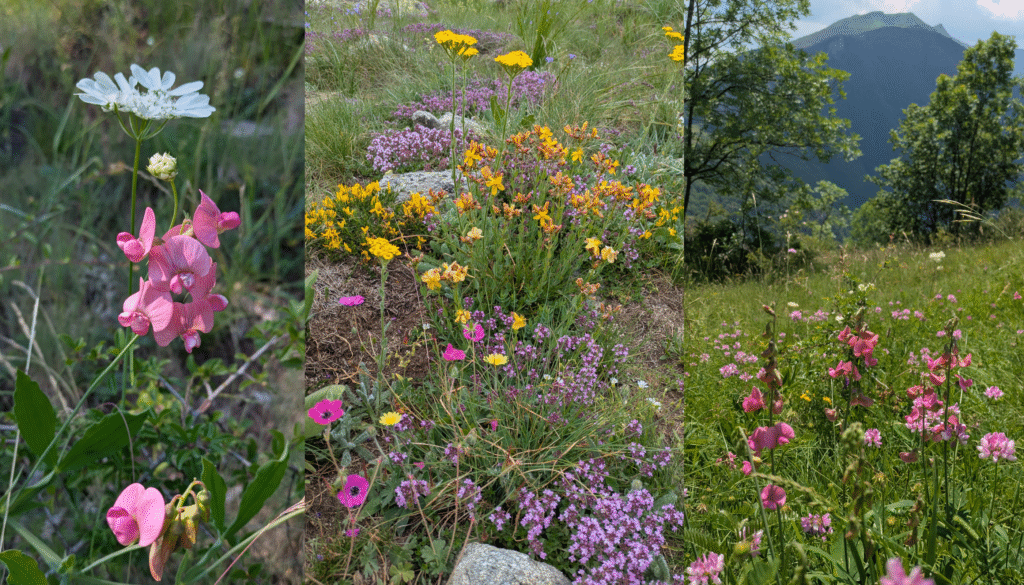
Wildflowers: in June and July, Zelengora’s meadows fill with gentian, bellflower, arnica, wild orchids, marguerite, mountain pansy, hellebore and sage, while the pastures around Prijevor and Trnovačko Lake bring yellow bird’s-foot trefoil, purple meadow sage, bulbous buttercups and wood anemone.
7-day Bosnia hiking holiday
Want to explore Bosnia’s wildflower-filled mountains for yourself? Discover the spectacular Dinaric Alps on our 7-day Bosnia & Herzegovia hiking holiday, including the wild landscapes of Sutjeska National Park and the beautiful mountains around Zelengora.
5. Pirin National Park, Bulgaria
Distance: 5.5km out and back to Banderishki Lakes (easy/moderate); up to 16km for the full edelweiss trail (moderate/challenging) | Difficulty: Easy to challenging depending on route | Best time: July
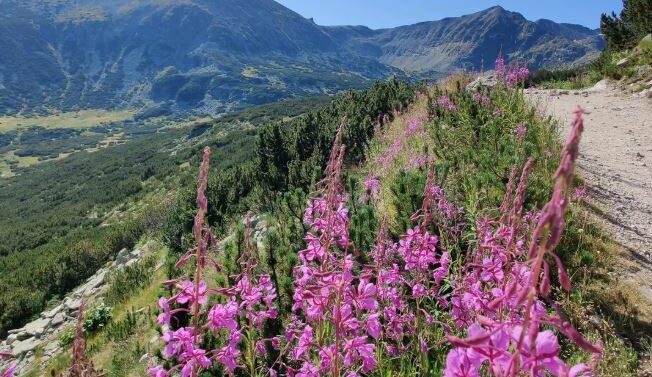
Pirin is the most botanically rich of all the ranges on this list, with a long list of Balkan endemics found nowhere else. Banderitsa Valley, above Bansko, is the classic starting point: an easy there-and-back walk climbs above the tree-line in under two hours to reach Banderishki Lakes, or push further to Vihren Hut and beyond onto Pirin’s dedicated high-altitude edelweiss trail, where educational boards point out the flower along a 16km route gaining almost 1,000m. July is the best month in Bulgaria’s high peaks for both access and flowering — snow patches can still linger into June at this altitude. It’s is our 7-day Bulgaria hiking holiday departures start from late June and not earlier.
Wildflowers: expect the heart-flowered marsh orchid, the delicate Gymnadenia frivaldii — a Balkan endemic found almost nowhere else — plus foxgloves, oxlips and, higher up, sheets of edelweiss on the exposed ridges.
6. Stara Planina, Serbia
Distance: 16km | Difficulty: Moderate | Best time: June–July
A more rugged, less obvious wildflower destination than Serbia’s better-known Tara National Park, Stara Planina — the “Old Mountain” — trades forest for broad alpine grassland and wide-open mountain views. It’s also higher: reaching the flower-filled high meadows and Midžor (2,169m), Serbia’s tallest peak, means a steady 700m climb, so moderate fitness is worth having in the bank. We explore it on our 7-Day hiking holiday in Serbia, rambling past waterfalls and serious ridgelines, and, if we’re lucky, spotting wild horses.
Wildflowers: the meadows either side of the trail are thick with oxeye daisies, yarrow and knapweed, kept wildflower-rich by the same low-intensity, traditional grazing and hand-cutting still practised in the stone villages below.
7. Pelister National Park, North Macedonia
Distance: ~17km round trip | Difficulty: Moderate | Best time: June–July
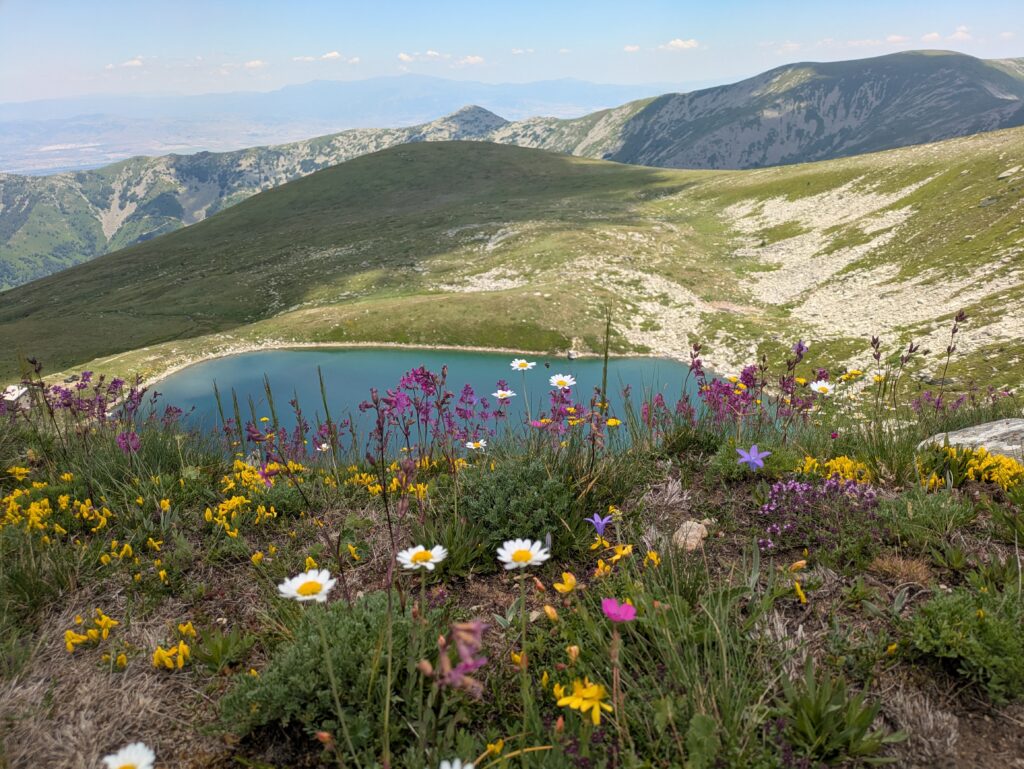
North Macedonia’s oldest national park is best known for the Macedonian pine, or “molika” — an endemic species first described here in 1843. A well-marked trail climbs a little over three hours from Nizhepole village to Malo Ezero (2,180m), the smaller of Pelister’s twin glacial lakes, with the larger Golemo Ezero (2,218m) an hour beyond, where a mountain hut serves as a weekend guesthouse. On our North Macedonia activity holiday, we’ll take you up by Land Rover and hike the moderate three-hour loop between both lakes, saving your legs for the flowers rather than the ascent.
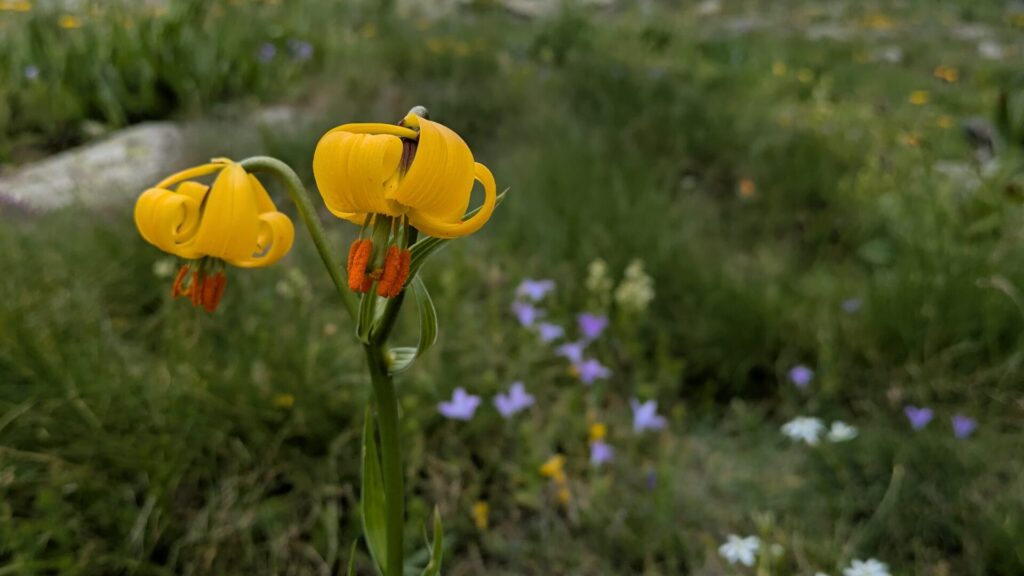
Wildflowers: as the ancient molika pine forest thins out above 1,600m, it gives way to open alpine grassland around the lakes — prime wildflower territory, including the striking Yellow Turk’s Cap lily, with unmelted snow patches lingering well into summer at this elevation.
When to Go
Think of this as a flowering window rather than a fixed week. If you’re heading for the highest routes — Bulgaria, the full Peaks of the Balkans loop, Pirin’s edelweiss trail — July is the safest planning choice, once the passes have properly cleared. If you’re sticking to lower and mid-altitude meadows, June can be just as spectacular, and often quieter. Either way, these are some of the best wildflower hikes in Europe precisely because you don’t have to choose between flowers and scenery, on every route above, you get both.
FAQs
When do wildflowers bloom in the Balkans?
Mainly June–July, though it depends on altitude — lower meadows can peak in May.
Is June too early for wild flowers?
Not necessarily — it’s excellent at lower and mid elevations, even if the highest passes are still clearing.
What’s the best trail for wildflowers?
The Peaks of the Balkans and Theth–Valbona are our top picks, with Pirin the strongest choice for rare and endemic flora.
Which are the best wildflower meadows?
The Accursed Mountains, Durmitor, Zelengora and Pirin all stand out.
What flowers will I see?
Orchids, gentians, alpine poppies, edelweiss, bellflowers and countless other mountain wildflowers, depending on altitude and season.
Do I need to be an experienced hiker?
No — some routes are demanding, but not all. Zelengora’s Tepih Livada is an easy, flat meadow walk, while the Peaks of the Balkans and Montenegro’s Bobotov Kuk are serious, much harder undertakings best reserved for serious walkers.
Feeling inspired? Check out our full collection of hiking holidays and subscribe to our newsletter below for free monthly travel tips, offers and updates.
Comments