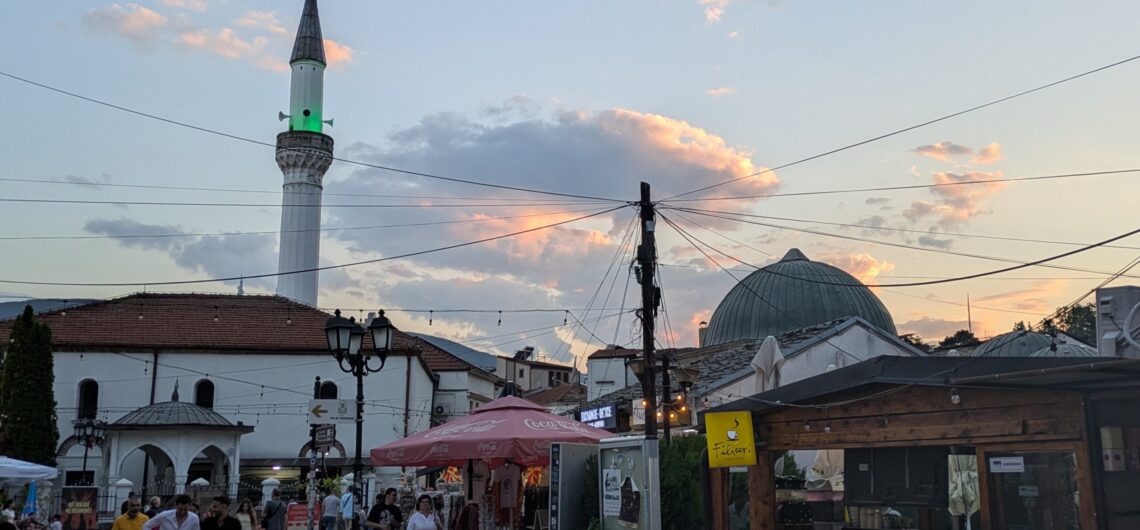
Skopje has been knocked down and rebuilt more times than almost any capital in Europe – by earthquake, by empire, by its own government – and somehow it manages to mix it all together. Ottoman minarets sit across the river from Austro-Hungarian facades and fantastical brutalist buildings, and the city is littered with chunky sculptures. It’s fun, a bit mad and certainly vibrant.
Whether you’re flying in, or just passing through, it’s worth spending an extra night or two in North Macedonia‘s extraordinary chief city before you head out to the mountains and lakes.
We asked our Macedonian guide Vojislav, who grew up in Skopje in the last years of Yugoslavia, what the city means to him. “There was a feeling of never-ending freedom, we all shared so much,” he told us. His childhood of mixed languages, cultures and religions still exists. That layered, mixed up identity is still exactly what makes Skopje worth a wander today.
Here we’ve listed some of the must-visit places in Skopje, plus a stunning gorge just outside of the city.
Visit Skopje’s Old Bazaar
If you land in Skopje, head to the Čaršija (the old Ottoman bazaar) to peruse the many small shops. One of the largest Ottoman era bazaars still standing in the Balkans, Čaršija is a tangle of cobbled lanes, mosques and old craft workshops on the north bank of the Vardar. Mustafa Pasha Mosque and the 15th century Suli An caravanserai, once a stopover for merchants, are both worth ducking into.
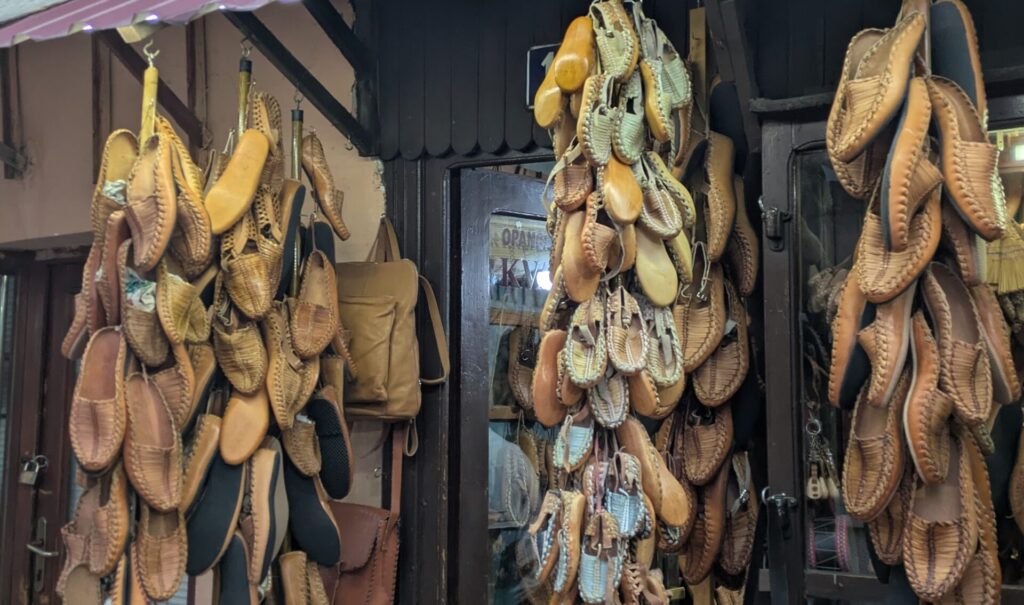
This is a city that still has its specialists: the hatmaker, the leather slipper maker, the belt and buckle shop, the watch-fixer. Seeing the (usually) elderly shopkeepers at work handcrafting their wares is a delight – and is rare to see in Europe.
A wonderful souvenir to pick up are these comfy leather Opinok (опинок) Plural: Opinci (опинци) – the pan-Balkan traditional slipper.
While you’re wandering the Čaršija of Skopje, you can snack on sweet or savoury street food delights include lahmacun (a thin, spiced Turkish-style flatbread) from Galerija 7 bar. Or order warm Burek, or “Banitsa sas Sirene,” at one of the small bakeries and grills tucked between the stalls, and don’t leave without baklava from one of the old patisseries. Eat it standing up on the street like everyone else does— preferably for breakfast to fuel a day of kayaking and hiking.
Read: Visiting Skopje’s ‘Slatkarnice’ patisseries in our Macedonia Food & Drink guide
Shop for your Balkan wedding dress
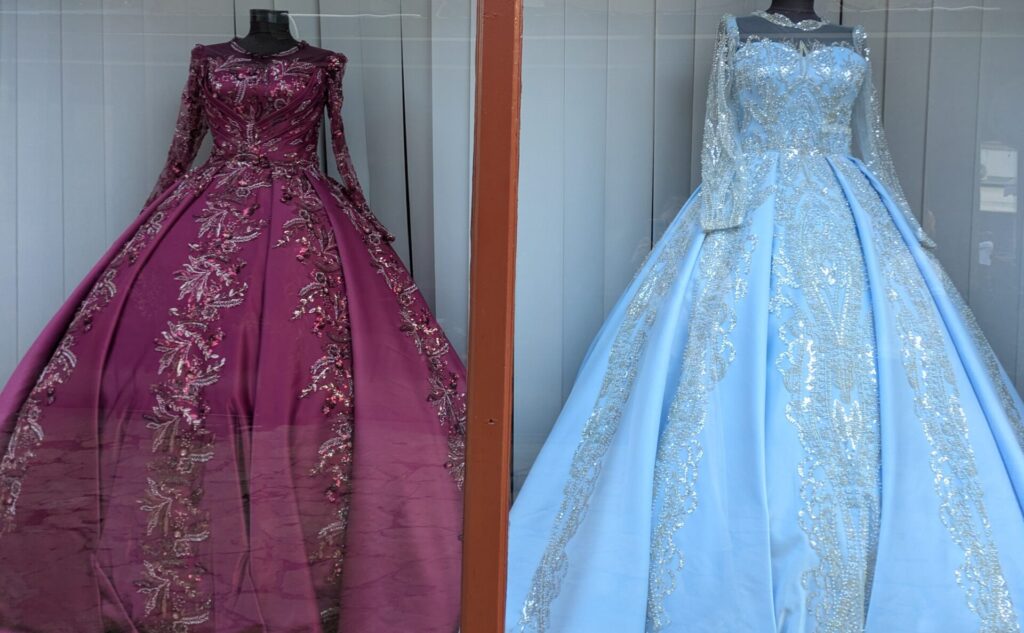
Before you leave the Čaršija, have fun browsing the OTT dresses in the many fantasy wedding shops of the old town. Warning: if you come back from Skopje with one of these meringue-sized, crystal-studded creations, you’ll need a bigger suitcase, a wider doorway, and a fiancé brave enough to show it to the mother-in-law!
Ride an old London double decker bus
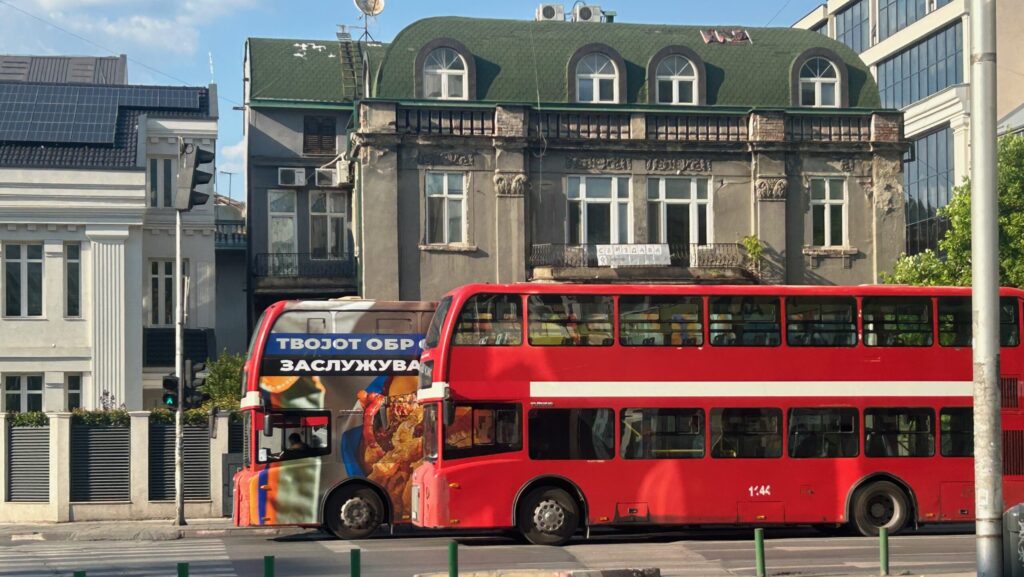
Skopje’s red double deckers actually go back to 1953, when the city bought a fleet of English buses from London, a novelty at the time and a real head turner on the streets. Sadly the iconic red busses you see around Skopje today are not the real vintage ones with the open platform at the back and pole to hop on and off!
Most of those were destroyed in the 1963 earthquake along with everything else. But in 2011, the city’s transport operator brought the look back on purpose, ordering 217 new buses deliberately styled to look like classic London busses as a nod to that pre earthquake fleet.
Visit the Skopje Fortress
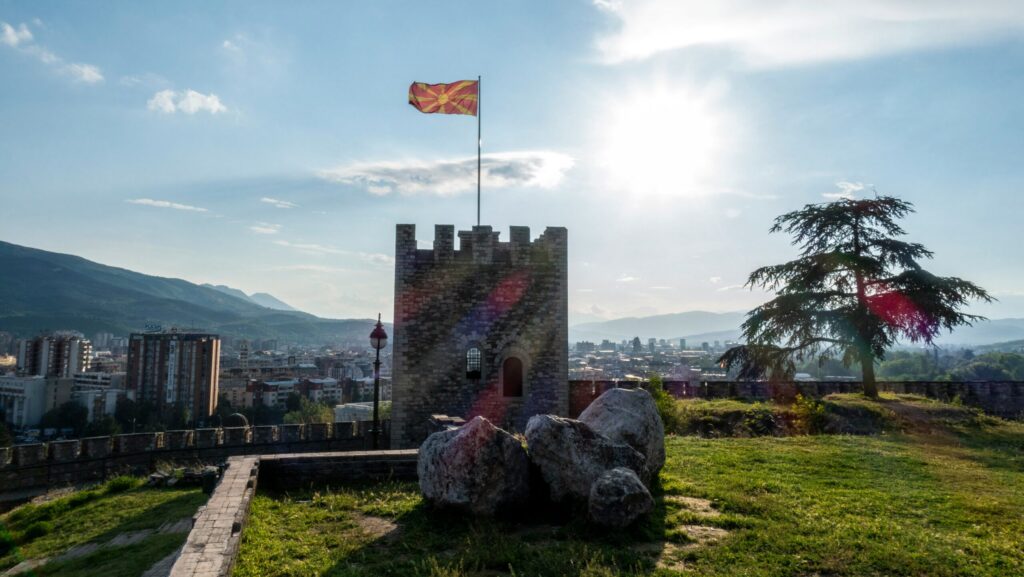
Brooding over the Old Bazaar, the Kale (fortress in Macedonian) has been rebuilt by Romans, Byzantines, Ottomans and Macedonians alike, and the walls you see today are a patchwork of all of them. From the ramparts you get the best free view in the city, straight down the Vardar to the Stone Bridge, the 15th century Ottoman crossing that still links old Skopje to new.
Related:
- The best things to do in North Macedonia
- Meet the team: North Macedonia partner Vojislav
- Which Balkan country should I visit first?
The funky statues of Skopje
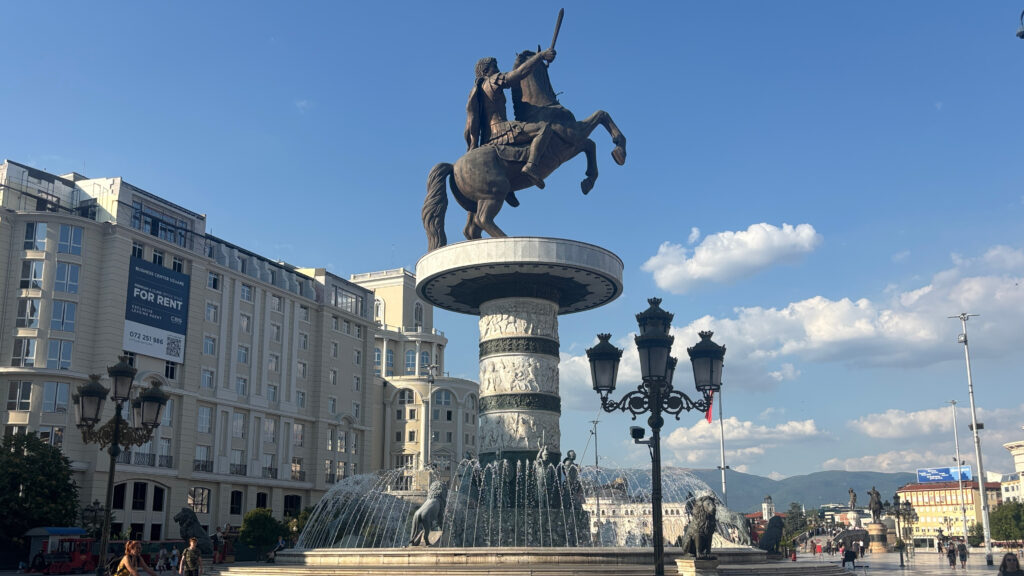
Cross the Ottoman Stone Bridge and the city changes rapidly. Macedonia Square is the centrepiece of a multi-million euro makeover completed in the 2010s, all grand neoclassical facades, fountains and statues where a much plainer socialist era square once stood. The makeover was very controversial- many locals saw all the pompous statues as contributing to the ‘Disneyfication’ of their city.
Tourists come to gawp at the biggest statue, a warrior on horseback, represents the Macedon Alexander the Great but is officially unnamed ‘Man on Horse’ thanks to a long running dispute with Greece over who gets to claim Alexander the Great. Best to enjoy it and leave the argument to the diplomats.
North Macedonia adventure holiday
Explore the vibrant nature and culture of Macedonia as you visit Europe’s oldest lake, hike wild mountains, taste local wines, discover ancient cities and experience the extraordinary mix of cultures that make North Macedonia one of the Balkans’ most rewarding destinations. Join one of our small-group adventures and discover a country that still feels wonderfully undiscovered.
Tour the brutalist architecture of Skopje
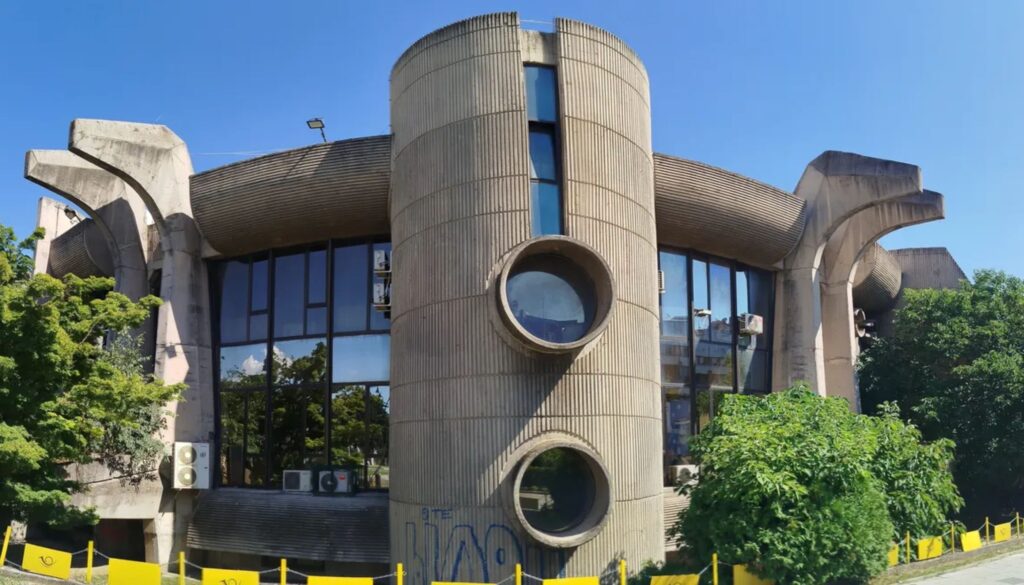
Skopje’s brutalism exists because of catastrophe – a blessing in a tragic disguise. After the 1963 earthquake flattened 80% of the city, the UN ran a rare international reconstruction effort, and Japanese architect Kenzo Tange won the competition to masterplan the new centre. His team blended Japanese metabolist theory with the concrete brutalism popular at the time in Yugoslavia, a combination barely seen anywhere outside Skopje.
Local architect Janko Konstantinov built the most famous result, the Post Office which looks like curved concrete petals. He also completed the Nikola Karev school, while Georgi Konstantinovski gave Skopje its City Library and student dormitories, and Marko Mušič designed the unusual university campus. Most of it sits within easy walking distance of Macedonia Square.
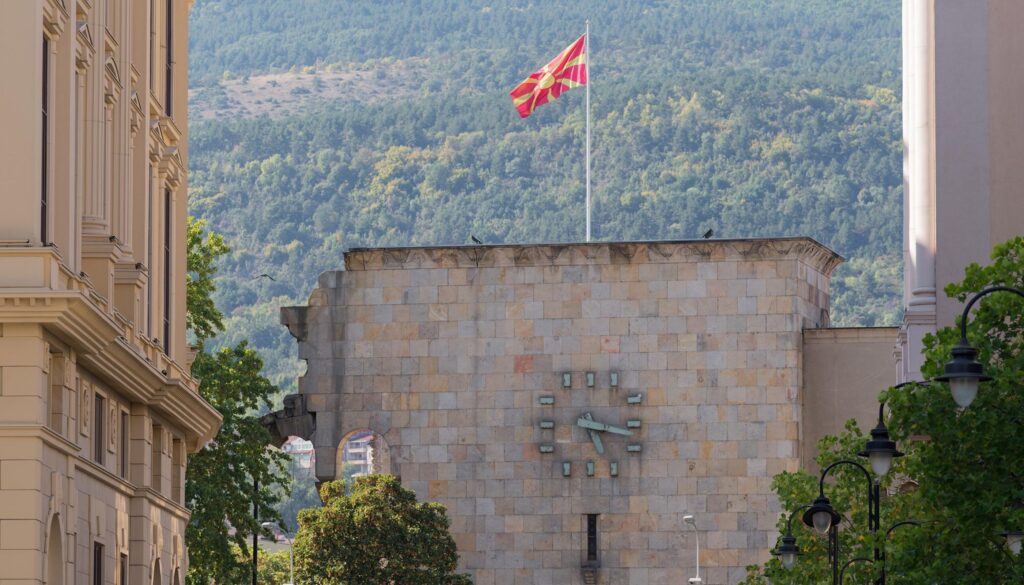
Skopje’s ‘stuck clock’ at the old railway station destroyed by an earthquake
Just north of the square, Skopje’s old railway station is now a city museum, its facade cracked and its clock frozen at 5.17am, the exact moment an earthquake levelled 80 percent of the city on 26 July 1963. The devastating earthquake killed over 1,070 people, injured over 3,000 and left more than 200,000 people homeless. About 80% of Skopje was destroyed. Thanks to President Tito’s position between East and West and his ‘Non-Alligned stance’, Skopje was rebuilt with help from all over the world, including the UK, USA and Soviet Union. The station was left as it fell, a reminder of the tragedy.
Mother Teresa: Skopje’s most famous resident
Who is Skopje’s most famous resident? Why, long before Calcutta, Mother Teresa was born here in 1910 as Anjezë Gonxhe Bojaxhiu. The Memorial House of Mother Teresa, a striking modern building near the Old Bazaar, marks the site of the church where she was baptised and holds a small relic sent from the Vatican.
Millennium Cross and Mount Vodno
Towering 66 metres over the city, the Millennium Cross sits on top of Mount Vodno, reachable by a cable car that takes six to eight minutes and rewards you with a panorama over all of Skopje and the mountains beyond. It’s close to where our North Macedonia trips are based, so it’s an easy add on before or after your holiday, and a genuinely spectacular spot for sunset.
Matka Canyon half day trip
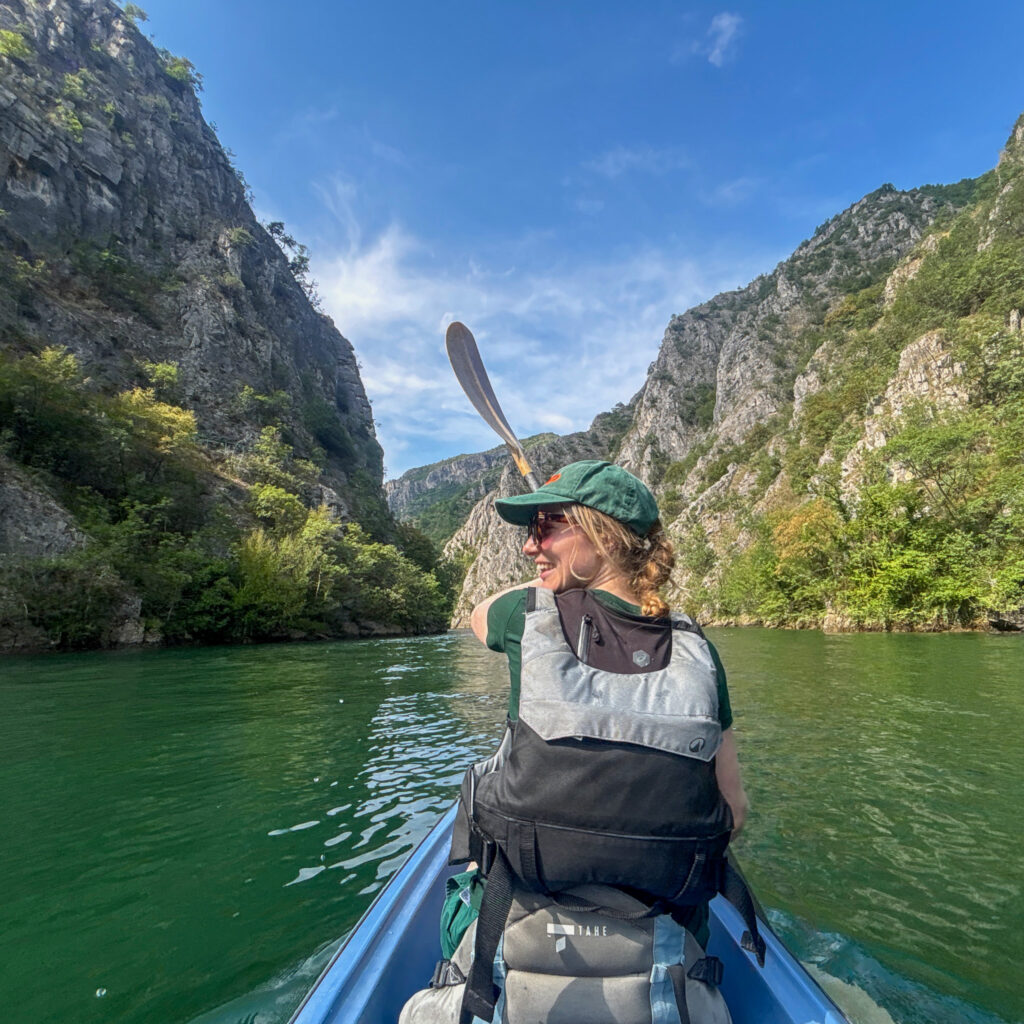
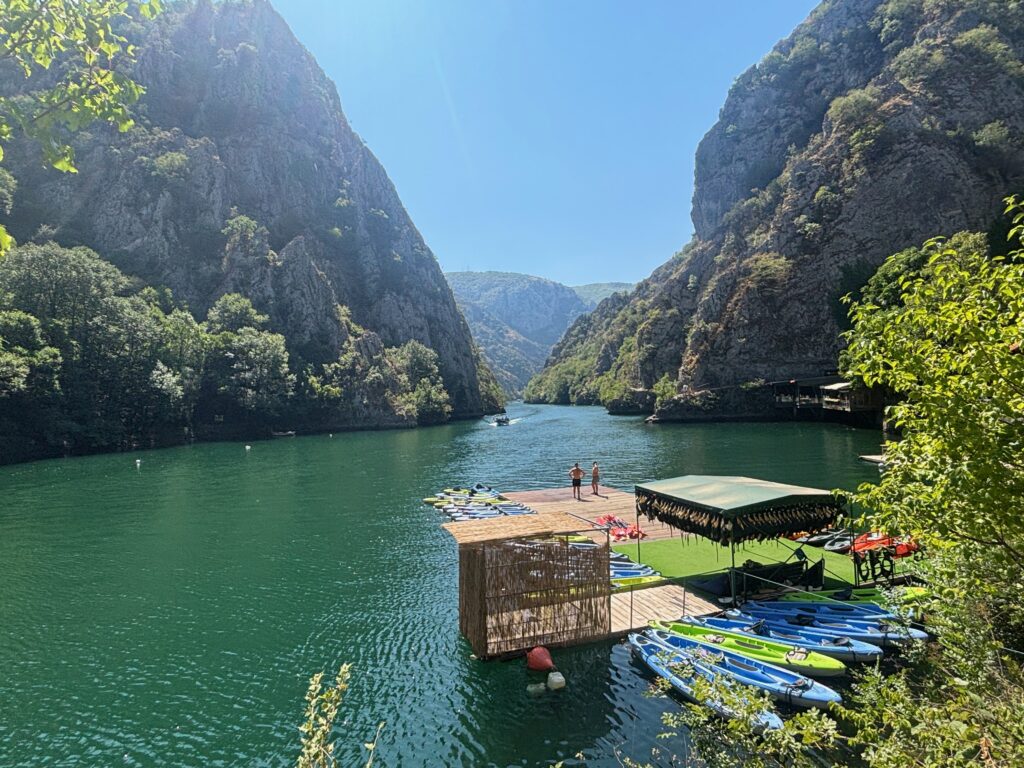
If you have half a day spare, don’t skip Matka canyon, a limestone gorge just 30 minutes from the centre. The most popular activity here is boat cruising – and there are plenty to choose from. If you join our 7-day North Macedonia multi-activity holiday, we’ll take you kayaking instead!
We paddle through the turquoise reservoir to a small pontoon leading to Vrelo Cave, one of the deepest underwater grottos in Europe. The scenery is spectacular, and once inside, you can have fun spotting eerie stalactites and singing echoes into the depths.
As you walk down to the boats you’ll pass a row of ice cream stands selling flavours you’ve never seen before, including “Facebook” and “TikTok.” This always seems to delight younger travellers (though we hate to think what they put inside them).
Quick FAQs: Visiting Skopje, Macedonia 

Is Skopje worth visiting?
Yes. It’s easy to underestimate, but the mix of Ottoman old town, communist era leftovers and a very modern makeover makes it one of the more unusual capitals in Europe, and most visitors are surprised how much is packed into a small centre. Personally we love shopping for artisan goods in the old bazaar.
Should I fly into Skopje or Ohrid?
Ohrid flights are seasonal and only on certain days of the week, so if you want more flexibility fly to Skopje. Flights go from London Luton and can arrive late at night. If you want to start and end your Macedonia holiday by the beautiful Lake Ohrid, and do Skopje as a sightseeing stop in the middle, we suggest you fly to Ohrid.
What is there to see and do in Skopje with kids?
Plenty to delight the young ones! Tried and tested with our children were the cable car ride to Mount Vodno, exploring Skopje’s Old Bazaar, climbing Skopje fortress and Matka Canyon. Here’s our guide to the 7 best things to do in North Macedonia with kids.
What’s the weather like in Skopje?
In summer Skopje gets piercingly hot – up to 40 degrees – so if you’re planning to spend longer than a day, we do recommend visiting in shoulder seasons from September to June. In winter there’s a chill from the Sharr mountains above.
When’s the best time of year to visit Skopje?
See above, we do recommend visiting Skopje in shoulder seasons from September to October and April to late June.
How many days do you need in Skopje?
A full day covers the Old Bazaar, Kale Fortress, Macedonia Square and the old railway station. Two days lets you add Mount Vodno and a half day trip to Matka Canyon without rushing.
Is Skopje safe for tourists?
Yes, it’s generally considered a safe, walkable city, including central areas at night. Family is a priority here and children are looked after by the community.
What is Skopje known for?
Its Ottoman Old Bazaar, the “Skopje 2014” makeover of statues and neoclassical buildings around Macedonia Square, and being the birthplace of Mother Teresa.
Is Skopje an expensive city to visit?
No, it’s one of the more affordable capitals in Europe. Food, transport and accommodation all cost noticeably less than Western Europe, making it an easy add on to a longer Balkans trip.
Read our other Balkan city guides and find more travel tips and inspiration on the blog. Or subscribe to our free monthly newsletter for more travel-inspired tips about the Balkans, our latest offers and tours, and our special subscriber discount.
Comments