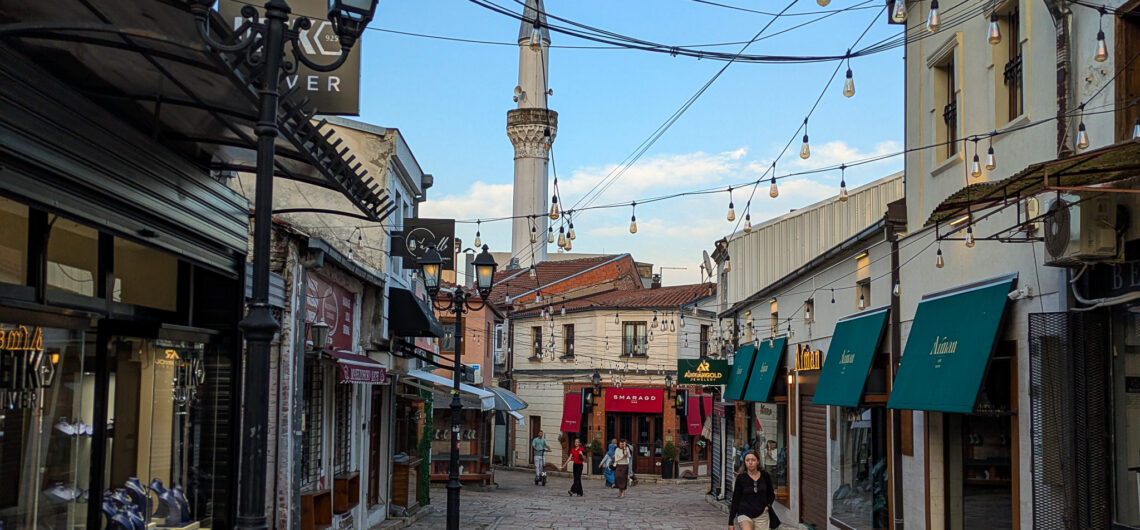
The Balkans, a region rich in history, cultural diversity and natural beauty, never fails to reward the adventurous traveller – but a handful of local customs are worth knowing before you go. None of them are complicated, and getting one wrong won’t ruin your trip, but getting them right tends to open doors to extra warmth and hospitality – or maybe even a friendship to return to!
Start with understanding the geography: the Balkans is a block of countries in South-East Europe, stretching from Greece to Romania. There are 12 Balkan countries: Slovenia, Croatia, Bosnia and Herzegovina, Montenegro, Serbia, Albania, Kosovo, North Macedonia, Greece, Turkey, Bulgaria, and Romania.
With the exception of Romania and Bulgaria, most of the above countries don’t call themselves ‘Eastern Europe.’ This is because the Balkans were never part of the Soviet Union, except for Bulgaria and, very briefly, Albania. General Tito insisted on an independent socialist path for Yugoslavia. See our guide to ‘Where is the Balkans anyway?‘
We brief guests on our guided adventure trips, but here we share five of the most common etiquette mistakes to avoid, and why.
1. Don’t bring up politics or assume everyone has taken the same side
The wars of the 1990s are recent enough that they still shape conversation, but things are never black and white. Families across the region are often mixed heritage, spanning ethnicities and religions that outsiders sometimes imagine as neatly separated. Asking a new acquaintance to summarise “what really happened” or assuming a whole country shares one political view is a fast way to make a warm conversation go quiet.
One example is casually blaming Serbs when you are in Bosnia & Herzegovina – the person you are talking to might come from a Bosnian Serb family and have their own harrowing war experience.
If people want to talk politics or history, then listen respectfully and try not to judge. Curiosity is welcome. Assumptions are not. If things get heated, compliment the food or scenery. Always bring it back to the excellent food!
Think of this as the old-fashioned British dinner party maxim: “No politics, sex or religion at the table.”
2. Don’t wear shorts and strappy tops at religious sites in the Balkans
The region is famously multi-faith with Catholic, Jewish, Muslim and Orthodox communities living here.
You don’t need to cover up on the street, but take a scarf, long skirt or long trousers with you if you plan to visit mosques or churches. This also goes for men! Shorts and tank tops are not welcome at religious sites.
In mosques you must leave your shoes at the door, cover your shoulders and knees, and women should wear a headscarf. Avoid visiting during Friday midday prayers. Most places have scarves to lend to visitors and some, like Blagaj tekia, have long skirts.
Ramadan, usually falling somewhere in February or March, is observed with varying strictness, and alcohol and tobacco remains widely available even in majority Muslim countries like Albania, Kosovo and Bosnia & Herzegovina.
In Orthodox churches and monasteries, women generally cover their shoulders and wear long skirts, shorts are best avoided for everyone, and it’s polite to enter and move around quietly if a service is underway.
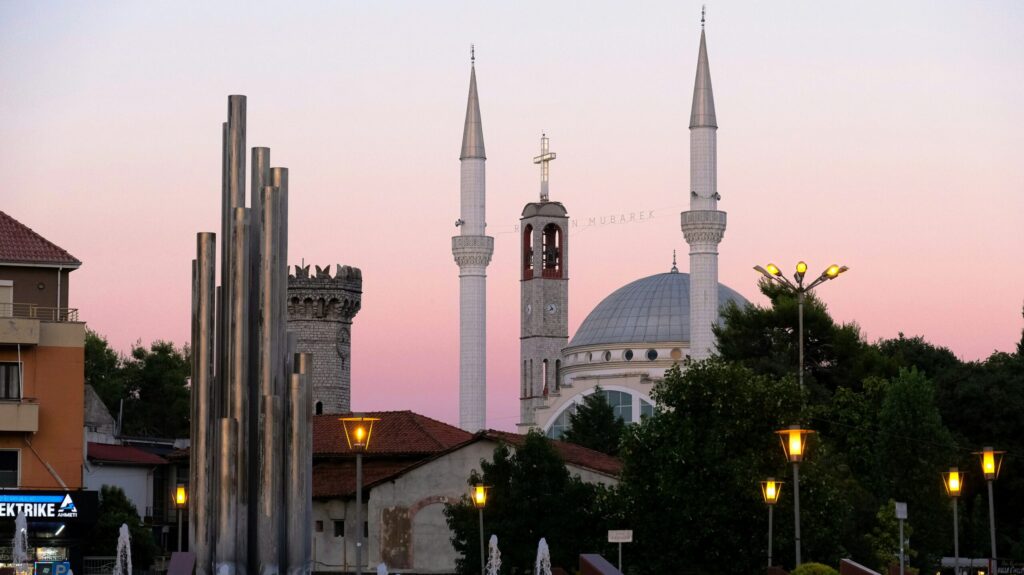
In many places, you will witness how faiths co-exist, borrow from each other and blend. One example is the close proximity of the Ebu Bekr mosque and the Catholic church in Shkodër, Albania, leading many to dub it the ‘church mosque’ – a symbol of the city’s historical interfaith harmony. Places of pilgrimage are often shared, like St Anthony’s church and cave in Albania, or Medjugorje in Bosnia & Herzegovina.
3. Don’t reject the Balkan hospitality: rakija, food and coffee
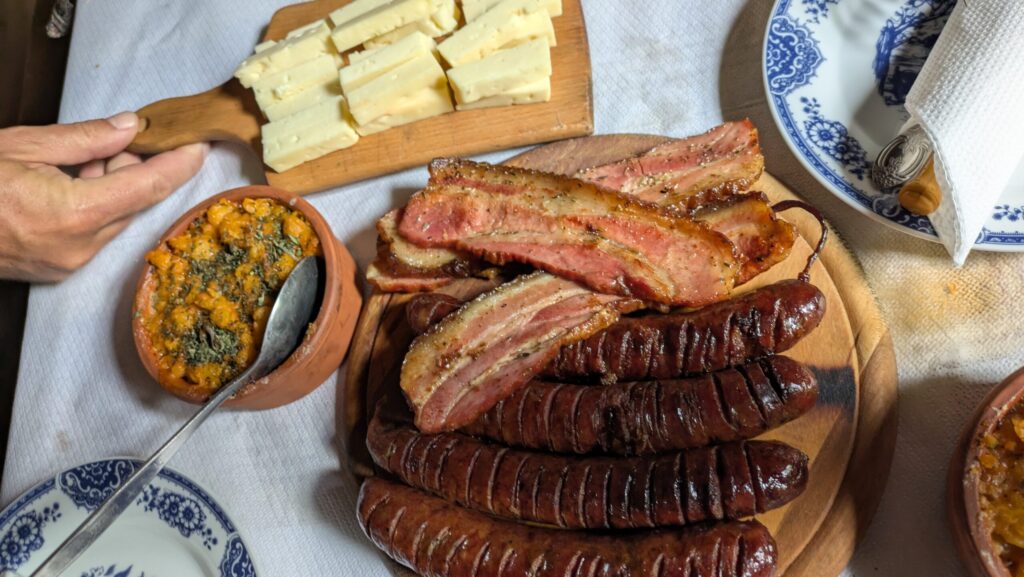
Balkan hospitality runs on the assumption that guests should never leave hungry, and refusing whatever is offered can come across as rejecting the welcome itself. Say yes to the rakija (even a small sip), the coffee, and whatever food appears, even if you’ve just eaten. People here are feeders.
If you know a big lunch or dinner is coming, eat lightly for breakfast. Or, just accept that you’re on holiday and will eat extremely well! The good news: it’s polite to leave a bit of food on your plate so your host knows they have fed you well enough and doesn’t get offended.
In Albania this hospitality runs so deep it has a code of honour that states “The house of the Albanian belongs to God and the guest.” In past centuries, strangers were sheltered at real personal risk and blood feuds could be provoked if a guest was injured on your land.
Most important of all, don’t down your rakija in one go. This region-wide fruit brandy offered to guests everywhere is potent. Sip don’t gulp- trust us!
We sincerely hope you don’t get ill on a trip to the Balkans, but if you do come down with a cold, don’t be surprised if you get offered a few herbal or folk remedies that may involve rakija, honey, garlic and teas. Some of these are genuinely helpful, others are old wives’ tales. Either way, accepting the remedy is often another way of accepting the care and hospitality behind it.
There’s also a superstition called ‘promaja’ in the Slavic languages of the region – the supposedly dangerous draught that can cause illness, particularly if you’re sitting in a draught or have wet hair. We’ve had hosts insist on drying our clients’ wet hair or socks to ward off ‘deadly’ promaja (again the polite thing is to go along with it). This is rather like the British warning “catch your death of cold”.
4. Don’t expect everything to run on schedule – enjoy ‘samo polako’
Plans shift in the Balkans more than you might be used to. Attractions close without notice, a surprise public holiday can shut half the shops in town, and forecasts are little more than a suggestion especially in the mountains where weather stations are few and far between.
It’s for this reason that one of our favourite phrases exists: samo polako meaning ‘just for easy’ (i.e. slow down and don’t get fixated on needing to do stuff). Think of it as the Balkan equivalent to hakuna matata!
In Croatia it’s known as “pomalo”. In Bosnia it’s taken one step further with the concept of ćejf (relax, there’s always time for coffee). And then there’s the legendary Dalmatian fjaka state of mind, a sublime state in which a human aspires for nothing – but experienced in vague, unconscious ways.
This all adds up to a culture which doesn’t rush or fuss over things having to run on time. Our trips will always build in a backup plan, so treat a possible unplanned detour as part of the trip. Embrace spontaneity: some of the best afternoons we’ve had were never on the itinerary at all!
Cross border Montenegro to Albania hiking tour | 7 days
Follow the Via Dinarica across Montenegro and Albania’s awe-inspiring mountains! This program combines two grandiose mountain chains – Komovi and Prokletije – and two amazing countries – Montenegro and Albania to get the best of both cultures.
5. Don’t try to haggle in shops or markets
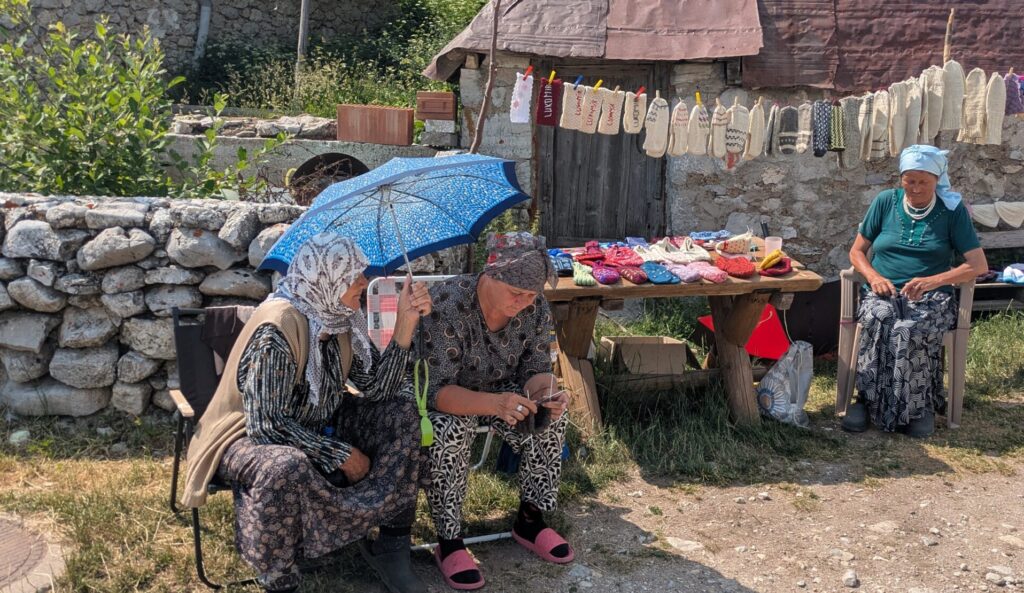
Unlike markets in the Middle East or North Africa, haggling isn’t part of Balkan culture. This is largely a legacy of decades of fixed, state controlled pricing under communism.
Try to talk a seller down and you’ll usually just get a polite refusal or a puzzled look – but in some cases, you may accidentally cause offence (never question someone’s honour in the Balkans!). If a price feels too high, the local approach is simply to walk on and find another stall selling the same thing for less, rather than try to negotiate on the spot.
Related:
Quick FAQ: Balkans etiquette
Do I need to cover my head or shoulders in the Balkans?
Not on the street, everyday dress is fine anywhere in the region. Head and shoulder coverings are only expected inside mosques, and shoulders are best covered in Orthodox churches too. Most mosques keep spare scarves for visitors, but it’s worth carrying a light one just in case.
Is it rude to talk about the Balkan wars of the 1990s?
It’s not off limits, but it’s a sensitive subject best approached with curiosity rather than assumption. Many families have mixed heritage and personal experiences that don’t map neatly onto one side, so let locals lead the conversation if they choose to have it.
Is haggling acceptable in Balkan markets?
No, fixed pricing is the norm across the region, a legacy of decades under communist rule. If a price seems too high, the polite move is to walk away and shop elsewhere rather than negotiate.
What should I do if I’m offered rakija or food I don’t want?
Where possible, accept a little, even a small sip or bite. Turning down Balkan hospitality outright can read as turning down the welcome itself. If you’re full, leaving a small amount of food on your plate is the polite way to signal you’ve had enough.
Is it true that plans change at short notice in the Balkans?
Yes, and it’s worth building flexibility into any itinerary. Attractions can close without warning, public holidays vary by country, and mountain weather forecasts are unreliable given how few weather stations exist in remote areas. Locals sum this up with the phrase samo polako, meaning “just take it easy.”
Are the Balkans safe and welcoming for visitors?
Yes. Despite a turbulent 20th century, the region today is known for exceptionally warm hospitality, and visitors regularly describe being welcomed into homes and invited to share food with people they’ve just met.
Feeling inspired? Subscribe to our free monthly newsletter for more travel-inspired tips about the Balkans, first dibs on our offers and tours, and our special subscriber discount.
Comments