
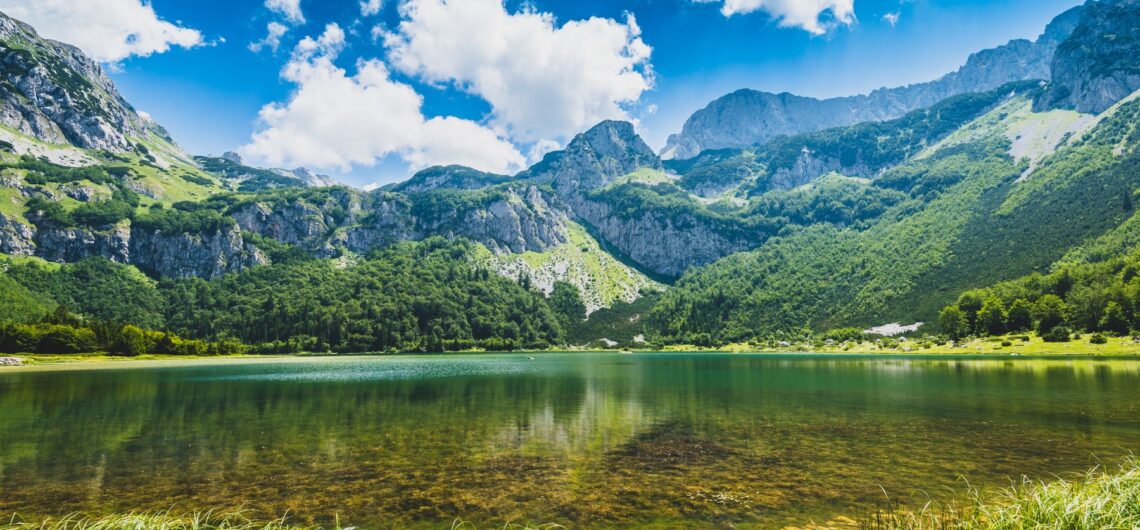
Bosnia and Herzegovina’s hiking trails are Europe’s best-kept secret. They wind through magical landscapes of alpine peaks, rainforests, rugged valleys and river canyons and tiny villages wrapped in mist. The 1990s conflicts sadly meant that the country’s wild beauty remained hidden for decades, but an enthusiastic new generation of Bosnians have been marking hiking trails, building bothies and making the mountains accessible again.
Today, hiking in Bosnia offers remarkable variety, from gentle day walks near cities like Sarajevo and Mostar, to challenging multi-day alpine treks on the Via Dinarica White Trail.
Below, we’ve gathered some of the best hiking trails across Bosnia and Herzegovina – from panoramic peaks and canyon-edge paths to quick city escapes and long distance treks.
The below routes are all found on our Bosnia holidays:
Bosnia’s best mountain hikes
Maglić Peak, Sutjeska National Park
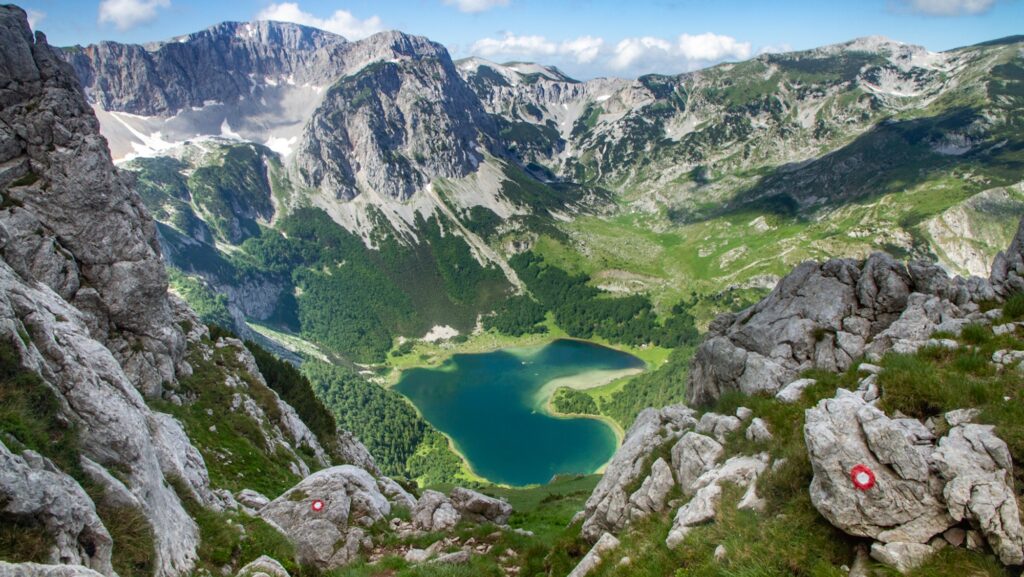
Bosnia’s highest summit, Maglić (2,386m), sits within Sutjeska National Park, a vast protected landscape of sharp limestone ridges and dense forest.
The hike typically starts in Prijevor (1,659m), one of the most untouched areas of the national park. It is a flower-filled meadow but soon gives way to scree, so take care on this section – you may have to scramble a little. From here it’s a 90-minute hike to Trnovačko Lake, a heart-shaped lake like a jewel below Mount Maglić, Bosnia’s highest peak (although it’s technically in Montenegro).
The last section passes through meadows again before climbing steeply towards the summit ridge. Maglić itself means ‘Misty mount’ in Bosnian/Montenegrin. On a clear day, the views sweep across Volujak, Bioč, Zelengora and the shining Trnovačko lake. It’s a demanding full-day hike that requires experience and rewards with spectacular scenery, among Bosnia’s most dramatic.
Čvrsnica mountain and the Outlaw’s Gate (Hajdučka Vrata)
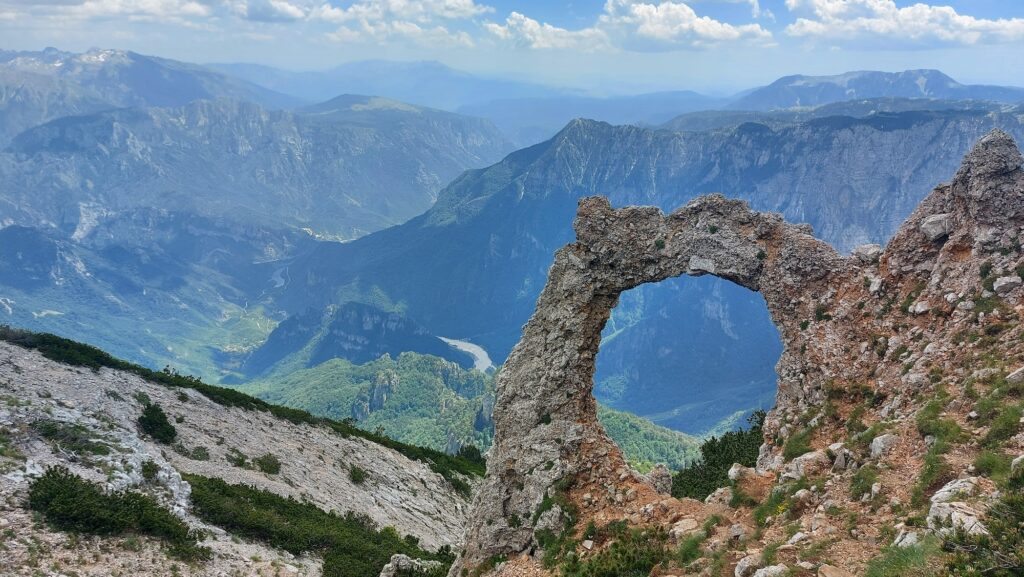
Rising high above Blidinje Nature Park on the Čvrsnica massif, Veliki Vilinac (2,228m) is one of Bosnia’s most rewarding summit hikes – and most demanding, despite not needing any technical equipment.
The route typically takes 7-8 hours in total, with roughly 1,000 of elevation gain, so start early as you climb from forested slopes up onto a wild limestone plateau.
Before ascending the summit ridge, most hikers choose to detour and visit a stone arch known locally as Hajdučka Vrata (Outlaw’s Gate). It’s a natural wonder located at 2,000m above sea level.
The trails here are rocky, often steep and very remote, so only take on Čvrsnica if you’re a fit, experienced hiker. Even then we’d always recommend going with a local guide. The Outlaw’s Gate and Maglić are both on the itinerary of our guided 7-day Bosnia hiking adventure.
Prenj mountain and Zelena Glava peak
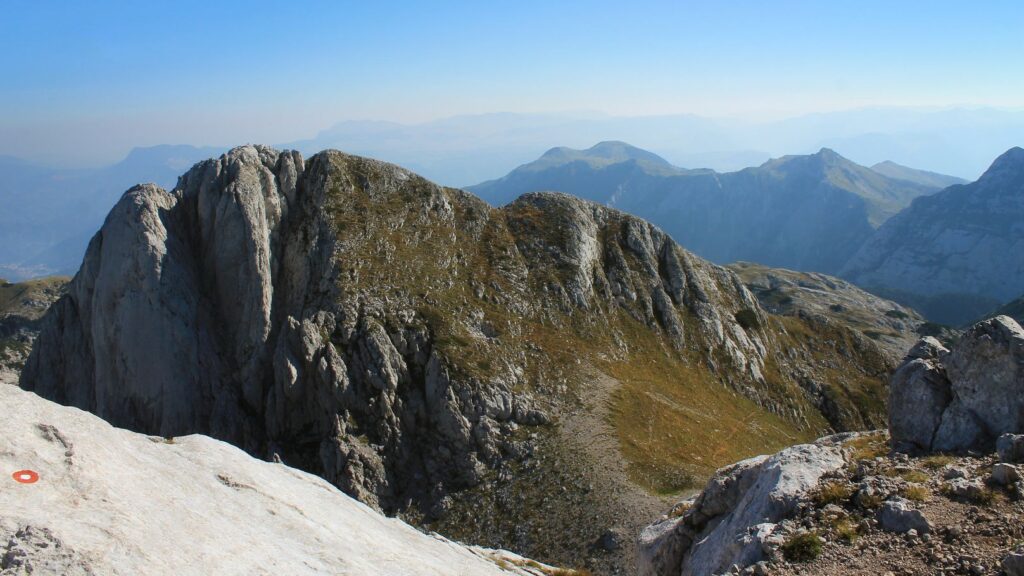
Dominating the skyline above Mostar at 2,155m, Prenj is often dubbed the “Bosnian Alps” – a rugged, limestone fortress of sharp ridges and remote valleys with some of the most spectacular hiking in Bosnia.
The classic route up starts from Rujište and climbs through dense pine forest onto high, open slopes, before committing to a long push towards Zelena Glava, the highest peak. Hiking to the summit and back in a day is achievable but long and physically demanding, with around 1,100m of elevation gain. Take on rocky, steep trails for big, wild views over the Neretva valley, neighbouring Čvrsnica and the Dinaric Alps.
Related:
- Meet Skender, our adventure guide in Bosnia and Herzegovina
- What to see and do in Sarajevo
- 7 Balkan alternatives to the best hikes in Europe
Easier hikes near Sarajevo
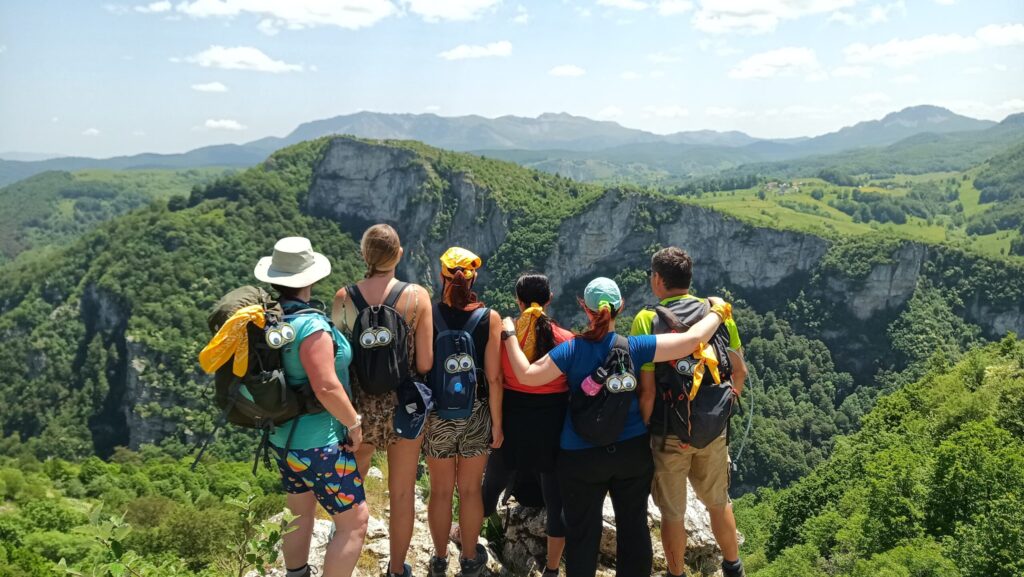
Skakavac Waterfall
Just 12km from Sarajevo, this beautiful and moderately easy walk leads to a scenic waterfall — great for a half-day hike.
Skakavac Waterfall (Grasshopper Falls) is the tallest flowing waterfall in Bosnia and Herzegovina and draws nature-loving ‘Sarajlije’ (Sarajevo locals) as much as visiting tourists. The waterfall is 98 metres high, plunging down a slippery limestone cliff and descending into a series of stunning smaller waterfalls and pools which are perfect for swimming. Note: in later summer the waterfall can run dry, which is why we hike this trail in spring and autumn as part of our 7-day Bosnia activity holiday.
Neretva Riverside & Lower Valley Path
This is a laid back route following the emerald Neretva River near Konjic. The Neretva river canyon is approximately 20km long but the path only follows part of it, making it a good half day hike.
Trebević Peak Trail
Sarajevo’s local mountain. This one is easily accessed via a 15-minute cable car ride from the city centre, but it’s much more fun to take the trail up from the city and pass by the semi-abandoned 1984 Olympic luge track which is covered in colourful graffiti. It’s longer and more strenuous if you hike all the way up to the summit, but plenty of shorter loops around Trebević are accessible too. The view from the top is gorgeous: spires of minarets and old churches poke through the mist and woodsmoke that rises from Sarajevo, where the Ottoman lanes of the old town are enchanting.
Lukomir loop & Rakitnica Canyon from Bjelašnica to Umoljani
A classic Bosnian day hike near Sarajevo that links Bosnia’s highest village of Lukomir with Umoljani village, offering stunning views over the Rakitnica River canyon and traditional stone-roofed houses. Moderate difficulty and great for both scenery and culture. Ascend roughly 600m in around 3.5 hours, all the while soaking up yet more incredible scenery.
The prize piece at the top is the view of Rakitnica Canyon, Bosnia’s longest canyon, and the surrounding mountains. After some rest, hike down to Lukomir, meaning “harbour of peace” in the local dialect. Here you’ll find 600-year-old traditions still kept including some of the best Bosnian coffee in the country, in our opinion.
You can also visit the medieval Stećci tombstones which date from the 14th century and show this high altitude region has long been inhabited. The return to Umoljani is a pleasant, mostly flat hike along the upper edge of the wildly untouched Rakitnica Canyon.
Multi-Day & Long-Distance Options: The Via Dinarica
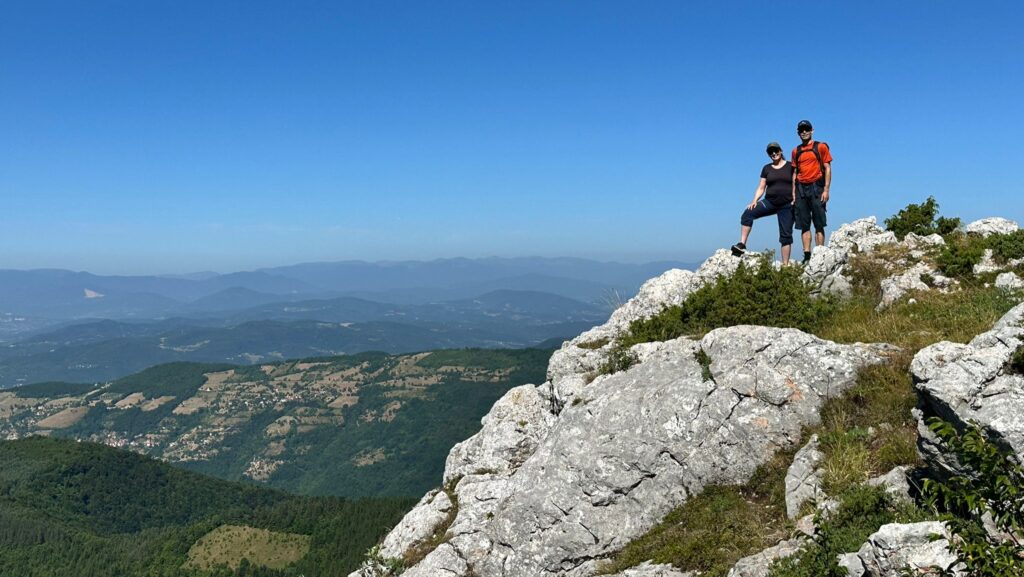
Via Dinarica White Trail
For those of you seeking a multi-day hiking challenge, the Via Dinarica White Trail snakes its way across Bosnia’s most mountainous and rugged terrain. It’s a long distance trekking route and sections can be tackled individually, as several linked days, or in one go as a deep immersion in the Dinaric Alps. The following sections are all within a stone’s throw of the magnificent capital, Sarajevo:
Day 1: Bjelašnica, 12 km – Bjelašnica – Hranisava summit (1,964m)
Day 2: Greda Pass, 16 km
Day 3: Rakitnica Canyon, 10km
Day 4: Visočica mountain, 11 km – Visočica Mountain’s Vito summit (1,960m) and Drstva summit (1,808m)
The Herzegovina Wine route

Winding through Herzegovina’s striking karst landscape between Mostar and Trebinje, the Herzegovina Wine Route moves from vineyard to vineyard. The trail begins in Mostar, named the European Wine City Dionisio 2024. From there, it’s a walk or drive through the region with stops off at family-run wineries along the way to taste a range of traditional dishes and exceptional local wines. Many vineyards along the hiking route offer guest accommodation.
Notable stops on the way include Goranci village, Tvrdoš Monastery, Kovačević, Stolac and Ljubuški.
The end point is the country’s southernmost city, Trebinje where the nearby karst fields, known as Popovo Polje, are considered some of the best wine growing terrain in the country. Local grape varieties include blatina, žilavka and trnjak.
When is the best time to go hiking in Bosnia?
Most mountain routes are best from late spring to early autumn (late May–October). Snow can linger on higher peaks and north faces into early summer so always check with locals before heading out on a trail. Lower level trails can be hiked year-round.
Weather can change fast in the mountains — always carry layers, good boots, and plenty of water.
Safety tips for hiking in Bosnia
While most routes above are mapped out, they may not be as clear as some of the more established hikes in Europe and it is easier to get lost, particularly in more remote areas where there are fewer people (and English-speaking at that) to ask directions of.
Mountain rescue services do exist, but are not as well-funded or resourced as in the west. That’s why all of our hiking holidays are led by qualified mountain guides who know the routes like the backs of their hands.
Sticking to marked trails is important. Some areas once saw conflict; check with local guides or clubs for up-to-date trail info if you’re planning to head off the beaten path.
Other than that, people in the Balkans are incredibly welcoming and crime is very rare in the mountains. Nature itself is likely to pose the greatest danger.
Feeling inspired? Sign up to our monthly newsletter to get more exciting adventure travel tips and hear first about our best offers across the Balkans.
Comments