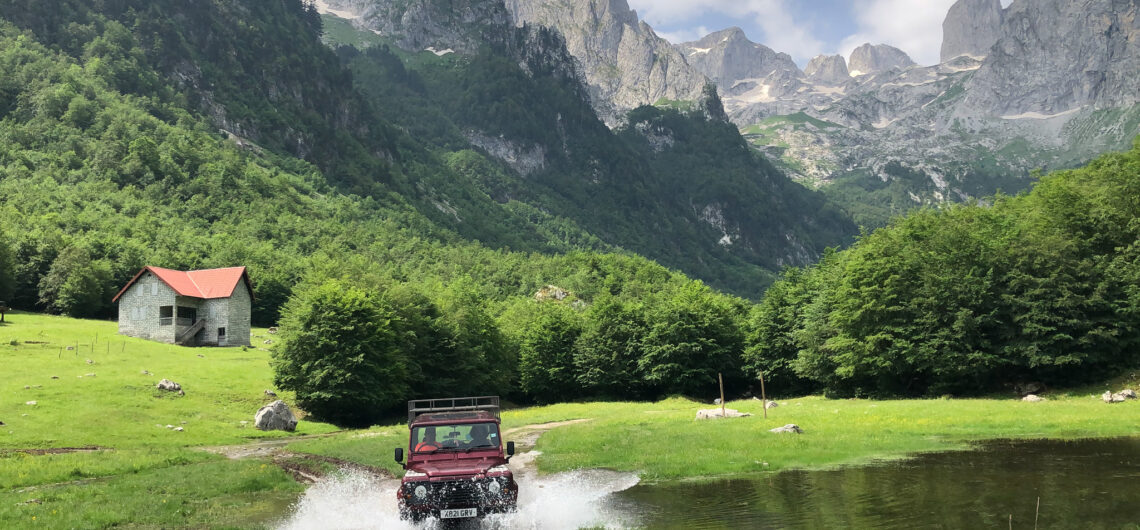
Driving in the Balkans can be hugely rewarding – dramatic mountain scenery, quiet country roads and the freedom to reach places public transport doesn’t serve. But there are a few important rules and quirks to know before that Balkan road trip. Border crossings aren’t always straightforward, road conditions can change without warning, and Google maps isn’t always your friend.
This guide is for travellers planning to self-drive, whether you’re hoping to make your own independent journey to reach your holiday start point (for example flying into Dubrovnik to reach Montenegro) or hiring a car to extend your time away.
We’ve put it together based on years of driving across Albania, Montenegro, Bosnia & Herzegovina and Kosovo – both for our own travel and while supporting guests travelling independently before or after our guided trips.
Self-driving in the Balkans offers the freedom and flexibility to explore areas at your own pace but it requires preparation and – occasionally – nerves of steel. Read on for a practical, experience-led overview of Balkan roads, border crossings and what to expect along the way.
Documents Required for a Balkan Road Trip
To drive internationally in the Balkans, you will need:
✔ Driver’s license and, in many cases, an International Driving Permit (IDP)
✔ Passport
✔ Credit card (some borders may accept cash or debit; check in advance)
✔ Rental agreement that allows cross-border travel
✔ International insurance / Green Card (for non-EU countries)
Related:
- How to prepare for your Balkan trip: from eSims to currency
- Our top adventures for couples in the Balkans
- When’s the best time to visit the Balkans
What kind of insurance do you need for driving in the Balkans?
Most standard EU and UK motor insurance policies will cover Croatia, Montenegro and Bosnia & Herzegovina, but nowhere else – always check first. In almost all cases, you will need to request a Green Card from rental agencies. These are proof of insurance and allow international driving. Green cards typically cost €15–€55 for around 15 days. Major border crossings usually have kiosks or brokers that also sell 3rd party border insurance if you are driving your own vehicle; small or remote crossings may not, so plan accordingly.
Always inform your rental company if you plan to cross borders—they can guide you through the process. Many Balkan rental agencies allow cross-border travel.
Planning Ahead for your Balkan road trip
- Don’t rely on one navigation app. Research across Google, Maps.me, Here WeGo and Waze. Navigation tools often underestimate road quality. Google Maps and other apps might send you onto small backroads that are technically passable but very rough or poorly surfaced. 🧭
- Download offline maps because signal is patchy in rural areas.
- Check satellite view on map apps to gauge road width and surface conditions.
- When measuring driving distances and times, always factor in additional time.
- Carry a physical roadside safety kit: warning triangle, tyre repair kit, first-aid kit and high-vis vests. Rental cars carry these as standard.
- Always fill up with fuel before heading into rural areas.
- Use modern toll motorways where possible; they are better maintained.
- Be careful after heavy rain, as asphalt can become slippery.
- If you must use smaller roads, ask locals for current condition insights. They often know which stretches are genuinely poor despite what navigation apps suggest.
- Reduce speed and avoid night driving where you can’t clearly see surface conditions.
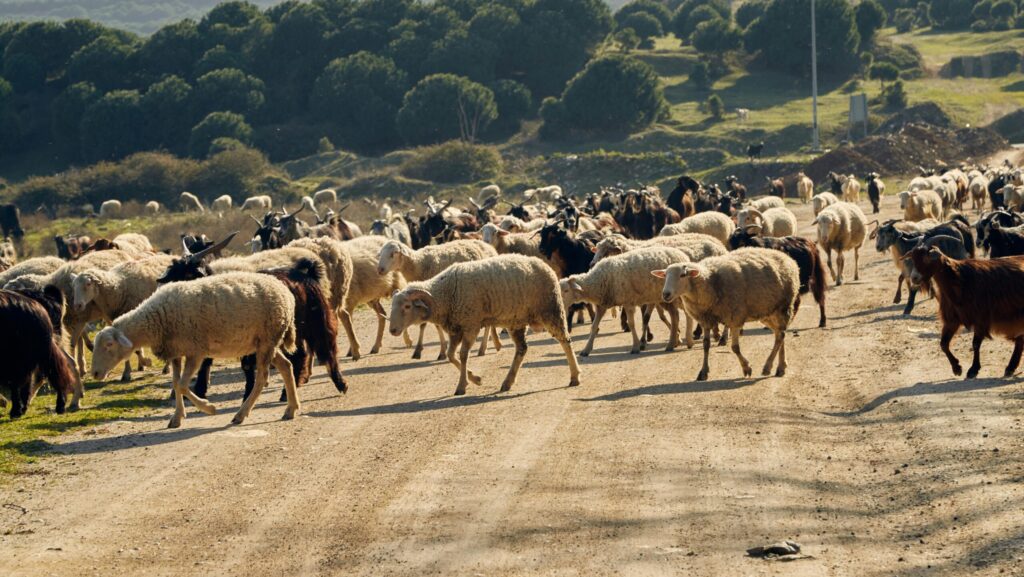
- It’s common to encounter livestock on the road — sheep, goats and cows — especially in rural areas. Keep a steady pace, be ready to brake and anticipate livestock or slow vehicles around bends.
Challenging roads in the Balkans 🚧
⛰️ Mountain roads across the region are narrow and challenging. You should always be well prepared that even a beautifully asphalted road can just stop and turn into a dirt track full of potholes and bumps. The locals are used to this and will overtake you at every opportunity. Most of all in Montenegro, Bosnia & Herzegovina, North Macedonia and Albania. Mountain passes often have sharp hairpins, steep gradients and limited guardrails. Drive slowly! And if this all sounds too much, relax and leave the driving to us on one of our expertly guided activity holidays.
🚧 Challenging roads in Montenegro
The A1 from Podgorica to Kolašin is one of the most scenic stretches of asphalt we’ve clapped eyes on, clinging to the edge of the steep-sided Morača canyon. It’s narrow too, with frequent hairpin bends, blind turns and slow-moving trucks causing tailbacks and frustrated overtaking manoeuvres. Keep your eyes on the road and take it slow. Or pay the toll and take the new stretch of motorway that runs to Mateševo in the Kolašin municipality.
The Kotor serpentine road (P1) from Cetinje down to Kotor Bay is spectacular but extremely narrow, with no less than 25 hairpin bends. Even though buses are banned from driving it, minivans and trucks still do and you may need to reverse for oncoming cars. An easier option is to go via Budva to Cetinje on the M2/E65.
🚧 Challenging roads in Albania and Kosovo
Albania’s SH75 and SH21 (Thore Pass) are among the most notoriously patchy roads in the country, with rough surfaces, narrow switchbacks, and occasional unpaved or poorly maintained segments.
Driving from Shkodër to Theth is no longer the stomach-lurcher it was thanks to asphalt now in place all the way, but it is often still impassable in winter and early spring due to snow and ice. Always check with someone local before driving it.
🚧 Challenging roads in Bosnia & Herzegovina
Rural roads, especially in the Republika Srpska section of Bosnia, have unexpectedly rough surfaces despite being labelled main routes. What appears on maps as a “major highway” between Foča and the Montenegro border at Šćepan Polje is in parts more like a country road to a remote village — rough, narrow, lacking guardrails and not well maintained.
🚧 Challenging roads in Serbia
Belgrade → Niš (A1 / Corridor X) is one of Serbia’s main highways but is in constant redevelopment. There are still ongoing works, narrowed sections and bottlenecks. Because Google maps hasn’t kept pace with the newly laid sections, GPS can detour off the highway onto lesser rural roads (e.g., route 158), but don’t be tempted to follow it. Just follow signs to Niš or Belgrade.
Belgrade to Montenegro via Čačak / Užice
Locally known (especially older sections) as Ibarska Magistrala (State Road 22), this once-major route has a reputation for being uneven and in poor condition in rural stretches. It has been the subject of long-standing media and safety reports due to deteriorated pavement, little to no lighting and accidents over the years.
🚧 Challenging roads in North Macedonia
While main roads (e.g., the major corridor from Skopje to Greece) are intended to be modern highways, long-running construction projects have left some stretches incomplete for years. One example is a 44-km section near Ohrid that has been under construction for over a decade, leaving temporary surfaces of varying quality.
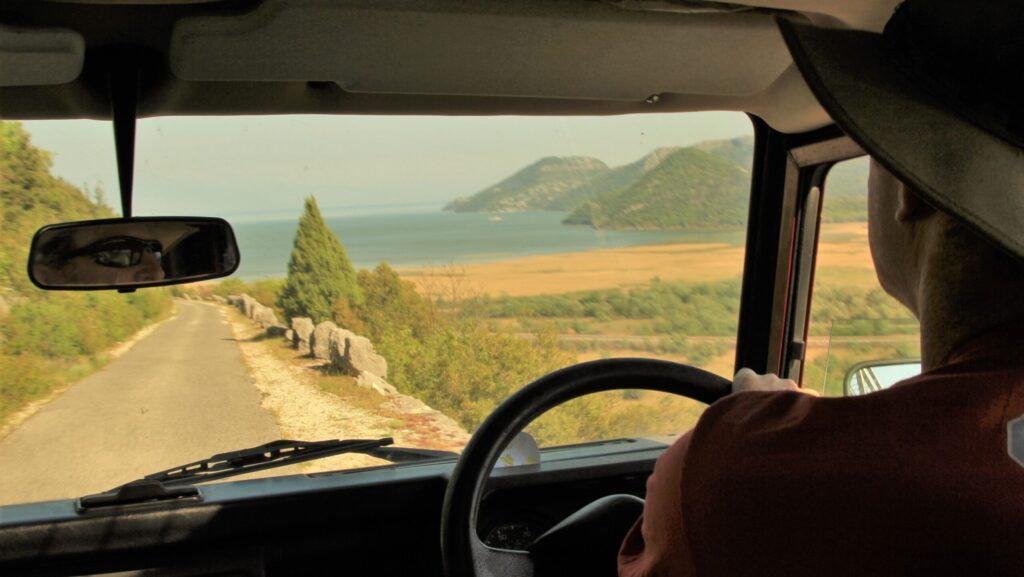
Crossing Balkan borders? Here’s our tips
Check which borders sell insurance with our handy guide below. The procedure usually looks like this: you hand your passport to the border police, drive through customs to buy insurance, return with the certificate, get a passport stamp and then proceed. It can be a bit chaotic but manageable.
If you cannot cross at a major border, you will need to buy insurance in the first major town. Keep cash in euros for small fees.
| Country pair | Border crossings which sell insurance |
| Albania ↔ Montenegro | Hani i Hotit – Božaj; Muriqan – Sukobin |
| Montenegro ↔ Croatia | Debeli Brijeg – Karasovići |
| Croatia ↔ Bosnia | Metković – Doljani; Ivanica; Bijaca |
| BiH ↔ Montenegro | Klobuk / Ilino Brdo; Scepan Polje |
| Serbia ↔ Montenegro | Dobrakovo – Gostun; Jabuka – Rance |
| Kosovo Crossings | Morinë–Vermicë; Qafë Prushit; Kulla |
| North Macedonia | Qafë Thanë; Elez Han / Blace |
Scenic Balkan border crossings
🇦🇱 Albania → Montenegro border
☐ Hani i Hotit – Božaj
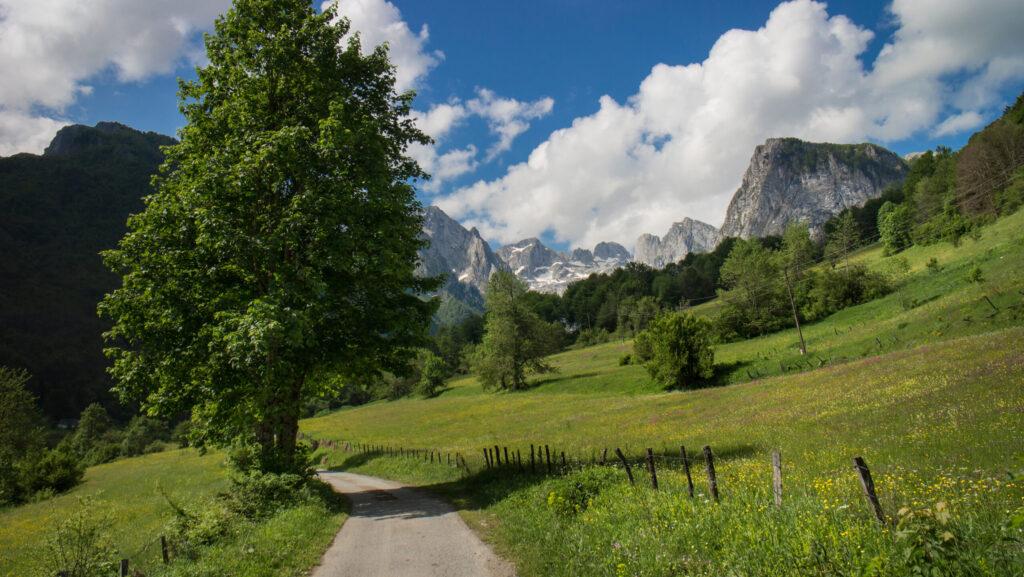
The busiest and most reliable Albania to Montenegro border, linking Shkodër with Podgorica. Flat, fast and functional, but with views of the Prokletije mountains in the distance and Lake Skadar/Shkodër to one side. This is the one we use to return to Podgorica after our Montenegro to Albania hiking holiday.
🇲🇪 Montenegro → Croatia border
☐ Konfin – Vitaljina
A scenic crossing on the tip of the Kobila Peninsula, close to tiny villages and rocky coves. While atmospheric, it’s unlikely you can buy insurance here, so use it only if you’re already covered. It is also a much longer way around than the Debeli Brijeg – Karasovići crossing. We do not recommend this in summer! It can take up to 5 hours of waiting time to cross this EU/non-EU border. Go via Bosnia instead.
🇭🇷 Croatia → Bosnia & Herzegovina border
☐ Metković – Doljani
The main inland route from the Dalmatian coast to Mostar, following the lush Neretva River Valley. Metković is a practical stop for fuel and supplies. As you drive on the Bosnia side, you will pass the Roman Bridge on Bregava and on to Mostar which we visit on our 7 day Bosnia hiking holiday.
☐ Ivanica – BiH
A smaller crossing near Čapljina south-east of Dubrovnik, frequently used by visitors heading inland to Trebinje. Trebinje’s cobbled old town, riverside cafés, and nearby vineyards (like the Vukoje winery) make this a pleasant first stop in Bosnia.
🇧🇦 Bosnia & Herzegovina → Montenegro border
☐ Ščepan Polje
One of the most dramatic border crossings in the Balkans, spanning the Tara River Canyon, Europe’s deepest gorge. This route connects Foča with Durmitor National Park, passing some spectacular views of towering dark mountains. The mountain roads are poorly maintained on the Bosnian side, but even out in Montenegro (EU money). This route is slow, unforgettable, and hugely popular with adventurous travellers.
If you come rafting with us on our 6 day packrafting holiday in Montenegro, you get to cross this border with minimal hassle!
🇲🇪 Montenegro → Serbia border
☐ Jabuka – Rance
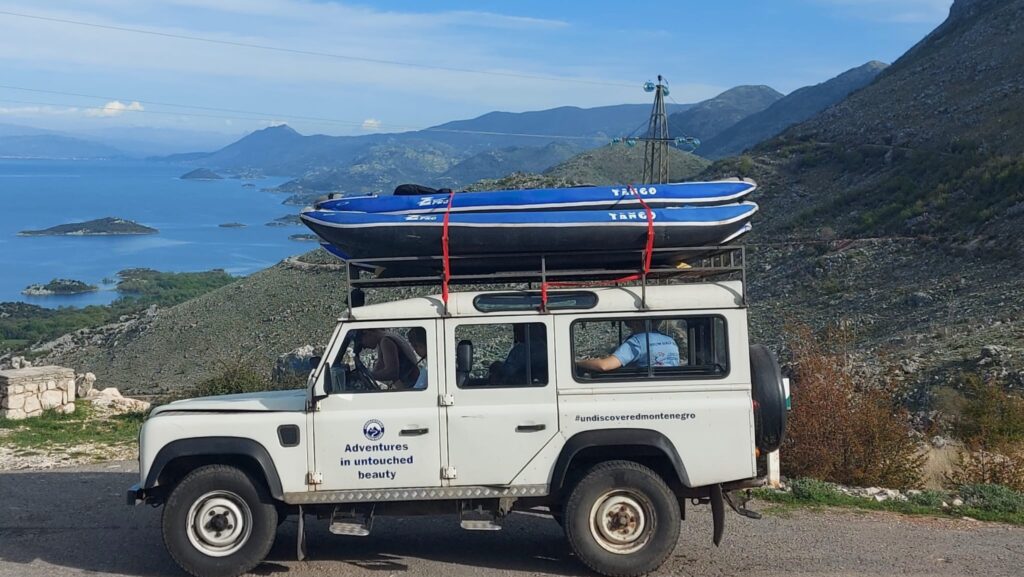
Scenic but with fewer services. A quieter mountain crossing used by those travelling between Pljevljain Montenegro and western Serbia (Teretna). The landscape here is remote and rural, with forests, high plateaus, and very little traffic.
🇷🇸 Serbia → Bosnia & Herzegovina border
☐ Karakaj – Mali Zvornik
A striking crossing over the Drina River, linking Bosnian Zvornik and Serbian Mali Zvornik. The river gorge, hillside fortresses, and lakes make this one of the prettier Serbia–BiH crossings, with easy access to eastern Bosnia’s mountains.
🇽🇰 Kosovo Routes
(Green Card not accepted — must buy MTPL Kosovo insurance)
☐ Qafë Morinë Shqipëri
A mountainous route through Northern Albania from Tropoje to Gjakova in Kosovo.
☐Qafë Prushit
A quieter, more rural route through alpine landscapes and small villages, also leading toward Gjakova. Less traffic, more scenery — but fewer services, so best used during daylight hours.
🚫 Kulla – Montenegro–Kosovo (CLOSED)
Often mentioned in older guides, this crossing at the end of the Rugova gorge has been closed for years and is not usable. Travellers heading between Montenegro and Kosovo must route via Serbia or Albania instead.: Montenegro → Serbia (Dobrakovo or Jabuka) → Kosovo (via Jarinje or Merdare) or Montenegro → Albania (Hani i Hotit or Muriqan) → Kosovo (via Morinë)
🇲🇰 North Macedonia border
☐ Qafë Thanë
A dramatic mountain crossing between Pogradec and Ohrid, with sweeping views over Lake Ohrid, a UNESCO World Heritage site. One of the most scenic border approaches in the Balkans, especially at sunset.
A humorous guide to driving in Montenegro (from a survivor) 🛣️
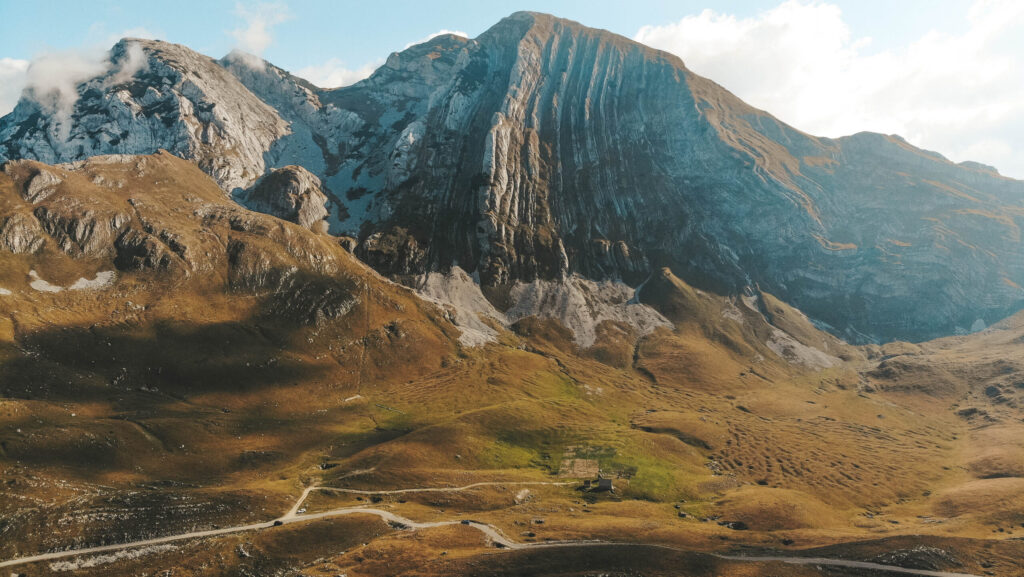
“Every country has its fair share of drivers who fail to understand the basic rules regarding roundabouts, tailgate vehicles they perceive to be not be moving quite quickly enough and take incomprehensible risks for no discernible reward (what’s the point in risking your life to arrive 5 seconds faster when whoever you’re meeting is going to be late anyway?), but only in Montenegro have I observed drivers smoking a cigarette and talking on their mobile phones at the same time. Whilst overtaking on a blind hairpin. In the rain. With a small child on their lap.”
“Montenegrin rules of the road bear little resemblance to those elsewhere. In Montenegro, a car slowing down for no perceptible reason means it is about to turn right. If the car is indicating right, this does not mean it is about to turn right. This means you can safely overtake it because the driver has scanned the road ahead for you. Or it means move to the side, there’s a big truck coming the other way. Or it means it is about to turn left. How can you tell which it is? You can’t! In Montenegro, the fast lane is for driving slowly and the slow lane is for driving fast – that is to say if you are driving the 5km stretch between Golubovci and Podgorica, which is only the second sustained length of dual carriageway in the whole country. Texting and driving appears to form part of the test to get your licence. Wearing a seatbelt is for wimps – I’ve seen drivers loop them around the back of their seats to prevent those annoying bong noises that detect the passengers aren’t wearing them.”
Get in touch with us if you need help finding your next Balkan adventure or sign up to our newsletter for more travel inspiration, tips and offers across the region.
Comments