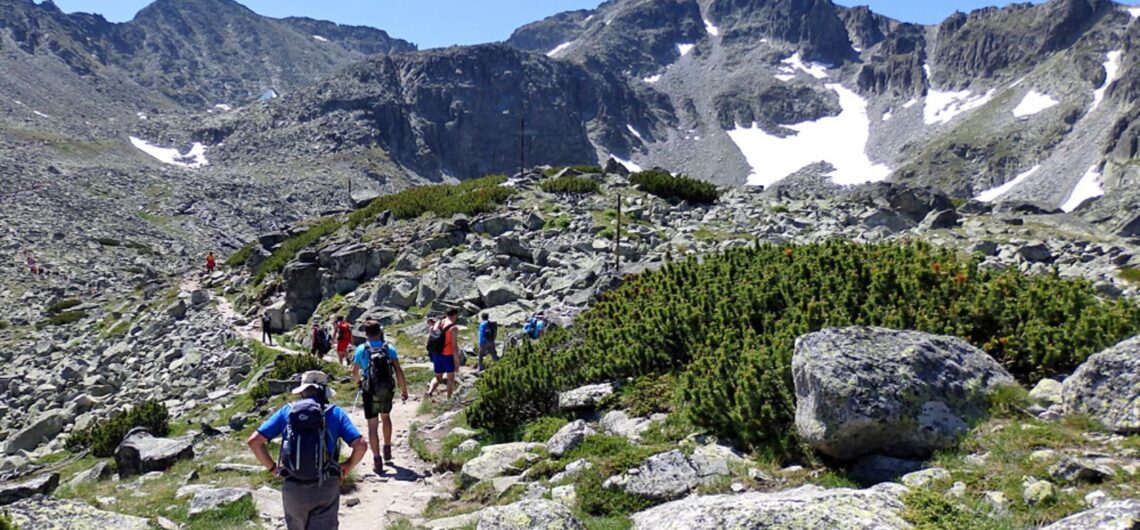
The best hikes in Europe are the ‘best’ for a reason—be it the scenery, local culture, history, or physical challenge. But the downside is that hikes such as the Tour du Mont Blanc or West Highland Way attract a huge footfall each year, meaning you won’t get the views to yourself and they’re susceptible to overtourism.
Swap the Alps for the Dinaric Alps and you’ll find landscapes with astounding natural beauty, free of ski lifts, hotels and crowds. Hiking holidays in the Balkans are cheaper, more culturally immersive, and mean you will fill your Instagram grid with something truly original.
From the multi-day Via Dinarica trail to short and sharp hikes in the Albanian Alps, if you’re looking to take the paths less trodden and encounter more sheep than people, read on as we list some of Europe’s best hikes and their hidden Balkan alternatives.
Jump to:
- Camino de Santiago = Zagoria
- Scottish Highlands = Stara Planina
- Alta Via 1 = Durmitor National Park
- High Tatras = Pirin Mountains
- Yorkshire Three Peaks = Via Dinarica
- Tour du Mont Blanc = Peaks of the Balkans
- West Highland Way = High Scardus Trail
- Hiking safety in the Balkans
Instead of: Camino de Santiago (Camino Francés), Spain
Go here: Zagoria, South Albania
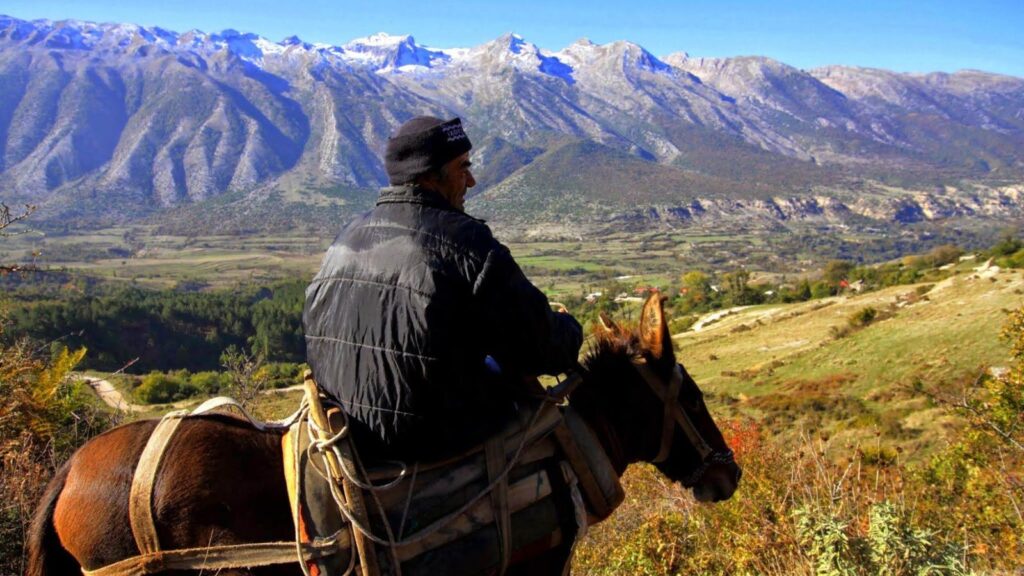
Originally a religious pilgrimage, people nowadays take on the Camino de Santiago for a number of reasons, whether it’s the culture, the scenery or purely a fitness challenge. Along the way, you can visit cathedrals and religious sites, stumble upon small villages and cultural towns, wineries, and surround yourself by nature. But if it’s solitude you’re looking for, you could be in for a surprise as some 180,000 hikers take the Camino Francés, the most popular route, each year.
Instead, look to Zagoria in Albania, an agricultural region in the south where shepherding communities still lead a traditional way of life. As you ramble through karst limestone valleys and wildflower meadows, you’ll saunter past Ottoman bridges, ancient churches and other remnants of the region’s layers of history.
See it all on our 7 Day Albania homestay hiking holiday. We begin on day one hiking an ancient caravan route through the valley and finish our final hike in the Langarica Canyon with a soak in the warm thermal springs there (perfect for releasing those tight calves). In total over the week, we cover 68km of ground and the highest ascent is on day one with a 750m elevation gain.
Related:
- Meeting the Malesorë shepherds of Albania
- The 8 best hikes in the Balkan
- How fit do you need to be for an active holiday? (plus 8-week training plan)
Instead of: Scottish Highlands
Go here: Stara Planina, Serbia
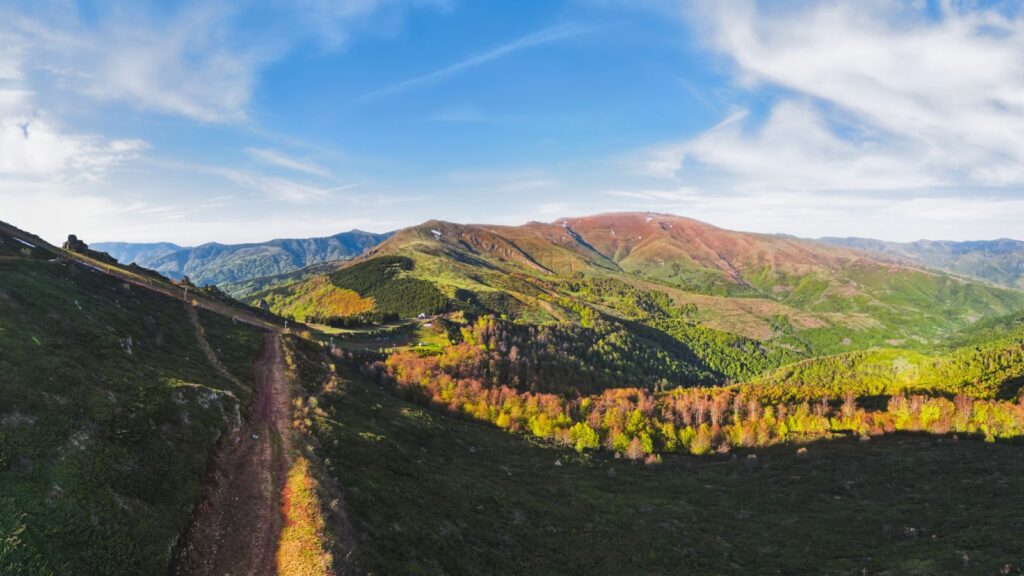
The Scottish Highlands are undoubtedly stunning. It’s the UK’s only area to have a taiga biome (thick, coniferous forest populated by pine, spruce or larches). Ancient lochs, waterfalls, castles and celtic tribal history characterise the area with hearty food like haggis and ample opportunities to warm your cockles on Scotch whiskey.
Well Scotland, we see you, and we raise you Serbia’s vast swathes of ancient forests, some so undisturbed by humans they’re considered primeval, belly-busting mountain feasts and rakija. Eastern Serbia is largely uncharted territory by foreign tourists. Stara Planina, meaning ‘Old Mountain,’ is a mountain range stretching through eastern Serbia to Bulgaria offering a glimpse into a slower, older way of life in the Balkans. Stone villages, traditional family farms and undisturbed wilderness characterise the landscapes.
We explore Stara Planina on our 7-Day hiking holiday in Serbia, which includes a hike to Serbia’s highest peak, Midžor, standing at 2,169m (7,116 ft) above sea level. During our rambles, we’ll meet the locals in traditional farming communities and, if we’re lucky, spot some wild horses.
Instead of: Alte Via 1, Italy
Go here: Durmitor National Park, Montenegro
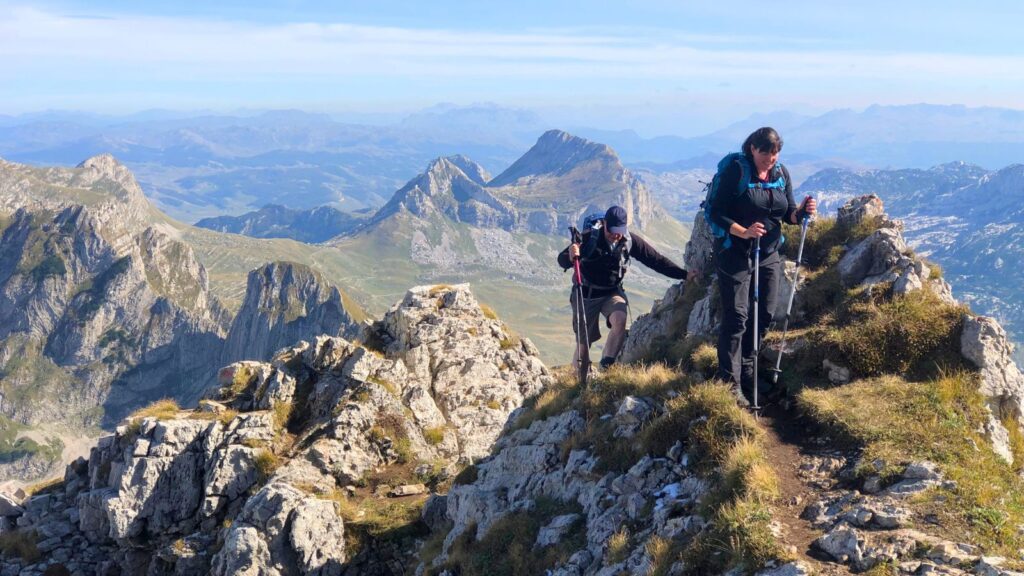
The Alta Via 1 in the Italian Dolomites attracts mountaineers far and wide for its stunning scenery: jagged peaks, glacial lakes, lush meadows and picture postcard Alpine villages. This multi-day hike totals 120km (75 miles) in distance with an elevation gain of 7,400m (24,000ft), taking between 6-10 days to complete. Although the most technically easy of the Alta routes, it’s still for more experienced hikers.
For equally stunning scenery that’s more accessible, look to Montenegro’s Durmitor National Park. Forged by glaciers, this limestone massif is a UNESCO World Heritage Centre and boasts no less than 48 peaks above 2,000m (6,561ft), 18 glacial lakes and Europe’s deepest canyon. Alpine meadows and dense forests unfurl against the backdrop of serrated limestone peaks and the environment plays host to dozens of wildlife species which have become extinct in other parts of Europe, including brown bear, grey wolf, European wildcat and chamois. During our 7 day mountain hiking holiday in Montenegro, we often climb to the park’s Prutaš peak (2,394m/1,995ft) and spy two beautiful glacial lakes.
Instead of: The High Tatras, Slovakia/Poland
Go here: Pirin Mountains, Bulgaria
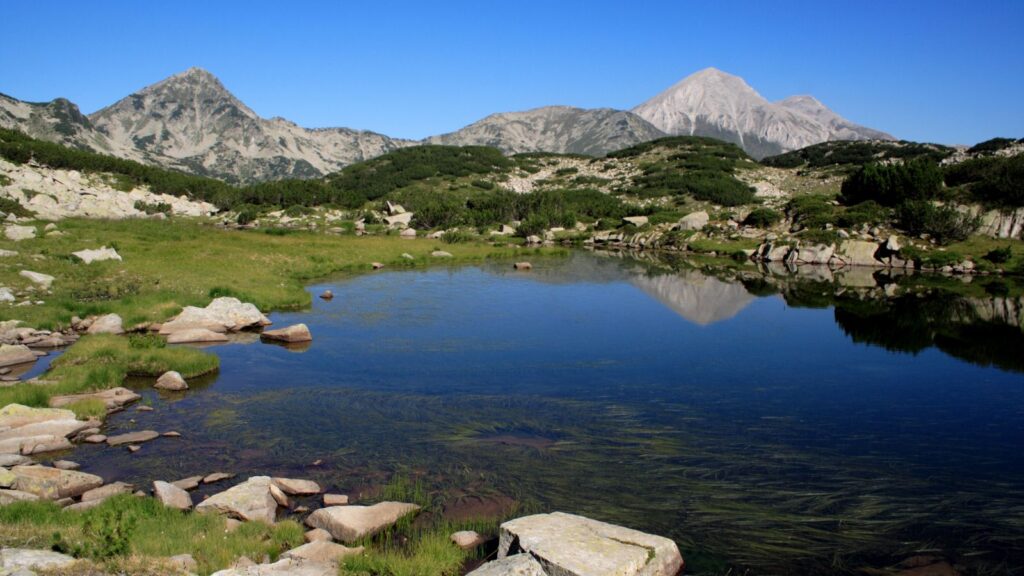
Although not as mainstream as hiking spots in Western Europe, Slovakia’s High Tatras mountains are still er… up there and gaining popularity as a result of their natural beauty. Instead, how about exploring Bulgaria‘s share of the Dinaric Alps with us for a week?
Shaped by glaciers, the Pirin and Rila mountain ranges in Bulgaria boast some of the most dramatic scenery in the Balkans. Think gunmetal grey peaks, mirror-like glacial lakes, waterfalls and dense, ancient forests. The mountains are also home to several monasteries, including Rila Monastery, Europe’s largest and most famous Eastern Orthodox monastery which dates back to the year 927.
You’ll find the physical demands in Bulgaria similar to the High Tatras trails. For example, the Waterfall Trail in Slovakia covers 11.1km (7 miles) and has an elevation gain of 477m (3,9750ft) while a hike to the Musala Peak covers 14km (8.7 miles) and around 600m (1,969ft) in elevation.
Learn more about what Bulgaria’s mountains have to offer hikers with our 7 day mountain hiking holiday in Bulgaria.
Instead of: Yorkshire Three Peaks, UK
Go here: Via Dinarica, Three Peaks, Montenegro
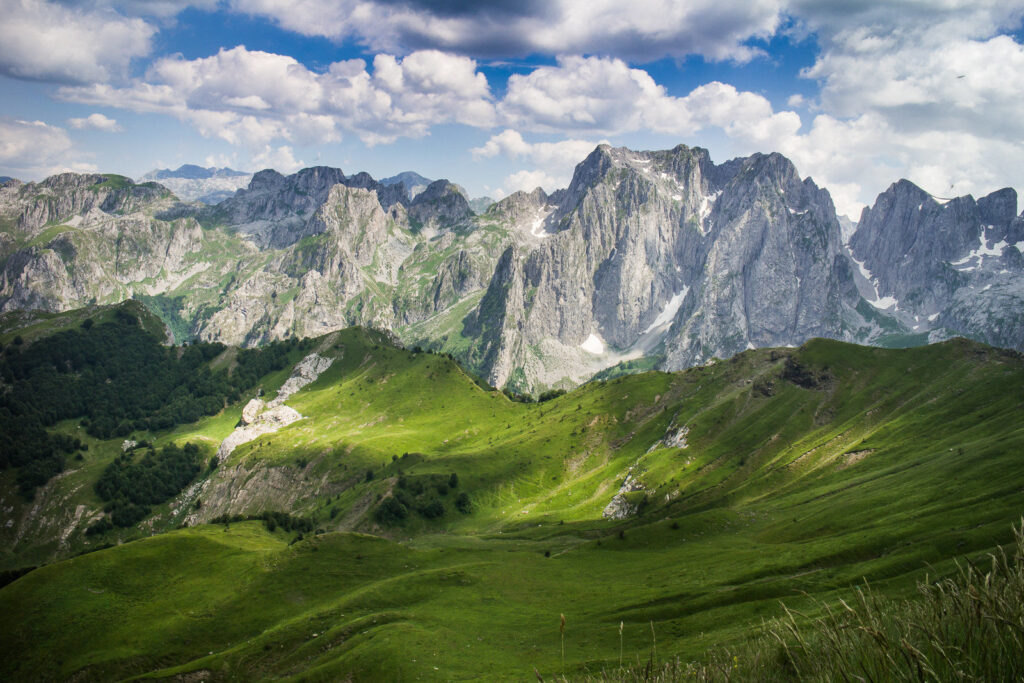
The Yorkshire Three Peaks challenge, in which hikers climb the hills of Pen-y-ghent, Ingleborough and Whernside in a day, is attempted by an astounding 200,000 people annually. The route covers 38.6km (24 miles) with a 1,600m (5,429ft) elevation gain.
Instead, we’ve got a quieter alternative three peaks challenge in Montenegro, on the border with Albania. The Prokletije hike forms part of the Via Dinarica White Trail, a 2,000km (1,243 mile) cross-border hiking route in the Dinaric Alps. This 9km (5.5 mile) day hike connects three moderate summits— Volušnica (1,859m/6,000ft), Talijanka (2,056m/6,745ft) and Popadija (2,057m/6749ft)—and packs a lot in: soaring peaks, ebony forests and mountain meadows at every turn. This hike forms part of our week-long Montenegro to Albania hiking holiday.
Instead of: Tour du Mont Blanc, France
Go here: Peaks of the Balkans
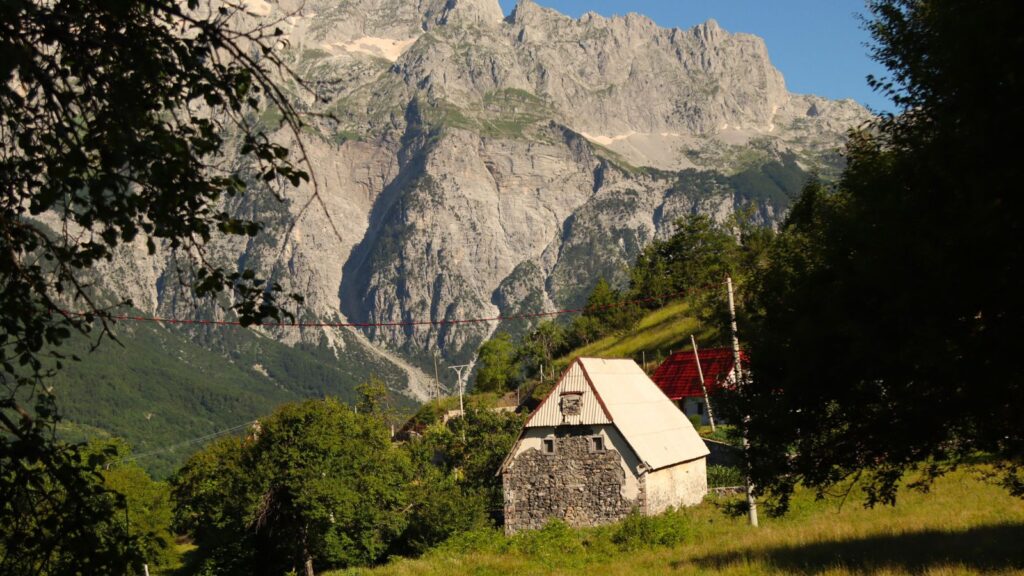
Attempted by some 20,000 hikers each year, the Tour du Mont Blanc attracts visitors from far and wide who come to admire Mont Blanc in all of its glory. It’s a 10-day undertaking across three countries, covering 165km (103 miles) and gaining around 3,230m (10,600ft) in elevation with stays in mountain huts.
Equally as thrilling (without the crowds) is the 14-day Peaks of the Balkans trail which stretches 192km (119 miles) across Montenegro, Albania and Kosovo with an elevation gain of around 3,277m (10,750ft). Nestled in the karst limestone valleys are remote villages trapped in time, Ottoman ruins, ancient forests, and pristine rivers. But if you haven’t got the time to hike it from start to finish, we’ve picked out its best bits on our week-long, family-friendly Peaks of the Balkans holiday, a real adventure which sees you immersing yourself in the local culture with homestays in remote villages.
Instead of: West Highland Way, Scotland
Go here: High Scardus Trail, Albania and Kosovo
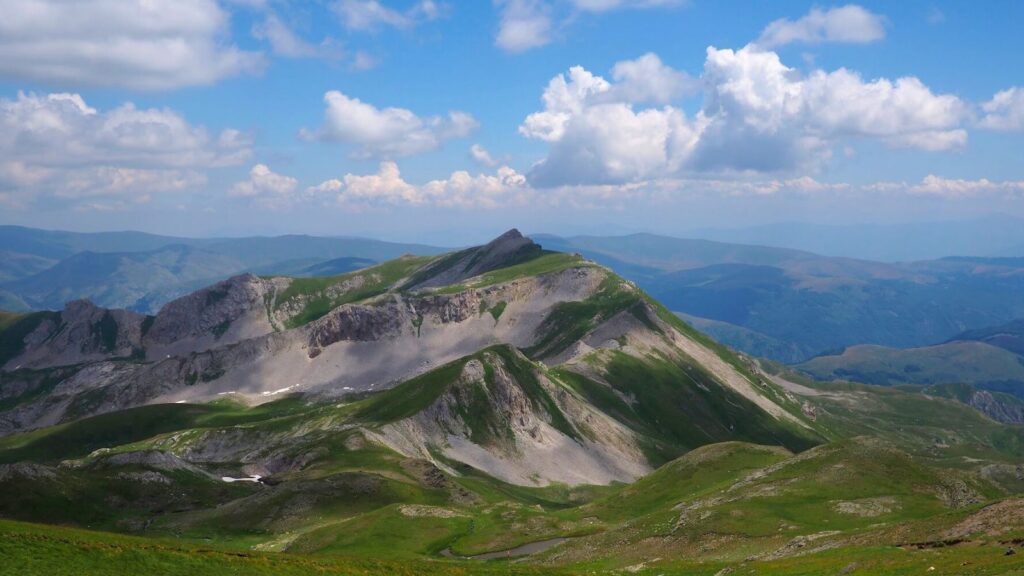
Scotland’s West Highland Way from Milngavie to Fort William attracts around 45,000 hikers each year with its vast valleys and deep lakes steeped in myth and legend. But it’s hardly a solitary experience with that many feet on the paths.
Instead, head to Albania and hike the High Scardus Trail, the newest and wildest trekking route in the Balkans which traces ancient Roman roads. A truly remote trekking experience which promises serenity, it spans 362km (225 miles) with a total elevation gain of 2,064m (6,772ft). The mighty Mount Korab (2,7643m/9,068ft) crowns these glacial valleys which are frequented by more animals than people. Hike the trail with us on our 7 day High Scardus Trail holiday and look forward to calf-burners with huge payoffs and homestays in traditional villages.
Safety when hiking in the Balkans
While most routes above are mapped out, they may not be as clear as some of the more established hikes in Europe and it could be easier to get lost, particularly in more remote areas where there are fewer people (and English-speaking at that) to ask directions of. Mountain rescue services do exist, but are not as well-funded or resourced as in the west. For example, there is no dedicated rescue station on the popular Theth to Valbona trail.
That’s why all of our hiking holidays are led by qualified mountain guides who know the routes like the backs of their hands. Not only do they know where to go and have a feel for the unpredictable weather, they know areas to avoid, for example, due to landslips. In Bosnia and Herzegovina, especially, it is important to stick to marked or known trails as sadly, the reality is there are still some unexploded landmines in certain parts. A local guide will not only allow you to hike carefree, without needing to concentrate on a map, they will greatly enrich your cultural experience when you meet villagers or shepherds and enjoy homestays. After all, the Dinaric Alps are steeped in history, myth and legend.
Other than that, people in the Balkans are incredibly welcoming and crime is very rare in the mountains. Nature itself is likely to pose the greatest danger.
Feeling inspired? Discover our full range of hiking holidays in the Balkans.
Comments